



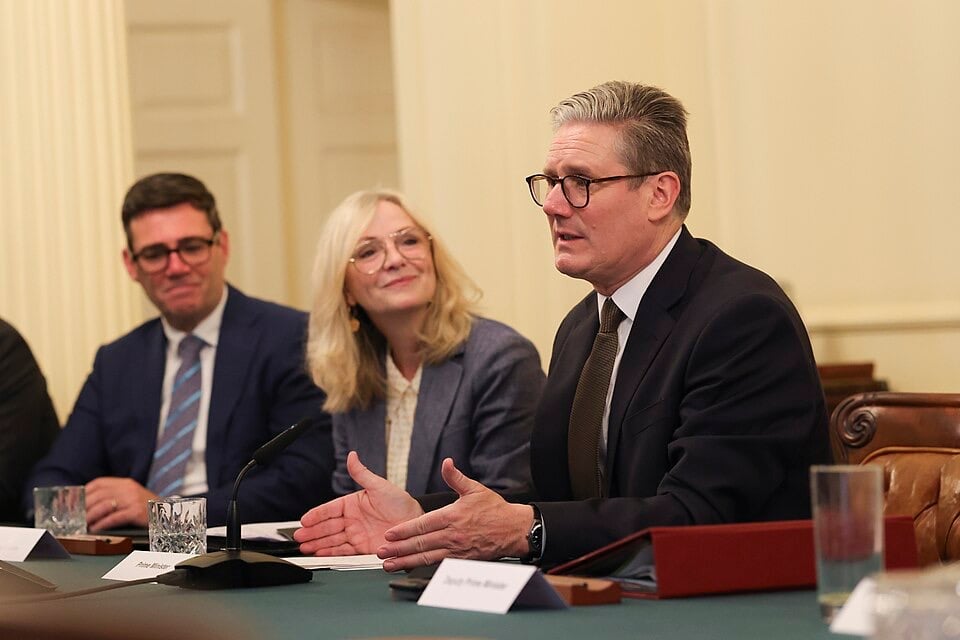
Sir Keir Starmer is bracing for a wave of ministerial resignations following Thursday’s Makerfield by-election, with Andy Burnham widely expected to win the seat and immediately position himself to challenge for the Labour leadership and Downing Street.
The vote takes place on 18 June, with the result expected in the early hours of the following morning. The Greater Manchester mayor is running in the constituency after Labour MP Josh Simons resigned to clear the way for him, following months of speculation about whether Burnham would mount a comeback to Westminster. Polling by Survation has put Burnham on around 49 per cent, roughly ten points ahead of Reform UK’s Robert Kenyon, with Rebecca Shepherd of the harder-line Restore Britain splitting the right-wing vote and helping Burnham’s chances further.
According to The Independent, Labour’s own campaign research suggests the result will be widely read internally as a verdict on Starmer himself. One Labour source said: “The data shows the biggest reason people are voting for Andy is to get rid of Starmer.” A Liverpool Riverside MP and Burnham supporter, Kim Johnson, said: “Not looking good for Starmer, everyone waiting until next week, he needs to just stand down.” Another MP said: “There will be nothing until Thursday, but then maybe more pressure on the PM to do a timetable to go,” while a third was blunter still: “It’s the end of days for Starmer. We are just counting them down.”
The pressure on Starmer has been building for weeks. Following Labour’s heavy losses in the 2026 local elections, a LabourList tracker found that 97 Labour MPs were calling on the Prime Minister to resign or set out a resignation timetable as of mid-May. Health Secretary Wes Streeting resigned from the cabinet on 14 May, saying he had “lost confidence” in Starmer’s leadership, becoming the most senior minister to quit at that point. Cabinet instability has continued since, with Defence Secretary John Healey and Armed Forces Minister Al Carns also resigning in recent weeks.
Foreign Secretary Yvette Cooper is now reportedly under resignation watch, having already told the Prime Minister, alongside Home Secretary Shabana Mahmood, that he should step aside. The Independent reports that Burnham has already begun assembling a prospective government team and canvassing potential appointees for senior roles, anticipating his elevation to both party leader and Prime Minister should he win the seat. Louise Haigh and deputy leader Lucy Powell are said to be among those lined up for cabinet positions, while Deputy Prime Minister David Lammy and Chief Whip Jonathan Reynolds are understood to be earmarked for dismissal — Reynolds reportedly viewed by Burnham allies as having played a role in obstructing the mayor’s earlier attempt at a parliamentary return via the Gorton and Denton by-election. Burnham has pledged to lift the suspension of MP Karl Turner, a critic of Lammy’s jury trial reforms. Powell is said to be privately reassuring ministers and backbenchers, while former Deputy Prime Minister Angela Rayner has been working to calm anxieties about a potential transition.
Despite the scale of speculation, not everyone expects an immediate exodus. One Burnham ally was sceptical about the timing of any resignations, telling reporters: “Those that haven’t jumped will probably fancy keeping their pay and perks til the autumn. They have no other honour, so why would they? It is possible a few would go after the result like rats from a sinking ship to curry favour with Burnham.”
Starmer has repeatedly said he intends to fight any leadership challenge and remain in post, drawing comparisons from some Labour insiders to the final weeks of Boris Johnson’s premiership, when a cascade of ministerial resignations ultimately forced him from office.
Burnham has used recent days to set out a wide-ranging policy platform ahead of any leadership bid, centred on redirecting resources from welfare towards defence alongside greater state intervention in utilities. He has said he is “not squeamish” about reducing the benefits bill to help fund higher military spending, while favouring a preventative approach focused on employment support over what he called “crude” short-term cuts. He has also signalled that nationalising water companies, including Thames Water, remains “absolutely an option” should he reach Downing Street, alongside restructuring energy grid operations. Further proposals include a one-year freeze on private sector rents and a national cap on bus fares to ease cost-of-living pressures, as well as reforming government procurement rules to prioritise domestic employment and social value — citing his experience securing bus-building contracts for Falkirk and Ballymena as Greater Manchester mayor.
