



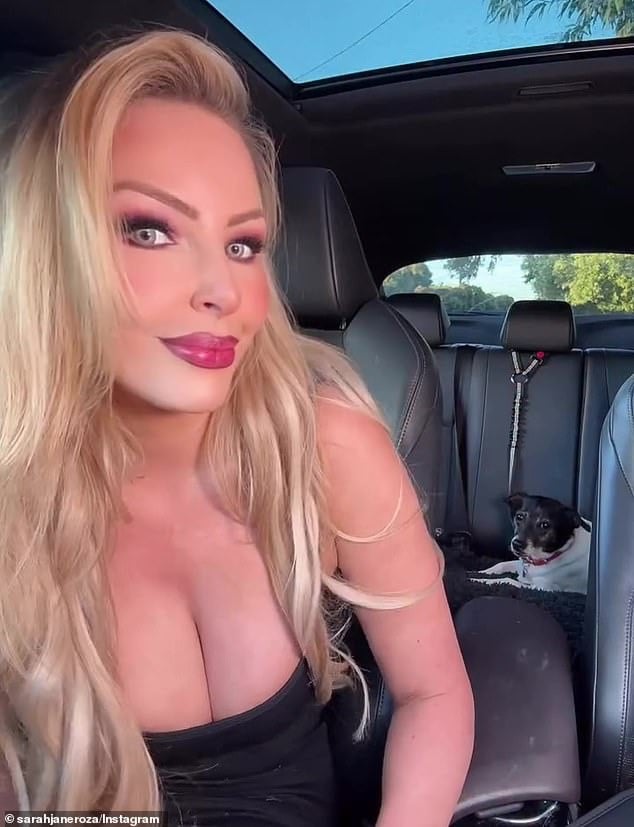
Married at First Sight star Sarah Roza has become the latest high-profile figure caught up in Melbourne’s escalating car theft crisis, after her vehicle was left damaged following an attempted theft outside her home this week.
Roza, who appeared on season five of the reality show in 2018, shared details of the incident on Instagram. “I’m so mad! Some motherf***er tried to steal my car today… whilst it was parked out the front of my house!” the 47-year-old wrote. “They were unsuccessful in driving away with it, but because I don’t know who the culprit is, I’m now left with the $1200 insurance excess to pay to fix all the interior and exterior damage they did to my car.” Roza, who frequently films social media content from inside her vehicle, had earlier this year documented fitting it out with plush seat covers, back-seat organisers, karaoke speakers and a range of other accessories.
Roza’s experience reflects a wider crisis facing Melbourne and the wider state of Victoria, where car theft has surged in recent years, increasingly driven by criminals using high-tech methods to bypass traditional security. Earlier this year it emerged that key cloning devices were responsible for at least a third of all car thefts across Victoria, accounting for between 30 and 40 per cent of the 33,000 vehicles stolen across the state between September 2024 and September 2025 — an average of 30 stolen cars a day.
Police say thieves are deliberately targeting specific models that are easier to access electronically, particularly those using push-start technology that does not require a physical ignition key. Holdens and Toyotas dominate the figures, with 1,271 Holden Commodores stolen in 2025 alone, alongside 846 Toyota Land Cruisers, more than 670 Toyota Corollas, 592 Toyota Hiluxes and 467 Toyota RAV4s stolen across the state during the same period.
The scale of the problem has fuelled growing frustration with the response from authorities. In May, Victoria Police released a 29-second video offering drivers tips to prevent their cars from being stolen, including storing keys in signal-blocking pouches, using steering locks, keeping keys in a metal tin or drawer, and fitting OBD port locks. An officer in the clip warned: “Think your keys are safe inside your house? Think again. Criminals can clone or relay your key signal, even from outside. Small changes make a big difference. Make your car hard to steal.”
The video was met with significant backlash from Victorians, many of whom argued that police and the state government should be focused on tackling the root causes of the crime wave rather than producing advice for potential victims. “Or… keep these repeat offenders in jail and off the streets. What a shame we live in a country that a video like this needs to be made,” one person commented. Another wrote: “It’s sad, Melbourne’s counter-revolution into a less developed country which needs extra security for valuable belongings.” A third added: “Or governments could actually fund the police effectively and have judges lock criminals up instead of putting them back on the street.”
