



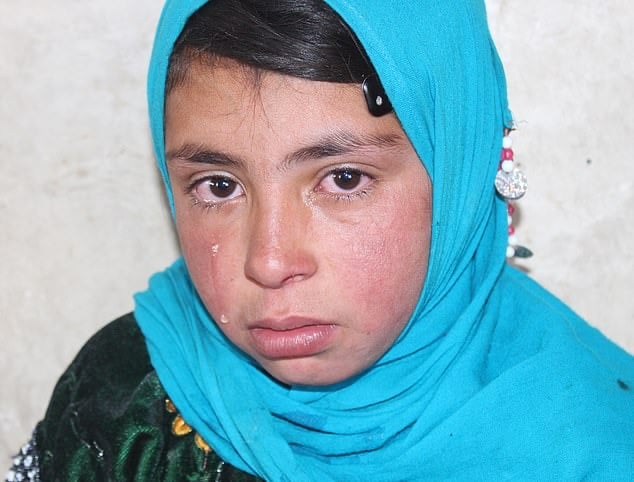
The Taliban has introduced sweeping new family legislation that contains no minimum age for marriage, effectively legalising child marriage in Afghanistan and prompting urgent condemnation from the United Nations, human rights organisations and women’s rights groups around the world.
The 31-article regulation, titled the Code on Judicial Separation of Spouses and approved by Taliban leader Hibatullah Akhundzada, was published by the Taliban’s Ministry of Justice on 14 May. It dismantles legal protections that existed before the Taliban’s return to power in August 2021, when Afghanistan’s civil code set the minimum marriage age at 16 for girls — and the 2009 Elimination of Violence Against Women law criminalised marriages involving girls under 15.
The new regulation effectively removes the previous minimum marriage age for girls by linking eligibility for marriage to puberty, which can begin as early as age nine. Under Article 5, marriages arranged for minor girls by their father or paternal grandfather are considered legally valid provided the dowry is appropriate and the spouse deemed socially compatible. The regulation acknowledges that a child may seek annulment after reaching puberty — but only through a formal court order, a process experts say will be inaccessible to the vast majority of girls in a country where women are systematically excluded from public life and legal processes.
The United Nations expressed grave concern. Susan Ferguson, UN Women’s special representative in Afghanistan, said the legislation represented “another serious development” in the erosion of women’s rights and warned it “risks normalising” child marriage. The UN Assistance Mission in Afghanistan described the regulation as operating within a “deeply unequal framework” in which men retain the unilateral right to divorce while women must navigate complex and highly restrictive judicial avenues to leave a spouse — avenues that require a male chaperone, typically the husband himself, and demand that a woman remain fully covered while proving physical injuries to a judge.
Among the regulation’s most alarming provisions is Article 7, which establishes that the silence of a “virgin girl” constitutes her consent to marriage, while the same silence from a male or a previously married woman does not. In a society where women and girls risk severe punishment for speaking out, critics say the provision renders any meaningful notion of consent entirely meaningless.
Afghan women’s rights outlet Zan Times described the law as “an effort to promote the marriage of hungry young girls” in a country where around 20 million people face acute food insecurity and five million children suffer from malnutrition. “This law,” the outlet said, “has built yet another legal prison.”
The legislation sits within a broader pattern of Taliban governance that has been condemned internationally at every level. Since regaining power, the Taliban have banned girls from attending school beyond sixth grade, barred women from most forms of employment and freedom of movement, and introduced a penal code under which husbands are permitted to beat their wives with a stick, provided no severe injury results — defined as a wound or bodily bruising requiring proof before a judge. Women found repeatedly visiting their own family’s home without a husband’s permission face three months in prison. Their relatives can also be punished. The Taliban government has rejected international criticism, saying the new decree is consistent with Islamic law.
