



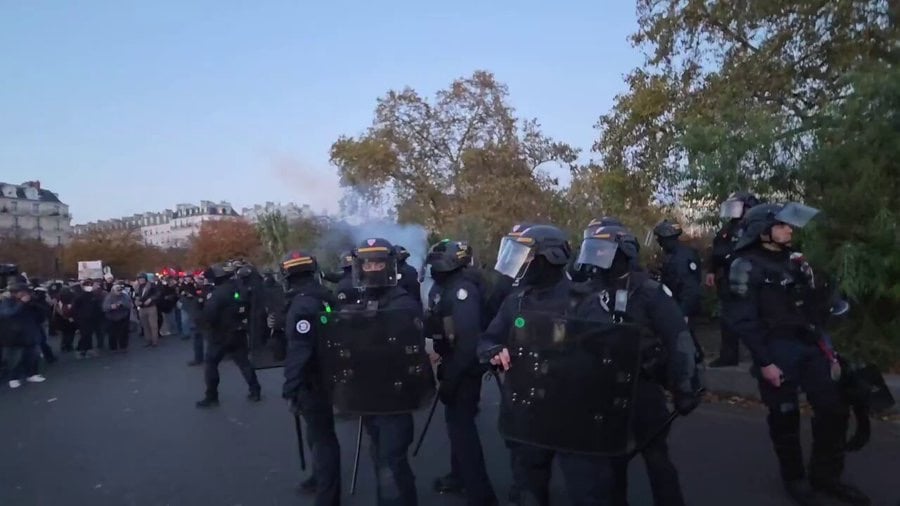
About 106,000 people took part in the “Act V” demonstrations, according to the Interior Ministry. Organisers put the figure at roughly twice that. Hundreds of arrests were reported.
Around 106,000 people joined anti-government protests in cities across France on Saturday, according to the Interior Ministry, in the fifth consecutive weekend of demonstrations. Paris saw 24,000 marchers by the official count. Organisers from the youth-led coalition claimed about 200,000 nationwide and 100,000 in the capital, and the two sets of figures have not been reconciled. Police used tear gas and charged at crowds in places, and projectiles were thrown in several cities. Interior Minister Laurent Nuñez said about 70,000 police officers and gendarmes were deployed.
Turnout and arrests
The official count is down on the previous Saturday. On 7 November, authorities recorded 146,000 demonstrators nationally and 46,000 in Paris. That makes this week’s national figure about 27% lower and the Paris figure about 48% lower. Police intelligence had forecast between 30,000 and 60,000 people in Paris alone, and authorities had expected 50 to 60 demonstrations nationwide.
By 5pm local time, at least 121 people had been detained nationwide, according to a provisional Interior Ministry count. Paris prosecutors separately reported 22 arrests, including three minors, mainly linked to alleged weapons offences, insulting officers and breaches of demonstration restrictions. Die Welt later put the total at 219 arrests alongside 137 protest actions, a figure that should be treated as unconfirmed until the ministry publishes its final tally.
Authorities described most of the demonstrations as relatively calm, despite confrontations in several cities. Police reported projectiles thrown in Paris, Marseille, Grenoble and Lyon, with fires and other incidents in some places.
Paris and the regions
The authorised Paris march ran from Place de la République to Place de la Nation via Bastille, bringing several movements together on one route. Mr Nuñez said mobile police teams were adapting to small groups trying to evade security cordons.
In Lyon, the Rhône prefecture counted around 8,000 demonstrators, while the Solidaires union estimated 15,000. Confrontations were reported around the Guillotière district as the march dispersed. A four-person BFMTV crew, made up of two journalists and two security staff, was attacked, and police stepped in to protect them, according to the prefecture. AFP and Le Parisien reported that a cameraman was chased and kicked while on the ground, and that a camera was broken and stolen. Rhône prefect Étienne Guyot condemned the attack and stressed the importance of press freedom.
Marseille drew about 3,500 people, according to the local prefecture, despite restrictions on unauthorised gatherings from Friday evening to early Monday. In Toulouse, organisers claimed 6,000 participants against the prefecture’s 1,800, and the demonstration passed without major incidents. In Bordeaux, Toulouse and Rennes, groups campaigning on children’s rights and trade-union issues did not always merge into a single procession.
A widening set of demands
The protests have taken in a growing range of causes. The Collectif Enfantiste, which campaigns for stronger measures against violence towards children and teenagers, has joined in. Its founder, Claire Bourdille, described the merging of different movements as unusual. Climate campaigners marched alongside student and union groups, and in Lyon one procession carried demands on the climate, children’s rights and conditions in schools.
Campaigners also oppose a proposed law on police use of firearms, which critics call a permis de tuer, or “licence to kill”, arguing it would make officers harder to hold to account. Supporters of stronger protection for police stress the risks officers face. The proposal has not been enacted. Yellow Vest organisers had listed 338 planned protest actions ahead of Saturday, though that is a register of planned activity and not a count of events that took place.
Investigations into police conduct
A Reuters investigation published on 14 November reported that French authorities have opened 161 investigations into alleged police violence linked to the wider wave of unrest. These are investigations and not findings against officers. Reuters also reported that nearly 7,000 minors have reportedly been detained during school blockades, and that police and intelligence sources questioned claims of a centrally organised campaign of violence. Authorities have blamed radical activists and opportunistic rioters, but Reuters’ sources said evidence of a single group directing the unrest remained uncertain.
The 17 October demonstrations, which involved more than half a million people and extensive rioting, including damage to businesses and government buildings, provide the backdrop to the heavy police presence.
Another strike on Tuesday
The CGT has called fresh strikes and protests for 17 November, focusing on wages, public services and purchasing power, according to Europe 1. Le Monde reported that the CFDT joined the public-sector strike call on 13 November, after Prime Minister Sébastien Lecornu postponed talks on public-sector purchasing power until 11 December. The government recently announced a minimum-wage increase, but unions say it does not go far enough. Mr Lecornu has cited the difficulty of reaching agreements ahead of public-sector elections.
How the movement has developed
- September: Student protests begin over school conditions and education funding.
- 17 October: Demonstrations expand amid serious unrest, with more than half a million people taking part nationally.
- 7 November: Authorities record 146,000 demonstrators.
- 9 November: The government announces a minimum-wage rise.
- 13 November: The CFDT joins the planned public-sector strike.
- 14 November: The Interior Ministry reports 55 actions and 8,900 participants at 2pm, rising to 106,000 and 121 arrests by 5pm.
- 17 November: A further nationwide strike and protest day is planned.
