



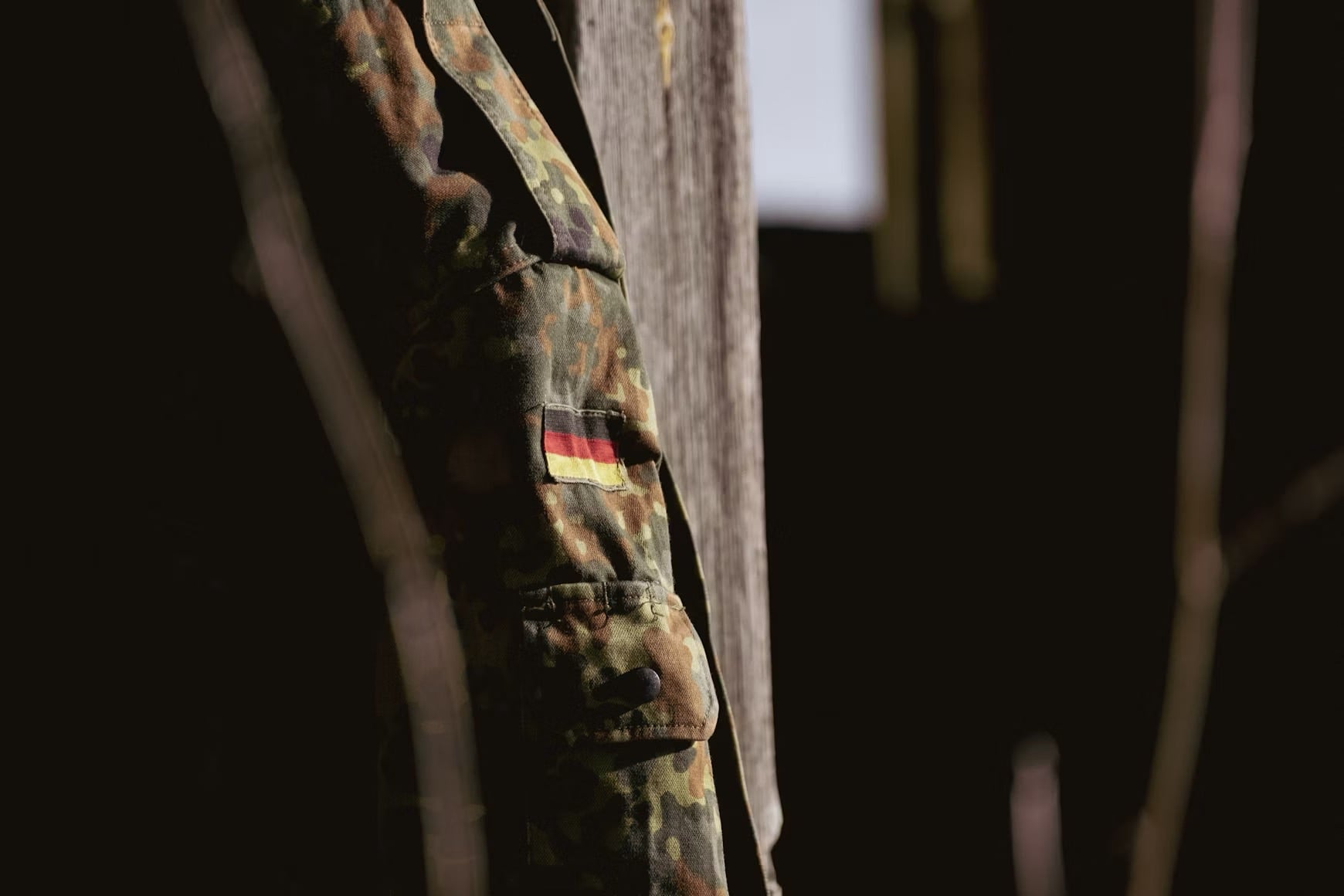
Defence Minister Boris Pistorius has promised “zero tolerance” after the first comprehensive study of its kind in the Bundeswehr. He called the findings “unacceptable” as the military tries to recruit more troops.
More than 60% of women serving in the German armed forces say they have experienced some form of sexual harassment or abuse while on duty, a major study has found. The research, by the Centre for Military History and Social Sciences in Potsdam, was released this week. Mr Pistorius said the extent of the misconduct was “unacceptable”, particularly as the Bundeswehr is trying to expand to meet global threats. “Zero tolerance applies to sexual harassment within the Bundeswehr,” he said.
What the study found
The misconduct reported ranged from sexually explicit remarks and degrading rituals to sexual violence. Of the roughly 4,000 women who responded, nearly 40% said they had been addressed with suggestive or sexualised comments. About 15% said they had been harassed with mobile phone pictures taken without their consent, some of them altered using AI. Just over 8% reported being physically attacked, and 2% said they had been victims of sexual violence.
Around 19% of male soldiers had experienced a similar form of misconduct. The study found that non-binary and gay soldiers were disproportionately affected.
Deutsche Welle published a further breakdown. It distinguishes between experiences at any point in a soldier’s service and those in the 12 months before the survey:
| Type of misconduct | Female soldiers | Male soldiers |
|---|---|---|
| Verbal sexual harassment, at least once in service | 72% | 31% |
| Verbal harassment, previous 12 months | 38% | 16% |
| Unwanted visual or image-based harassment, previous 12 months | 7% | 5% |
| Physical sexual misconduct, previous 12 months | 9% | 3% |
| Sexual violence, previous 12 months | 2% | 2% |
According to Deutsche Welle, the researchers found no statistically significant overall difference between combat units and the rest of the armed forces. It also reported that women were less affected in units where they made up more than 15% of personnel. That is an observed association, not proof that higher representation alone prevents misconduct. The Berliner Zeitung reported that women on seagoing naval units appeared particularly exposed. Deutsche Welle said younger, junior-ranking women and non-heterosexual men were especially at risk, and that the alleged perpetrators were overwhelmingly men.
The ministry said it contacted 45,000 current and former members of the armed forces and that 18% responded. It said its analysis showed the results were nevertheless representative. The SWR reported that researchers also carried out more than 60 individual and group interviews to examine reporting culture.
The minister’s response
Mr Pistorius said he was struck by the finding that women in units with a higher proportion of other women were less often affected, which he said “argues in favour of recruiting more women into the Bundeswehr”. He said some colleagues had advised him to drop the study for fear of damaging the military’s reputation. Doing so, he said, would be “turning a blind eye”, which in the long run would harm the force more. The study will now be repeated every year.
The Bundeswehr has spent billions on personnel and equipment. Military chiefs have set a target of 260,000 active-duty troops and 200,000 reservists by 2035, in the hope of avoiding conscription.
Why so many cases go unreported
Mr Pistorius expressed concern at the reluctance to report. About a third of those surveyed said they did not or would not report incidents because they did not trust their superiors to act. He said complainants should in future be given more information about the progress of their cases, after victims said they were often left in the dark while still expected to keep serving. Before the results were published, he set up a round-the-clock hotline for personnel this month, called HELP.
Euronews reported that General Carsten Breuer, Germany’s top military officer, said the study suggested the true scale of sexual misconduct was about three to five times higher than official figures. The German Armed Forces Association put the possible undercount as high as sixfold, depending on the type of incident. Only between a sixth and a third of incidents are formally reported. An ARD, NDR and WDR investigation found that, among respondents who did not report, 36% to 61% cited fear of negative personal consequences, and 44% to 59% doubted that reporting would achieve anything. The Berliner Zeitung reported that only 49% of respondents knew about the military’s counselling services.
Official reports have been rising. The Berliner Zeitung, citing the parliamentary military commissioner, reported 385 reports in 2023, 395 in 2024 and 430 in 2025, a rise of about 11.7% over two years. ARD, NDR and WDR gave a higher figure of 472 for 2025 and said numbers had risen further in 2026. The difference has not been reconciled in the reporting available.
The 34-point action plan
ARD Tagesschau reported that Mr Pistorius announced a 34-point action plan on 11 November, covering prevention, new reporting arrangements, leadership accountability and support for victims. Deutsche Welle reported that commanders’ handling of complaints will become part of their performance evaluations, and that Mr Pistorius warned officers who tolerate misconduct or deliberately fail to act should no longer hold leadership positions. A specialist investigation team is planned to support units directly, and training on sexual misconduct is to become compulsory throughout military education.
Henning Otte, the parliamentary armed forces commissioner, said the findings showed a lack of confidence in military reporting structures and called on the Defence Ministry to turn the research into real organisational change. He told ARD that senior officers needed stronger reporting arrangements and a better leadership culture, instead of relying on victims to come forward. The German Armed Forces Association backed a firm approach to perpetrators.
Cases already in the system
ARD, NDR and WDR, working with Süddeutsche Zeitung, reported on several criminal cases involving soldiers. Prosecutors have charged two soldiers over the alleged joint rape of a female colleague. The indictment was before Berlin’s Tiergarten District Court, which was deciding whether to admit it for trial. Neither man has been convicted in that case. The broadcasters also found a case in which a penal order became legally binding in October 2025 against a soldier who sexually assaulted a sleeping colleague, and a legally binding judgment over a rape during the Afghanistan deployment in Mazar-i-Sharif in 2020. The Berliner Zeitung and ARD reported that Bundeswehr investigators are examining accusations involving ten soldiers from one platoon at Medical Regiment 1 in Weißenfels, Saxony-Anhalt, in an inquiry that began in October 2026.
An earlier scandal involved Paratrooper Regiment 26 in Zweibrücken, where 55 personnel were under investigation as of January 2026 over allegations including sexual misconduct, humiliating rituals, bullying, drug offences and extremist behaviour. The Bundeswehr’s published figures at the time recorded nine soldiers dismissed, 18 disciplinary measures, 17 personnel barred from performing their duties and 16 cases under investigation by prosecutors, a snapshot and not final outcomes. On 28 January, Army Inspector Lieutenant General Christian Freuding introduced a separate reform programme for airborne units.
The recruitment challenge
The parliamentary commissioner’s annual report shows Germany had 184,194 active-duty soldiers at the end of 2025, about 3,000 more than a year earlier but well short of its longer-term target. Applications rose from 51,200 in 2024 to 55,958 in 2025, about 9.3%. The Bundeswehr recruited 25,006 people in 2025, including 11,905 voluntary-service recruits, while 21,924 left, including 4,505 who withdrew their commitment during the six-month probation period.
