



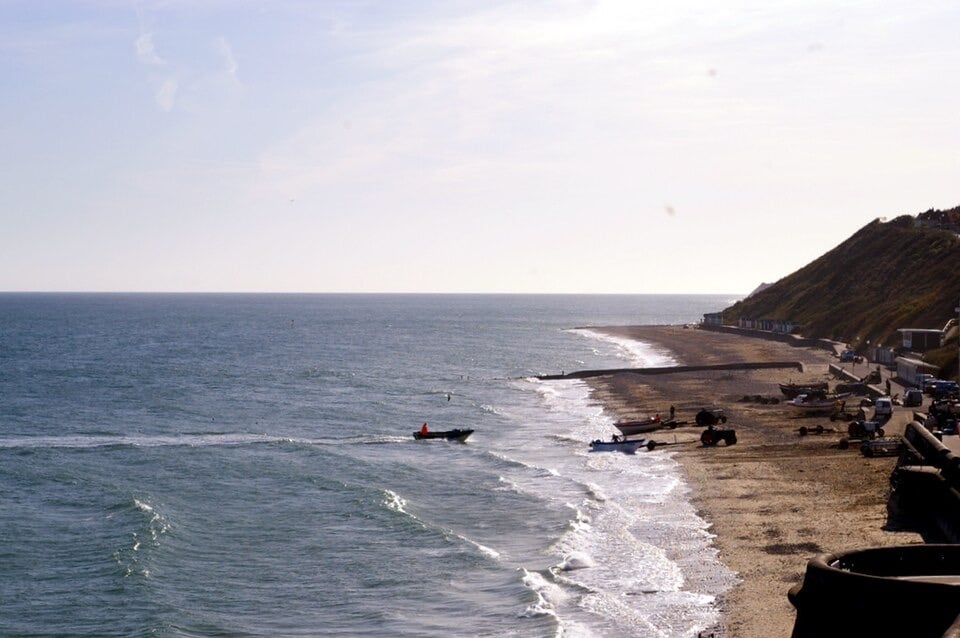
North Norfolk District Council has unanimously agreed to raise the maximum fine for littering on Cromer beach to £500, after a summer of “embarrassing” rubbish left by visitors sparked frustration among local residents and volunteers.
A popular UK beach resort is set to significantly increase littering fines after visitors left “embarrassing” amounts of rubbish on the sand this summer. Councillors at North Norfolk District Council have unanimously backed plans to raise the penalty for leaving litter at Cromer, Norfolk, from a maximum of £80 to £500. The seaside town attracts thousands of visitors each year, but a summer of mounting mess left locals “frustrated” and “embarrassed,” prompting the council to move ahead with the increase. The maximum fine for fly-tipping in the area is also set to rise, from £300 to £1,000.
How the council reached its decision
North Norfolk District Council’s cabinet formally agreed the increase on 7 September 2026, following a recommendation to raise its fixed penalty notices to the statutory maximum. The decision was made without a separate public consultation, since the report concerned only the operational level at which existing statutory penalties are set, rather than introducing a new power.
Importantly, the council is not proposing an automatic £500 charge for every piece of litter found on Cromer beach. Councillor Callum Ringer explained that enforcement officers must actually witness a littering offence before issuing a fixed penalty notice, meaning the system relies on an officer directly seeing someone drop rubbish, rather than identifying an offender afterwards from photographs or reports. The higher fine functions as an enforcement tool available in cases where an offence is witnessed, rather than a blanket penalty applied retrospectively.
The council’s earlier commitment to tougher enforcement
The move follows an earlier instruction from the council’s full council, which had directed its cabinet to ensure that fixed penalty notices for both littering and fly-tipping were set at the legal maximum where appropriate. Councillors also instructed officers to investigate fly-tipping cases where sufficient evidence exists, and to promote the Government’s “Let’s S.C.R.A.P. fly-tipping” campaign, which encourages householders to check that waste carriers they use are properly registered.
A national context
The £500 maximum is not a figure devised independently by North Norfolk District Council. Government rules introduced in 2026 gave councils across England the power to issue littering fixed penalties of up to £500. However, national policy has since moved further still: in July, the Government announced legislation raising the maximum national fixed penalty for littering to £750, and the maximum for fly-tipping to £5,000. This means North Norfolk’s move to £500 may not represent the final ceiling available to the council, as the newer national measures come into effect.
Volunteers already tackling the problem
Alongside the council’s enforcement changes, a significant volunteer effort has been under way locally throughout the summer. The Cromer Litter Pickers group now has around 45 volunteers who have been working to clear rubbish from the area. The group was established by local resident Tony Bates following particularly bad scenes on Cromer’s beach, with Bates saying the volume of rubbish left behind had left local people feeling “embarrassed.” The volunteer operation offers a striking contrast to the council’s approach: residents have effectively been carrying out regular clean-ups themselves, even as the authority moves to increase penalties for those caught deliberately dropping litter.
Wider concerns over fly-tipping
During an earlier council debate, councillors cited figures suggesting that more than one million cases of fly-tipping were reported on public highways nationally in the previous year, yet only around 1,500 resulted in court proceedings. Councillors argued that the relatively low average court penalty for fly-tipping, cited in the debate as £593, risked undermining the deterrent effect of enforcement more broadly.
The council has also raised concerns about the financial burden of removing illegally dumped waste. Under existing rules, when fly-tipping takes place on private land, responsibility for its removal generally falls on the landowner rather than the local authority, adding a further practical dimension to the council’s push for tougher penalties.
