



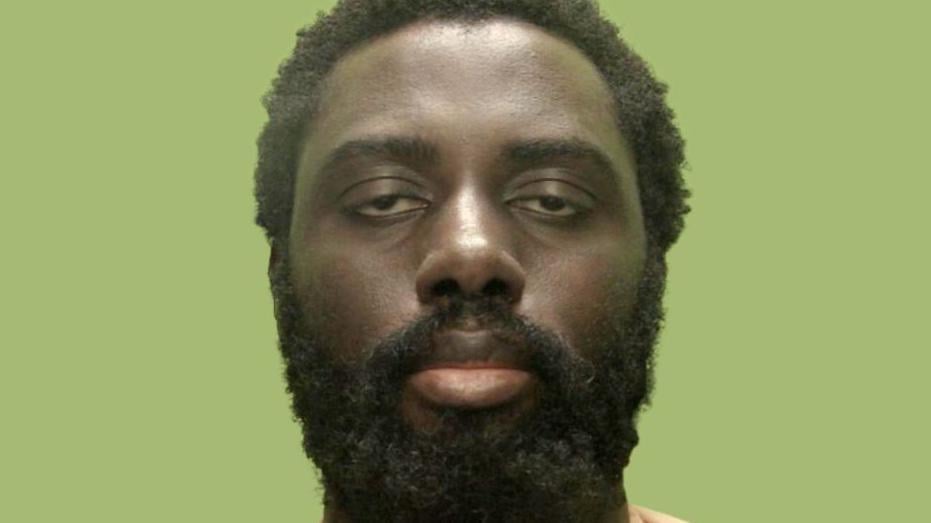
Notebooks belonging to Nottingham attacker Valdo Calocane, containing lists of explosives, references to the Manchester Arena bombing and disturbing claims about resurrecting people, were dismissed as having no evidential value by Nottinghamshire Police and kept hidden from a public inquiry for three years, it has emerged.
Notebooks belonging to Nottingham attacker Valdo Calocane, found in a holdall at his home shortly after he killed three people, contained lists of explosives that police dismissed as unimportant, a public inquiry heard today. The notebooks and an accompanying sketchbook also contained what were described as “deeply misogynistic” ramblings, references to the 2017 Manchester Arena attack, and disturbing claims by Calocane about being able to “resurrect” people and being God himself. Nottinghamshire Police did not disclose the existence of the material for three years, and it only came to light in June after lawyers for the bereaved families spotted a reference buried in a police statement.
What the notebooks contained
The inquiry heard the holdall contained two Pukka pads, an A4 Oxford pad and a sketchbook, which included maths and physics equations, pages of line drawings, references to AI mind control, and detailed notes on police and criminal evidence rules. On one page, under the heading “thoughts,” Calocane wrote bullet points listing various explosives, including TNT and nitrate fertiliser, alongside TATP, the explosive used in both the Manchester Arena attack and the 2015 Paris and 2016 Brussels attacks carried out by Islamic State extremists. The notebooks also contained references to “mea culpa.”
Rachel Langdale KC, counsel for the inquiry, said: “This piece of paper listing thoughts about a number of explosives was not identified or taken into account at the time.” She confirmed the material had never been made available to either the Crown Prosecution Service or the psychiatric experts who assessed Calocane ahead of sentencing.
How the failure occurred
Langdale told the inquiry that the notebooks were found within a holdall at the Nottingham property where Calocane had lived until the day before the killings, when he was evicted for non-payment of rent. According to a recent statement from retired Detective Superintendent Leigh Sanders, “detailed examination” of the holdall was “not prioritised in June 2023 because investigative efforts were focused on recovering the Slazenger bag he [Calocane] had with him on the evening of the attacks.” The holdall remained “unchecked” until September 2023.
Langdale questioned this approach directly, telling the inquiry: “You may consider chair that the searching of or for bags was not mutually exclusive and both should have been shortly after 13th June 2023?” She went on to explain that when the holdall’s contents were eventually examined, the further notebooks belonging to Calocane “were not considered to be of evidential value to the homicide investigation,” meaning “they were not therefore seen by Detective Sanders nor were they provided to the CPS for consideration by the psychiatric experts.”
Langdale said it would be “clear to everyone that the inquiry would be interested in this material,” describing the failure to disclose it as an “oversight by Nottinghamshire police” that was only corrected after counsel for the bereaved noticed a reference to a sketchbook and two notebooks buried within a police statement. A phone was also found in the bag but was not flagged until July 2026; when finally switched on, it was found to be a new device containing nothing.
The inquiry chair’s reaction
The revelations emerged on Tuesday, just as the inquiry was due to hear closing submissions from core participants. Her Honour Deborah Taylor, chair of the inquiry, expressed her frustration at the timing of the disclosure and ordered that any further information be handed over by the end of the year at the latest. “It is disappointing that over the break since we were last here, some evidence has emerged which ought to have been identified by core participants and disclosed earlier,” she said.
Reaction from the families
Dr Sanjoy Kumar, father of victim Grace O’Malley-Kumar, said the revelation was the latest in a long series of failures uncovered by the inquiry. “Since we lost Grace, it has been one shock after another, one failing after another,” he said. “I cannot get my head around how much has been kept from us, even the last day of summation. We’ve got people telling us that Valdo Calocane was planning to possibly bomb Nottingham. He was looking at venues and he was looking at pipe bombs.”
Radd Seiger, spokesman for the families, condemned the delay in disclosure. “It is utterly disgraceful that these notebooks have only now come to light, years after the Nottingham attacks and as this public inquiry reaches its closing stages. They are highly relevant to the criminal case,” he said. He credited the inquiry itself with uncovering the material, adding: “Thank goodness for the inquiry. It has the power to compel disclosure and shine a light into places that might otherwise not have seen the light of day. These revelations show exactly why public inquiries matter.” He continued: “But if these notebooks could have shed a different light on Calocane’s culpability, the question is unavoidable. Why on earth were they not disclosed before? What was going on?”
Questions over sentencing
Calocane, who admitted manslaughter and attempted murder, was detained indefinitely in a high-security hospital rather than prison in January 2024, after prosecutors accepted his not guilty pleas to murder on the grounds of diminished responsibility, a decision that angered the victims’ families, who had been told he would be sent to prison.
In his closing speech, Tim Moloney KC, representing the bereaved families, questioned whether psychiatric experts might have reached a different conclusion, and Calocane received a different sentence, had they known about his notes on explosives and his research into mass tragedies. Moloney said Calocane had also searched terms including Rwanda, Manchester Arena and Iraq, and had bookmarked webpages for the Albert Hall conference centre and the Theatre Royal in Nottingham, information he said “might have been worth asking him about.” He added: “No one has ever asked [Calocane] why he was researching explosives and large venues because they couldn’t,” attributing this directly to police having failed to share the information.
Moloney also described it as a “significant failure” that Professor Nigel Blackwood, the psychiatrist who assessed Calocane before sentencing, was never shown footage of the killer’s previous violent behaviour, including an assault on a police officer.
Further undisclosed violence
The inquiry also heard that additional violent assaults committed by Calocane against colleagues at warehouses were not disclosed to the inquiry team until after evidence had already concluded. Footage of one such attack, from February 2023, showing Calocane punching a colleague, was shown to the inquiry for the first time on Tuesday. Moloney said: “The footage of this was uncovered by the inquiry, not Nottinghamshire Police. Needless to say… neither Professor Blackwood nor any of the forensic psychiatrists nor, crucially, the sentencing judge have seen it.”
Police response
Nottinghamshire Police declined to answer specific questions about the notebooks. A force spokesman said: “We remain fully committed to supporting the Inquiry and will fully consider any recommendations that are made when it concludes.”
Background to the inquiry
The public inquiry into the Nottingham attacks began hearing evidence in February, questioning more than 100 witnesses over three months until May. It has already highlighted a series of significant failures, both by police, who did not arrest Calocane despite him being wanted in connection with previous attacks, and by mental health services, which released him back into the community. Students Barnaby Webber and Grace O’Malley-Kumar, both 19, and school caretaker Ian Coates, 65, were stabbed to death by Calocane, a paranoid schizophrenic, three years ago.
