



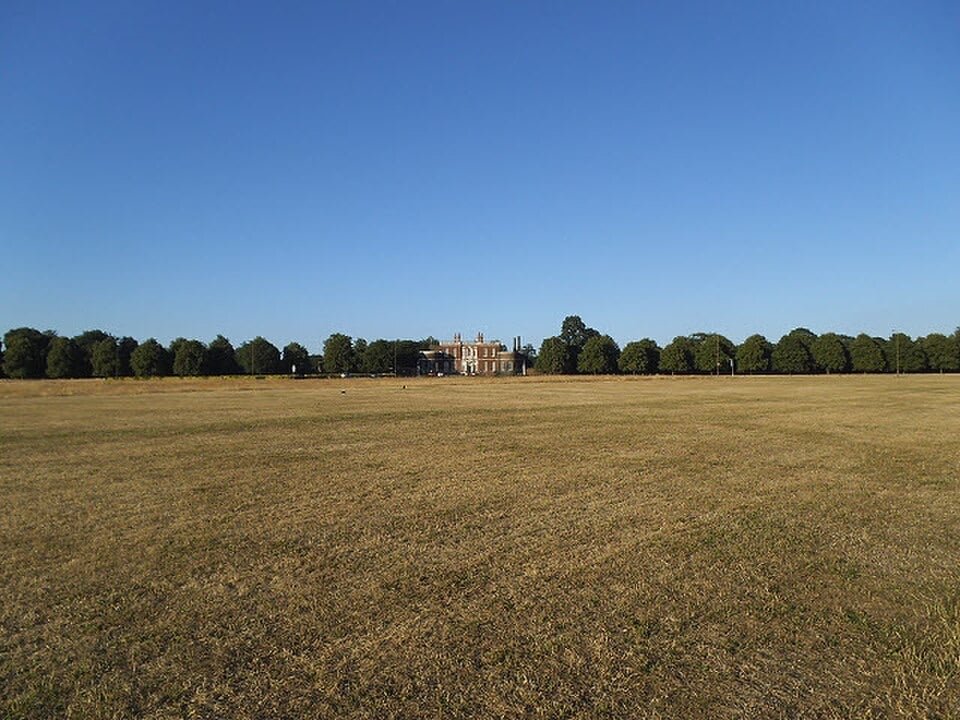
Southern Water has applied for a rare Non-Essential Use Ban that could stop businesses washing cars and filling swimming pools, as England and Wales endure their driest conditions in decades and brace for a sixth heatwave with temperatures set to reach 36C.
Car washes and swimming pools could face a water ban as Britain’s record-breaking drought worsens, with no significant rain in sight and a sixth heatwave of the summer forecast to push temperatures as high as 36C this week. Some 27 million people across England and Wales are already living under hosepipe bans as reservoir levels continue to fall following an exceptionally hot and dry spring and summer. Nine water companies have now introduced restrictions preventing customers from using hosepipes to water gardens or wash cars, patios and boats, and Southern Water is now seeking to go significantly further by applying for measures that would extend restrictions to businesses.
Southern Water seeks tougher restrictions
Southern Water, which introduced a hosepipe ban in Hampshire and the Isle of Wight on 10 July, has applied to Defra for both a Drought Order and a Non-Essential Use Ban (NEUB) covering the same areas. Submitting the application does not guarantee the restrictions will be introduced; approval from the regulator is still required.
A Southern Water spokesman explained the reasoning behind the move: “Due to the ongoing dry weather, and following the declaration of drought in Hampshire and the Isle of Wight, we have reached the trigger level requiring us to apply to Defra for a Drought Order and Non-Essential Use Ban in these areas.” The spokesman added: “These are precautionary measures and making an application does not mean they will be introduced. However, we must follow the regulatory process to protect water supplies and the environment if dry conditions persist. Protecting the River Test remains a priority, and any future drought measures would be subject to strict environmental monitoring and controls.”
If approved, the separate Drought Order would allow Southern Water to continue drawing the same volume of water from the River Test even as river flows fall.
What a Non-Essential Use Ban would mean for businesses
Unlike existing hosepipe restrictions, which primarily affect households, a NEUB would extend water restrictions directly to commercial activity. Under the ban, businesses would be prevented from washing cars and windows using hosepipes or other mechanical devices, and from filling non-domestic swimming or paddling pools.
The pool restrictions would apply to facilities limited to members of a private club, gym or association, rather than pools with general walk-in public access, and would cover pools at hotels, holiday parks and private health clubs that do not meet open public access criteria. A NEUB would additionally stop businesses watering outdoor plants on commercial premises, filling or maintaining ponds, cleaning vehicles, boats, aircraft or trains, cleaning industrial plants, suppressing dust, or operating cisterns on unoccupied buildings.
Should Southern Water’s application be granted, it would represent the first NEUB issued in the UK since one was granted to Sutton and East Surrey Water in 2006, which was itself the first since 1995, underlining how rarely such measures have historically been used.
A drought affecting most of the country
Southern Water is one of nine water companies to have introduced hosepipe restrictions this summer, alongside Affinity Water, Anglian Water, Cambridge Water, Dŵr Cymru Welsh Water, Essex and Suffolk Water, South East Water, South West Water and Thames Water. The most recent to act was South West Water, which announced restrictions last Friday covering all 1.8 million of its customers across Devon, Cornwall, parts of Dorset and Somerset, and the Isles of Scilly.
Drought was formally declared last month across the whole of Wales and more than half of England, including parts of the south-east, London, the West Midlands and the entire south-west. The Environment Agency has said further unspecified areas could be moved from “dry weather” to full drought status following a meeting of the National Drought Group. Around 16 million more people could move into drought status as public water supplies “remain under increasing pressure with continued dry weather and high demand,” the agency said.
July 2026 was recorded as England’s driest July on record, compounding months of unusually low rainfall. The UK’s ageing water infrastructure has added further strain, with billions of litres of treated water lost to leaks every day, adding pressure on supplies during the prolonged dry spell.
Sixth heatwave of the summer to bring 36C highs
Parts of the UK are set to experience their sixth heatwave of the summer this week, with temperatures forecast to reach 36C (97F) or higher. Today is expected to be slightly cooler before temperatures climb again tomorrow.
Met Office meteorologist Tom Morgan said: “We’ll probably see highs reaching the mid-30s quite widely on Wednesday, and indeed on Thursday too for England and Wales. On Wednesday, probably the Midlands, maybe a little bit further south, the M4 corridor, west of London, up towards the Midlands, is where we might have a small chance of reaching 36C in one or two spots. But Thursday at this stage looks the most likely hottest day of the week. So 36C is a fairly reasonable probability locally on Thursday and there’s a small chance it could get even higher than that.”
Reflecting on how unusual the summer has been, Morgan added: “If it wasn’t for this incredible summer that we’re currently seeing, then we’d be talking about these temperatures as being really, very unusual. But of course, we’ve had such an exceptional summer, people have become a bit used to it.”
Another record looks set to fall this week, after yesterday marked the 34th day so far this year on which temperatures exceeded 30C (86F) somewhere in the UK, equalling a record previously set in 1995. The extreme weather of summer 2026 has already included two record-breaking heatwaves in May and June, which were linked to more than 2,800 excess deaths.
Health and infrastructure warnings
The Met Office has warned of possible disruption to railway lines and power networks as the heat intensifies, and is considering whether to issue rare amber or red extreme heat warnings. “We sometimes issue extreme heat warnings, amber and red warnings, which we did back in June, so that’s under consideration at the moment,” Morgan said.
Health officials have separately warned of the impact the coming heat could have on vulnerable people, with potentially significant effects in health and social care settings and a possible rise in heat-related deaths. Yellow heat health alerts issued by the UK Health Security Agency currently cover the East Midlands, West Midlands, South East, South West, East of England, Yorkshire and the Humber, and London. The alerts are due to remain in place until 9pm tomorrow but could be extended should the hot weather persist. Morgan noted the broader risks posed by the conditions: “There is a potential for impacts, so impacts to infrastructure, things like railway lines and power networks, impacts to vulnerable people as well.”
