



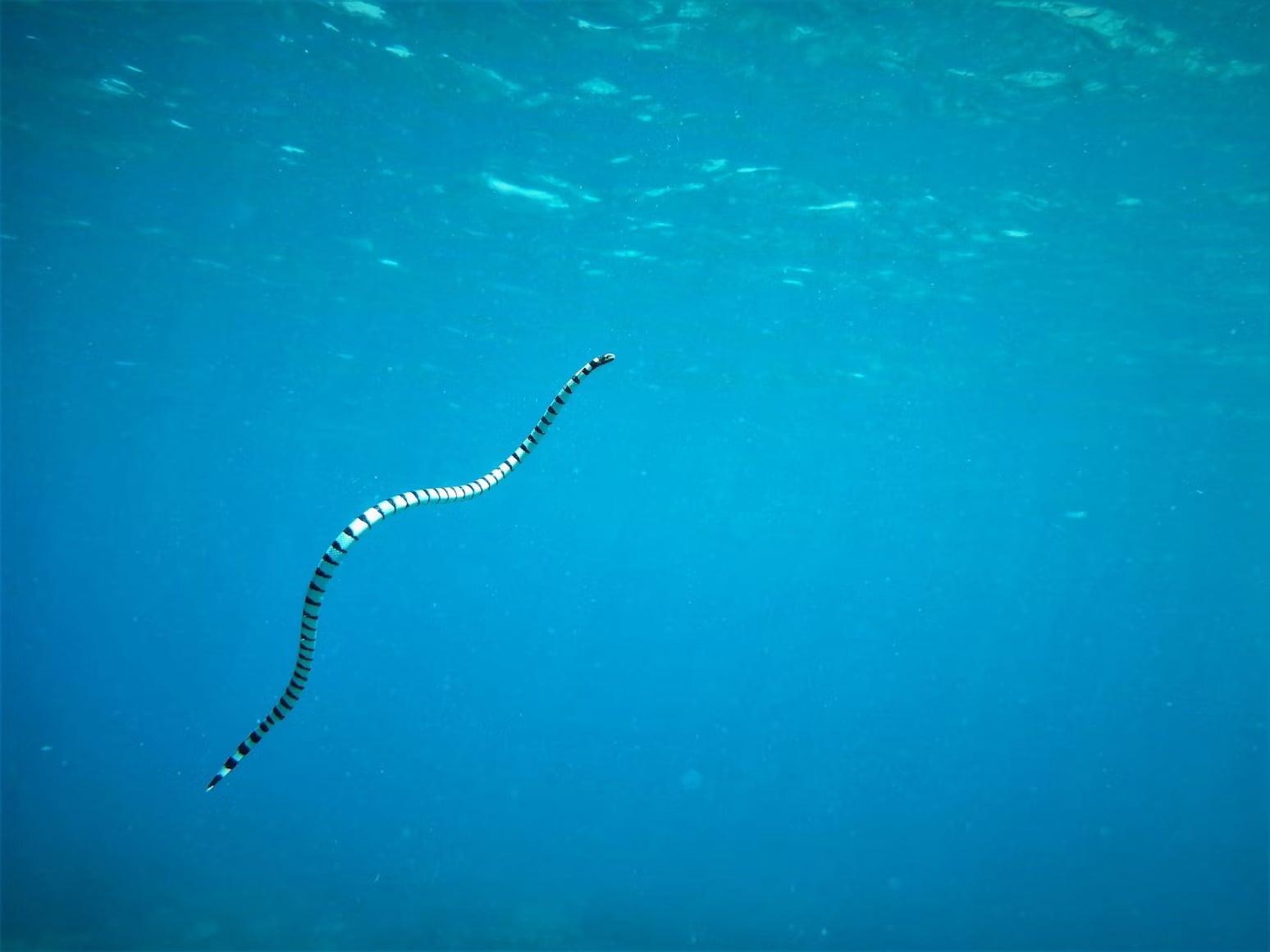
Forecasters at the US National Oceanic and Atmospheric Administration say this year’s El Niño event could rank among the strongest on record, with marine biologists warning it may carry sharks, venomous sea snakes and a host of unusual ocean species far beyond their normal range and closer to popular coastlines.
Marine scientists are warning that this year’s developing El Niño could bring an unusually high number of sharks, venomous sea snakes and other rarely seen marine species into waters where they are not typically found. The National Oceanic and Atmospheric Administration (NOAA) has forecast that the weather pattern will intensify to a moderate or strong level by autumn, with West Coast waters already recording unusually high temperatures. Experts say the shift is likely to reshape which sea creatures turn up, and where, in the months ahead.
A potentially record-breaking El Niño
El Niño occurs when the east-to-west trade winds over the Pacific slow down or reverse, allowing warm water that would normally stay near Asia to shift eastward toward the Americas instead. The pattern typically develops irregularly, roughly every two to seven years, and tends to last between nine and twelve months once established. NOAA has put the likelihood of a “very strong” El Niño between November 2026 and January 2027 at 63 per cent, and has said this year’s event “would rank among the largest El Niño events in the historical record.”
Despite the scale of the forecast, officials have stressed there is no cause for alarm. Ken Graham, director of NOAA’s National Weather Service, said no two El Niño events unfold in quite the same way, noting that “each one is unique with its own imprint on our weather.” He added that improvements in monitoring and forecasting have put the agency in a stronger position to anticipate what lies ahead and help both the public and its partner organisations prepare accordingly.
Predators following their food
Much of the expected change in marine life comes down to shifting food supplies. El Niño alters the distribution of bait fish such as sardines and anchovies, and as those fish move, so do the larger predators that rely on them, including sharks, dolphins, seals and whales, which follow their prey into new territory. Species considered most likely to expand their usual range include hammerhead, tiger, whale and oceanic whitetip sharks, along with pelagic stingrays, depending on regional water temperatures. Marine experts caution that a rise in shark sightings does not necessarily mean shark populations themselves have grown; more often, the animals are simply appearing in places where people are more likely to spot them. In some cases, warming waters can carry species hundreds or even thousands of miles from where they are usually found, drawing tropical and subtropical animals into cooler seas.
Snakes, sunfish and other unexpected arrivals
Among the more unusual visitors, warmer seas can also bring venomous sea snakes into areas where they are rarely encountered. Although highly venomous, the snakes are generally considered shy and rarely bite humans. During previous strong El Niño years, scientists have also recorded unusual sightings of jellyfish, ocean sunfish (or mola mola), flying fish, mahi-mahi, marlin, tuna and tropical reef fish well outside their typical habitats. Shifting ocean temperatures can additionally bring rare deep-sea creatures closer to the surface or nearer to coastlines, as unusual currents disturb their usual depths.
Broader effects on marine ecosystems
El Niño’s impact extends well beyond individual sightings. Warmer waters can fuel harmful algal blooms, sometimes referred to as “red tides,” which can poison marine life and lead to beach closures. Coral reefs are considered particularly at risk during strong El Niño events, since prolonged periods of high sea temperatures can trigger mass coral bleaching and weaken entire reef ecosystems. Fisheries can also suffer significant disruption, as commercially important species move away from their traditional fishing grounds, affecting both catches and the local economies that depend on them.
The pattern’s influence is not limited to the oceans. El Niño can raise the likelihood of heavy rainfall and flooding across parts of the Americas, while contributing to drought, heatwaves and wildfire conditions in regions such as Australia and Southeast Asia.
Unusual, but rarely dangerous
Despite the range of unusual marine activity expected, researchers have been keen to reassure the public that the vast majority of ocean wildlife poses little threat to humans. Scientists note that most of these animals are simply responding to shifting environmental conditions and following food or favourable water temperatures, rather than deliberately seeking out populated beaches or coastlines.
