



Confirmed cases in the Democratic Republic of Congo’s latest Ebola outbreak have overtaken the country’s deadliest ever epidemic, with officials warning that the virus is spreading faster than any Ebola outbreak on record.
The Democratic Republic of Congo’s current Ebola outbreak has grown into the second-largest in history, after confirmed cases surpassed the total recorded during the country’s 2018–2020 epidemic, which killed nearly 2,300 of around 3,500 people infected. Congolese officials said on Friday that 3,532 cases and 1,556 deaths have now been confirmed across five provinces. The outbreak, caused by the Bundibugyo strain of the Ebola virus, is unfolding in a region already strained by conflict, and no approved vaccine or treatment yet exists for this particular strain.
A record pace of infection
Only one Ebola outbreak in history has been larger: the 2014–16 epidemic in West Africa, which infected 28,616 people across Guinea, Liberia and Sierra Leone. By comparison, DR Congo’s current outbreak has expanded at an extraordinary rate, with confirmed cases climbing from 2,000 on 15 July to more than 3,500 within a matter of weeks. It has since spread beyond its original epicentre into four additional provinces, including North Kivu and South Kivu, where large areas are under the control of the Rwanda-backed M23 rebel group.
According to the Africa Centres for Disease Control and Prevention, the outbreak has also proven unusually lethal, killing around five times as many people within its first three months as previous Ebola outbreaks had reached by the same point.
“The world needs to pay much more attention”
Carl Skau, acting executive director of the UN World Food Programme, described the situation to Reuters as “the fastest-spreading Ebola epidemic that we have ever seen.” He said the scale of the crisis demanded far greater international attention than it had so far received.
Understanding the Bundibugyo strain
The outbreak is being driven by the Bundibugyo strain of Ebola, first identified in Uganda in 2007 and one of six known species of the virus. It has historically caused fewer outbreaks than the more widely known Zaire strain, and unlike some earlier large-scale epidemics, there is currently no licensed vaccine or approved antiviral treatment for it, leaving health workers reliant on isolation, contact tracing and supportive care.
The World Health Organization describes Ebola as a severe and often fatal disease, transmitted from infected animals and through direct contact with the bodily fluids of infected people. Symptoms typically begin with fever, severe headache, muscle pain, weakness and a sore throat, before progressing in many cases to vomiting, diarrhoea, and internal or external bleeding.
Vaccines in development
Despite the absence of an approved vaccine, research efforts are advancing. The WHO has identified a candidate vaccine developed by Singapore-based Hilleman Laboratories as the most promising currently in development against the outbreak. A separate vaccine targeting the Bundibugyo strain is also being developed by the University of Oxford, with the first volunteer receiving a dose last week as part of an ongoing clinical trial.
The response on the ground
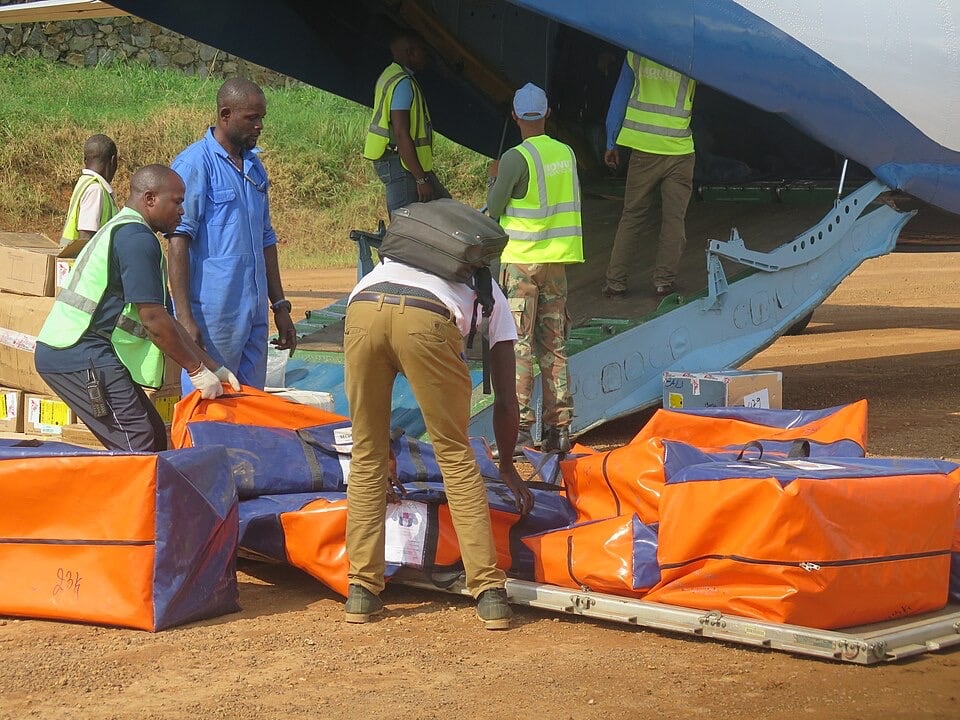
The WHO has deployed hundreds of specialists to support the Congolese response, including epidemiologists, laboratory experts, logisticians and infection-control teams. Thousands of people known to have had contact with confirmed patients are being monitored daily for 21 days, the maximum incubation period for the virus, while mobile laboratories have been set up to speed up testing in remote areas where transporting samples to central facilities can take days.
Healthcare workers remain among those at greatest risk of infection, particularly in areas where protective equipment, medical supplies and staffing are stretched thin. The outbreak has placed considerable pressure on DR Congo’s healthcare system, with hospitals having to establish dedicated isolation wards while continuing to deliver routine care.
Conflict complicating containment
The outbreak is centred in Ituri province in northeastern DR Congo, close to the borders with South Sudan and Uganda, though health officials say the true scale of the epidemic remains unclear. Its spread into areas of North Kivu and South Kivu controlled by the Rwanda-backed M23 rebel group has added further complexity to the response, amid the broader instability affecting eastern DR Congo despite ongoing peace efforts.
Public health officials say community mistrust, misinformation and insecurity have made it harder to identify cases quickly and trace contacts, allowing the virus more opportunity to spread. Cross-border movement into Uganda, South Sudan and Rwanda has also raised concerns about transmission beyond DR Congo’s borders, prompting neighbouring countries to tighten screening and surveillance measures.
What comes next
International aid agencies have stepped up public awareness campaigns, urging people to report symptoms early, avoid physical contact with those who are infected, and seek treatment as soon as illness develops. Experts have warned that the outbreak could continue to grow unless case detection, isolation and contact tracing are significantly strengthened, particularly in the conflict-affected areas where access for health workers remains most difficult.
