



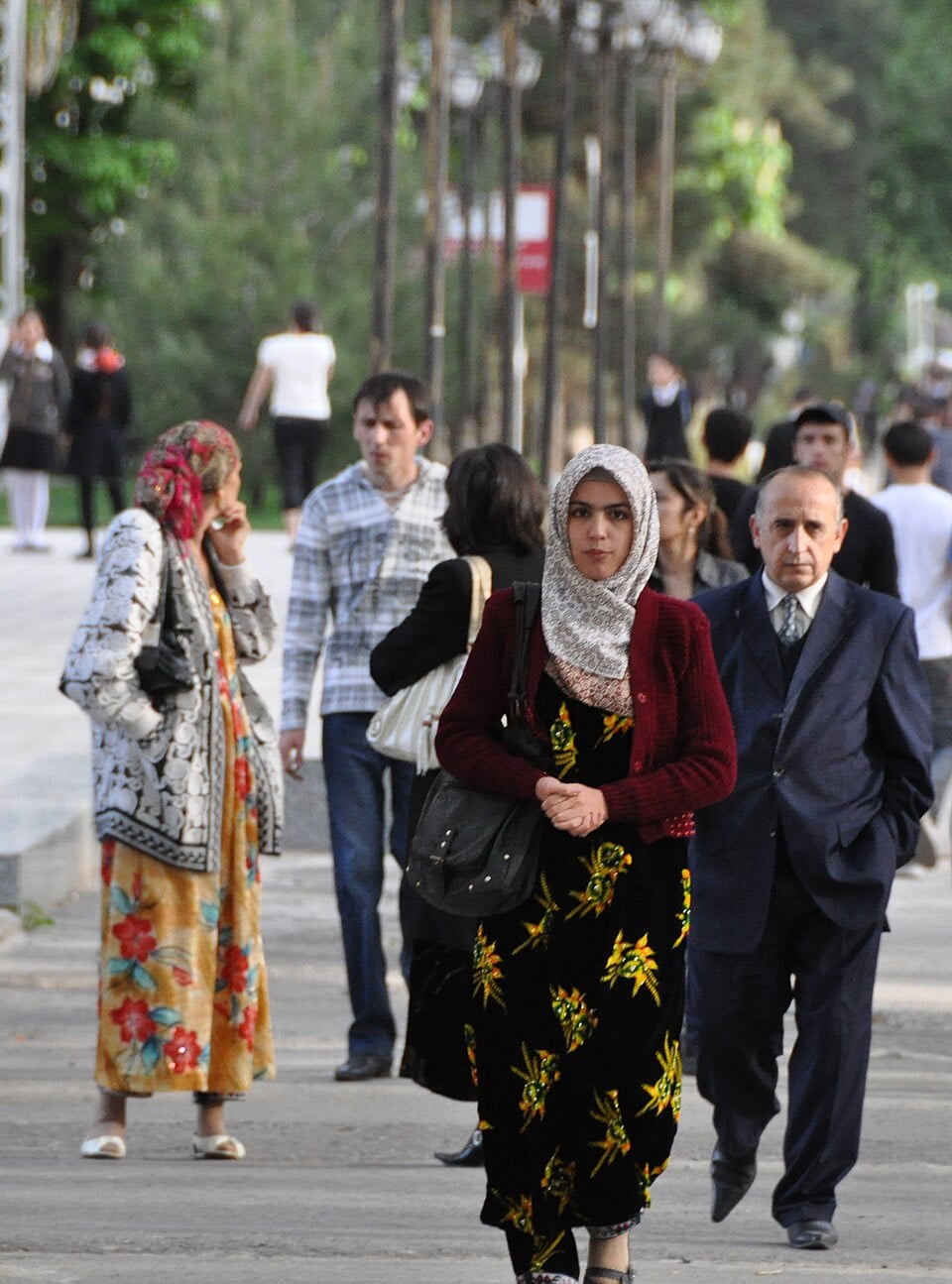
Tajikistan has introduced strict new legislation banning the import, sale and wearing of hijabs and other clothing deemed “alien to national culture,” alongside tighter controls on religious beards, as part of a long-running campaign to curb religious extremism and preserve secularism.
Tajikistan has formally banned the wearing of hijabs, describing the measure as necessary to counter religious radicalism, protect national identity and preserve the country’s secular character. The restrictions form part of amendments to Tajikistan’s Law on the Regulation of Traditions and Ceremonies, signed by President Emomali Rahmon and brought into force on 20 June 2024. Alongside the clothing restrictions, authorities have also strengthened control over the wearing of beards worn for religious reasons.
How the law is worded
Notably, the legislation does not explicitly use the word “hijab.” Instead, it prohibits the import, sale, promotion and public wearing of clothing classified as “alien to national culture,” a term officials have consistently applied to Islamic garments such as the hijab and black abayas. Because the wording is broad rather than specific, authorities retain significant discretion over which garments fall under the ban. The law also extends beyond the act of wearing such clothing, prohibiting its import, sale, advertising and public promotion as well.
Violating the restrictions can result in financial penalties, with larger fines applied to public officials and religious leaders than to ordinary citizens.
A long-running secularisation campaign
The measure forms part of a decades-long campaign led by President Rahmon aimed at reducing visible expressions of political Islam in public life. Tajikistan is a Muslim-majority country, with around 98% of its population identifying as Muslim, making the restrictions particularly notable compared with policies in many other Muslim-majority nations.
The government had discouraged Islamic dress for years before the law was formally introduced, with unofficial restrictions already in place in schools and public institutions. Authorities have previously closed shops selling clothing considered inconsistent with Tajik traditions and have run nationwide campaigns promoting what they describe as national dress. As an alternative, the government has encouraged women to wear traditional Tajik-style headscarves, which are tied behind the head, rather than Arabic-style hijabs or black abayas.
Crackdown on religious beards
Tajikistan has also intensified its campaign against beards worn for religious reasons. While there is no specific law banning beards outright, men have reported being stopped by police, questioned, and in some cases having their beards forcibly shaved.
Wider restrictions on religious life
The 2024 law introduced a series of additional religious restrictions beyond clothing and beards. These include banning children’s traditional Eid gift-collecting, limiting celebrations for pilgrims returning from the Hajj, and imposing tighter rules on the size and duration of weddings and other religious ceremonies.
These measures follow a broader pattern of similar policies pursued by Tajikistan in recent years, including discouraging the use of Arabic-Islamic names, increasing oversight of religious education, and restricting the activities of groups the government considers extremist.
Reaction to the measures
Human rights organisations have criticised the restrictions, arguing they limit freedom of religion and personal religious expression. The Tajik government, however, maintains that the measures are necessary to combat extremism, preserve national identity and safeguard the country’s secular character.
