



The Justice Department has withdrawn subpoenas seeking to force three New York Times journalists to reveal their sources over reporting on President Trump’s Qatari-gifted Air Force One jet, after a federal judge sharply criticised the government’s handling of the case.
The US government has withdrawn subpoenas that would have compelled three New York Times reporters, Maggie Haberman, Eric Schmitt and David Sanger, to testify about their sources for articles concerning President Donald Trump’s Qatari-gifted Air Force One jet. The withdrawal came in US District Court on Thursday, following a heated exchange between Judge Arun Subramanian and government attorneys, during which the judge accused the Justice Department of sloppy legal work. The move follows similar recent withdrawals of subpoenas targeting journalists at The Washington Post and The Wall Street Journal, and comes amid wider scrutiny of the Trump administration’s approach to both the press and internal government leaks.
Judge’s criticism of the government’s handling
Judge Subramanian criticised the Justice Department for failing to exhaust alternative investigative steps before attempting to compel journalists to reveal confidential sources. He said the government’s actions had turned established laws and regulations “on its head,” noting that rules governing subpoenas served on journalists are designed to ensure they are used only as a last resort. “Subpoenas are the last step, not the first step, but the last step,” he told the hearing, adding: “Subpoenas are not the first thing you do, they are the last thing you do.”
The judge became increasingly pointed in his questioning of government lawyers over the steps taken during their investigation, and said that had the case been a civil proceeding, he would have considered asking the parties to show cause as to why sanctions should not be imposed.
Judge Subramanian said he would otherwise have granted the New York Times’ request to reject the subpoenas outright, citing the legal protections in place to prevent violations of the First Amendment.
Records requests and public hearing
The New York Times had also challenged separate subpoenas seeking the phone records of several of its journalists and some of their relatives, arguing the requests were overly broad. In a letter to the judge, the paper noted that two of the subpoenas sought records dating back to 1 January, well before the publication of the articles on 8 and 9 July that prompted the grand jury subpoenas, suggesting the requests may have been intended “to forage for information about the Journalists’ source relationships more broadly.”
The hearing was held in public after the court rejected efforts by the Trump administration to keep the proceedings sealed, allowing media organisations and members of the public to observe. Senior New York Times executives, including Managing Editor Joe Kahn and General Counsel David McCraw, attended in support of the reporters.
Background: reporting on Air Force One
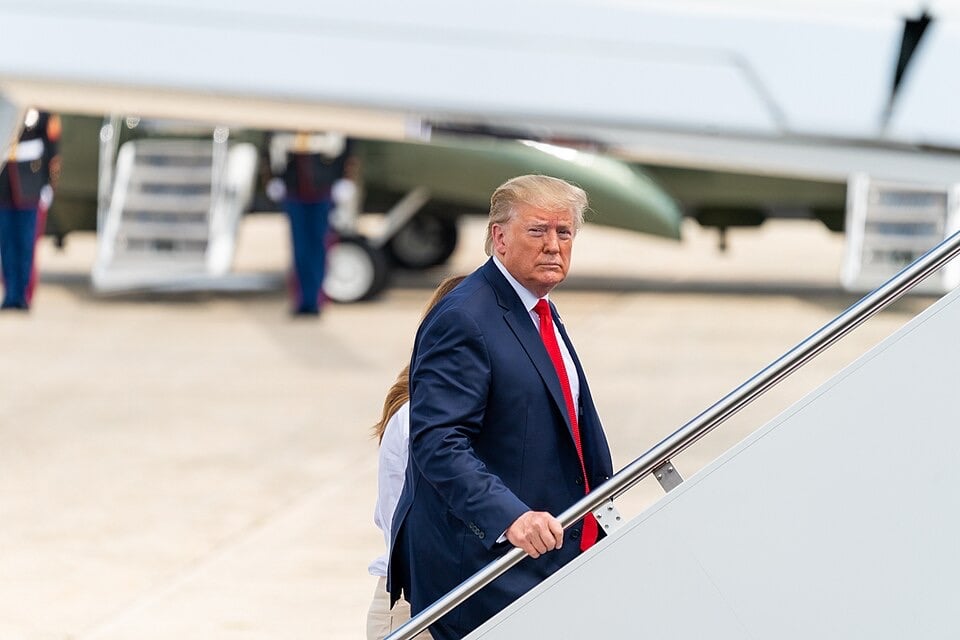
The dispute stems from New York Times reporting on Trump’s new Air Force One jet, a gift from Qatar that the administration spent $400 million retrofitting and upgrading, which recently entered service. Despite this, Trump used an older Air Force One aircraft to leave a NATO summit in Turkey earlier this month. Citing anonymous sources, the Times reported that the switch had come at the urging of the Secret Service, and that the newer jet lacked certain advanced security features found on the older aircraft, including antimissile capabilities. Trump rejected the security concerns on social media.
Wider pattern and reaction
This marks the third recent instance in which the Justice Department has withdrawn subpoenas targeting journalists following legal challenges, after similar withdrawals involving The Washington Post and The Wall Street Journal. Press freedom organisations welcomed the decision to withdraw the subpoenas in this case, but warned that the attempted use of compulsory legal powers against journalists could still have a chilling effect on confidential sources and investigative reporting more broadly.
