



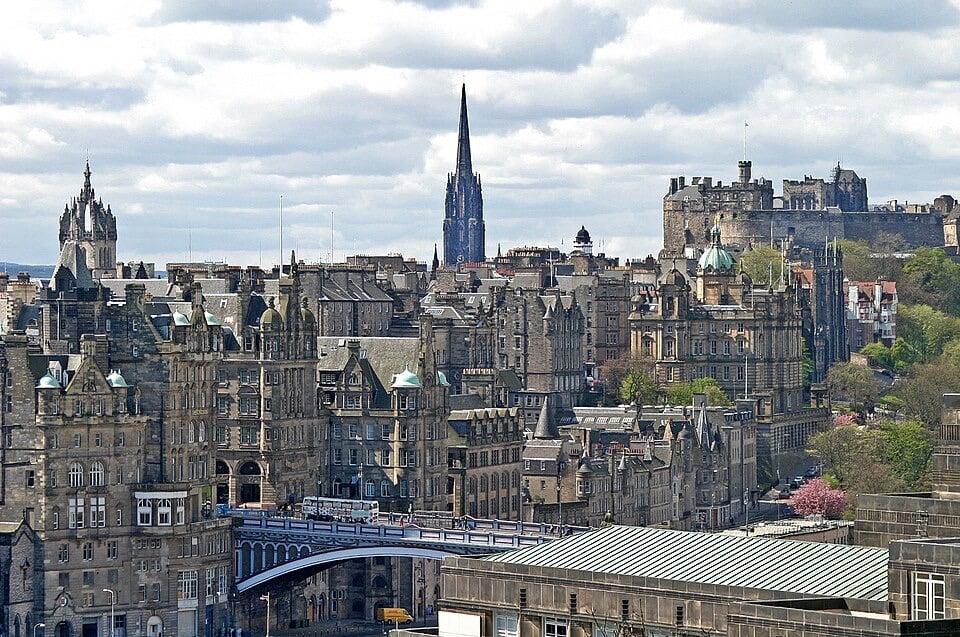
Edinburgh has become the first Scottish city to introduce a visitor levy, with business leaders warning the five per cent charge could push the capital past an affordability “tipping point” and drive tourists to stay elsewhere.
Edinburgh’s tourism industry is facing warnings of an affordability “tipping point” as Scotland’s first tourist tax comes into force. From Friday, the Labour-led City of Edinburgh Council is imposing a five per cent visitor levy on the first five nights of stays in hotels, self-catering properties, Airbnbs, bed and breakfasts, hostels and caravans. The council says the charge, added to the pre-VAT cost of accommodation, is expected to raise £50 million a year to fund public realm improvements, street cleaning and policing. However, industry groups have warned the levy risks doing more harm than good to the city’s tourism trade.
How the levy works
Edinburgh is the first local authority in Scotland to introduce a visitor levy, using powers granted under the Visitor Levy (Scotland) Act 2024. The charge applies to visitors staying in paid overnight accommodation, though it does not apply to children under 16, people who have been made homeless, or those staying in certain emergency accommodation. It covers the first five consecutive nights of a stay at the same accommodation, with no further levy payable beyond that period. Accommodation providers are legally responsible for collecting the charge from guests and passing the money on to the council.
The council has said the revenue raised will be ring-fenced specifically for projects supporting tourism and improving the visitor experience, rather than being absorbed into general council spending. It has also committed to reviewing the levy’s operation and impact once it has been in place, to assess its effect on tourism, local businesses and visitor numbers.
Industry warnings
The Scottish Tourism Alliance (STA) has warned the levy “risks more harm than good,” cautioning that it could lead to tourists taking shorter stays and spending less at local businesses. STA chief executive Marc Crothall said: “A visitor levy has always threatened Scotland’s price competitiveness and risks creating a tipping point that many visitors will be unwilling to pay, further impacting the declining market. Scotland is already one of the most expensive destinations to visit, and with VAT charged on the levy, this effectively becomes a double tax, further inflating costs for consumers.”
Businesses have also raised concerns that visitors may opt to stay in neighbouring council areas outside Edinburgh to avoid the charge while still travelling into the city for the day. Hospitality groups have further warned the levy could have a disproportionate impact during major events such as the Edinburgh Festival Fringe, when accommodation prices are already at their highest.
Garry Clark of the Federation of Small Businesses said: “Collecting the levy, explaining it to guests, training staff and becoming familiar with the new systems all add to the workload during an already exceptionally demanding period.”
Impact on events
Scottish Ballet has already cut short its December run of Cinders in Edinburgh as a result of the tax, while the Edinburgh TV Festival is relocating to Manchester next year after fifty years in the capital, citing the accommodation costs faced by its roughly 2,000 delegates.
To illustrate the scale of the charge, a room for two for the first three nights of the Fringe at Edinburgh’s Sheraton Grand currently costs £1,596 on Booking.com, including £60 in tourist tax. A city centre Premier Inn stay costing £956 carries a levy of just under £40.
Political reaction
Scottish Conservative local government spokesman Alexander Burnett said: “Today marks the start of the SNP’s great tourist tax experiment – and it is Scotland’s hospitality businesses who are being forced to take the risk. They have repeatedly warned this will bring more confusion, more costs and more red tape at the worst possible time.” Edinburgh Reform MSP Angela Ross added: “Labour’s holiday tax is making the UK’s most visited city the first to punish tourists simply for staying overnight.”
Council leader Jane Meagher defended the policy, saying: “Cities and destinations across the world have managed similar schemes for many years. The 5 per cent rate is modest.”
Other cities set to follow
Edinburgh’s move is expected to be followed by other Scottish cities, with Glasgow planning to introduce its own five per cent levy from January, and Aberdeen due to implement a seven per cent charge from April.
