


The Greater Manchester Police Federation chairman says officers are routinely cancelling rest days to guard the Prime Minister and his northern base. The Government says police funding is at a record high and that rota decisions are for the force.
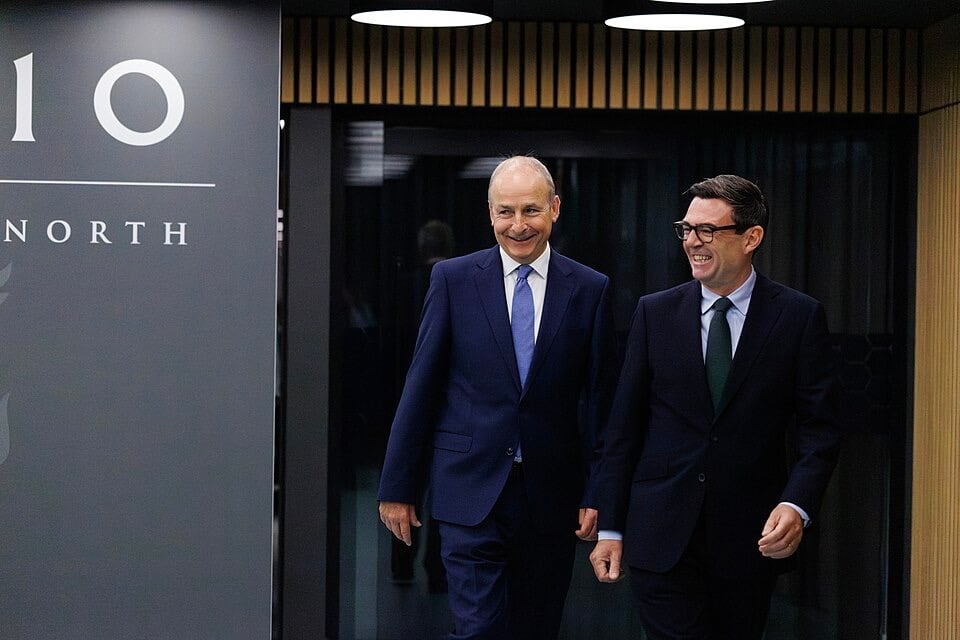
Greater Manchester Police (GMP) officers are at “breaking point” because of the demands of protecting Prime Minister Andy Burnham and No 10 North, the force’s Police Federation chairman has warned. Sgt Mike Peake said officers were routinely cancelling rest days to staff Operation Ember, the security operation covering Mr Burnham and his northern base at Heron House in Manchester city centre. He said too few officers were volunteering for the shifts, so others were being pushed into working overtime.
What the federation says
Asked whether officers had reached their limit, Sgt Peake said: “We have got to that point, yes. I think policing is broken.” He added: “While police officers are paid additional money, fatigue and burnout are causing a real issue in GMP.”
He said the extra workload was contributing to sickness, stress, anxiety and post-traumatic stress disorder. This comes on top of an average of five assaults a day on GMP officers, he said.
Police sources have also claimed that armed officers are being brought in from as far away as Scotland and housed in hotels. They say this mutual aid is adding to a predicted overspend of about £10m in the force’s budget. They further claim that Mr Burnham’s diary is often confirmed only on the Monday of the week in question, leaving commanders just hours to arrange security. Efforts are reportedly under way to train more armed officers to supplement those provided by the Parliamentary and Diplomatic Protection Unit. That unit supplies armed officers for sentry and protection duties at key government sites and works alongside GMP’s Tactical Firearms Unit.
On 31 October, Sgt Peake described a longer-term plan to recruit 60 officers specifically to cover the new security demands. The aim, he said, was for the duties to be done within scheduled working hours rather than through repeated loss of rest days. He cautioned that recruitment and training would take considerable time and money.
A Police Federation survey found that 92% of GMP officers felt they were not fairly paid for the stresses of the job. A further 34% said they often or always felt pressured to work long hours, and 50% said annual leave requests had been refused. These figures describe wider workforce pressures rather than the effect of Operation Ember alone.
Political and official responses
Shadow Home Secretary Chris Philp said: “Andy Burnham’s No 10 North vanity project is now jeopardising policing in Manchester. Police officers are being pushed to breaking point and the force has been pushed into a £10m deficit.” He added that it was “ridiculous that specialist officers are having to be shipped in from as far away as Scotland” and that crime-fighting in Manchester “will inevitably be impacted”.
A GMP spokesman said the force recognised the challenges around workload and fatigue and that officer wellbeing remained a priority.
A Government spokesman said No 10 North was “central to the Prime Minister’s commitment to bring Government closer to the communities it serves”. The spokesman said police funding this year was at a historic high of £18.5bn, with GMP receiving a cash increase of £33.3m. “While decisions about officer rotas are for the force we have also invested £2.4m to roll out measures, including psychological health checks and expansion of a dedicated mental-health crisis line,” the spokesman said.
Greater Manchester mayor Bev Craig, who succeeded Mr Burnham in August, has called for the Prime Minister’s security costs to be met nationally. She has said protecting No 10 North should not reduce the resources available for neighbourhood policing, and that talks with central government on funding are continuing.
What the oversight records show
Official papers for Greater Manchester’s Police, Fire and Crime Panel give a more detailed, and in places different, picture of the force’s finances.
- The papers put the projected police overspend for 2026-27 at £9.8m. They attribute it to several pressures, including overtime, pay, ill-health retirement and additional protective policing. The documents do not separate out the contribution of Operation Ember.
- Panel members backed Deputy Mayor Kate Green’s lobbying of ministers for funding to cover the pressures linked to the new office, including additional back-office demands.
- Officials set out seven measures to reduce the projected deficit, including monthly financial monitoring, scrutiny of staffing, overtime controls and further savings.
- Ms Green warned that further reductions could affect custody operations and the standard of emergency call-answering. The minutes do not say those services have already been affected.
- Information presented to the panel said Greater Manchester received the second-lowest percentage increase in core police grant in the country.
- Separately, the force was awaiting a £22m government grant for additional community protection after the Heaton Park synagogue attack. About £7m had earlier been recovered from the Home Office for costs linked to that incident. The papers do not say whether No 10 North costs will be reimbursed in the same way.
Questions over the cost of No 10 North
The overall cost of the operation, including security, has not been published.
- On 8 September, Cabinet Office minister Mark Ferguson told Conservative MP Gregory Stafford that setting up No 10 North was being paid for from existing departmental budgets. He did not provide the breakdown Mr Stafford had requested across security, equipment, staffing, accommodation and refurbishment (written question 25266).
- Conservative MP Mike Wood tabled a further question on 9 October asking for the estimated annual cost, including security. When the parliamentary record was last checked, it still showed the question as unanswered, despite an answer deadline of 13 October (written question 33233).
- On 27 October, Cabinet Office minister Baroness Twycross told Conservative peer Lord Udny-Lister that relevant spending would be included, where appropriate, in departmental publications such as the Cabinet Office Annual Report and Accounts. She gave no annual forecast and did not commit to publishing the full business case (HL3887).
- A separate parliamentary response said information about security at specific government locations, including how it is funded, is not routinely disclosed.
- The House of Commons Library, using a Cabinet Office Freedom of Information disclosure, itemised some initial set-up costs totalling £39,023.30. These cover £978.87 to move a replica No 10 door from London, £10,527.20 for branding, £8,799 for enabling building works and £18,718.23 for IT and communications equipment. The library said the figures exclude the ongoing cost of policing and protecting the Prime Minister.
Future plans
The Commons Library says Heron House is intended to be temporary and that No 10 North is expected to move to the First Street development in Manchester. It cites reports that around 50 civil servants were working at No 10 North by late August, with plans to expand to as many as 150. A Re:State think-tank blueprint proposed up to 300 staff within 18 months. These are projections, not confirmed staffing levels.
Timeline
- 23 July: No 10 North begins operating and hosts the revived National Economic Council.
- 8 September: A minister confirms set-up costs are being met from existing departmental budgets.
- 16 September: GMP’s financial pressures, including those linked to No 10 North, are discussed by the regional police oversight panel.
- 27 October: The Cabinet Office tells the House of Lords that spending will appear in future accounts where appropriate.
- 31 October: Sgt Peake sets out the plan to recruit 60 officers.
- 16 November: Panel papers record further financial pressures and support for lobbying over No 10 North costs.
