



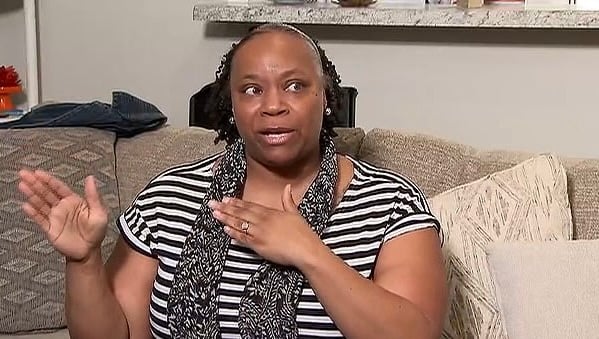
Laura Mack says an apartment complex’s AI assistant agreed she could pay on 30 November, days before she received a three-day eviction notice. The complex says it is gathering information.
A North Carolina woman says she was evicted while recovering from an operation after her apartment complex’s AI chatbot wrongly told her she could pay her rent late. Laura Mack, who lived at Colony Townhome Apartments in Raleigh, received an eviction notice on 16 November giving her three days to leave. She says she had been corresponding with an AI assistant called Olivia, which the complex introduced in December 2025, and that it agreed to a payment date of 30 November. The complex says it is gathering information and will provide an update.
What Ms Mack says happened
Ms Mack, who is not a salaried employee, says she warned the chatbot that time off to recover from surgery would delay her rent. On 8 November she received an email about past-due rent, asking: “What date works for you to pay the full $3,934.17?” She asked for an extension. The reply read: “Paying on November 30, the last day of the month, works.”
After the eviction notice arrived, she called the leasing office to say Olivia had given her an extension. She says staff told her the chatbot was wrong. She said she was disappointed because she had previously had a sit-down conversation with a member of the office staff about her situation, and she says she did not know how long she would be on medical leave.
Ms Mack says the office usually responds to maintenance requests quickly through Olivia. She reported a ceiling leak on 31 October, and a worker came within an hour. Part of her ceiling was left exposed until 12 November, and she believed the delay in fixing it meant she was being given some grace. She is now living in a hotel.
A review of the emails by a local news station found that the 8 November messages did not say they had been written by Olivia, although earlier chatbot messages were clearly labelled as automated. One of them expressed sympathy about the hole in her bathroom ceiling, which she says made her think a person had read her case. The messages were signed “Best regards, Colony Townhome Apartments”. Ms Mack says she received nothing between 8 and 16 November warning that the extension was invalid.
She went to Wake County courthouse on 19 November to try to challenge the eviction. No ruling reversing it has been reported. Ms Mack accepts that the unpaid rent was her responsibility, but says someone at the management company should be accountable for the extension she was given.
Response and calls for new rules
Colony Townhome Apartments told the local news station it was “gathering all information related to this matter and will be providing an update” next week.
Republican state senator Jim Burgin said on 20 November that he would renew his push for legislation regulating AI chatbots, raising it in the next legislative session. “Before someone evicted that lady, they should have reviewed their documents,” he said. “I think notification is one thing, and I think liability is another.” His Senate Bill 963, introduced on 4 May 2026, would require some chatbot operators to disclose that their systems are artificial where it would otherwise be unclear. His earlier Senate Bill 624 covers chatbot licensing, privacy and safety. These are proposals and not law.
Legal background
North Carolina law generally gives tenants 10 days to appeal an eviction judgment to District Court, and a landlord cannot ordinarily enforce a possession order until that period ends and a writ of possession is obtained. Whether Ms Mack has appealed has not been reported. A tenant who wants to stay while appealing may have to file a bond and make payments, though indigent tenants can be exempt from some advance payments, according to Legal Aid of North Carolina.
In a separate case in February 2024, a Canadian tribunal found Air Canada liable after its chatbot gave a customer wrong information about bereavement fares. It rejected the airline’s attempt to distance itself from the chatbot’s answer. That ruling does not decide Ms Mack’s case.
