



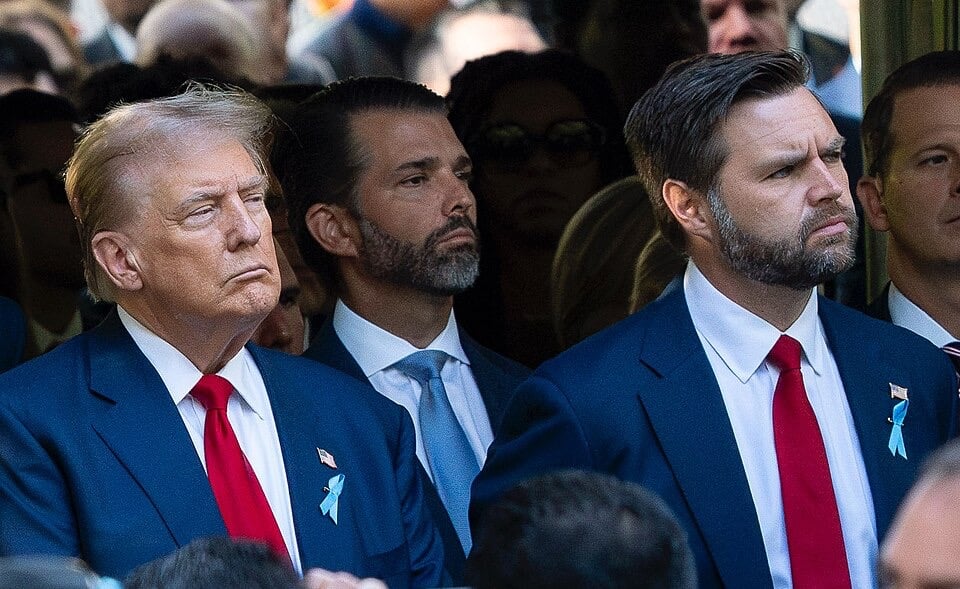
Vice President JD Vance has confirmed that nuclear inspectors will return to Iran as part of the framework deal agreed between Washington and Tehran, saying the destruction of Iran’s highly enriched uranium stockpile is “spelled out very clearly” in the memorandum of understanding set to be signed in Switzerland on Friday.
In an interview with NBC News‘ Tom Llamas, Vance confirmed the International Atomic Energy Agency and the United States would help Iran dismantle its highly enriched stockpile, describing it as “one of the core parts of the agreement.” He also said a start date for inspections could be determined at Friday’s signing ceremony. “Our expectation is that because there’s broad agreement on this, there isn’t a whole lot of disagreement on this particular issue, that should happen very quickly,” he said. “Again, if the Iranians comply, benefits will flow to them, and that’s what we hope to see. We want them to behave like a normal country. I want them to have a successful country, but only if they do what’s necessary to commit long term to not building a nuclear weapon.”
Vance confirmed the full text of the MOU would be released only after the formal signing ceremony, explaining that while the text itself was agreed, technical implementation details were still being finalised. He praised the role of Qatar and Pakistan as mediators in brokering the agreement, saying the two countries had been “very helpful” in reaching the deal.
When asked about comments from former President Barack Obama, who told ABC’s Good Morning America that he doubted any deal forged by the Trump administration would be “significantly different or a significant improvement” over the 2015 nuclear deal his administration negotiated, Vance was dismissive. “Well, first of all, I just think that’s fundamentally not right,” Vance said. “If you go back to the Obama JCPOA, what it did is it took an Iranian nuclear program that it accelerated, and it basically bribed the Iranians to stop that program. We’re in a totally different position here. The Iranian nuclear program has been completely destroyed, and what we’re saying is: Make the long-term commitment not to rebuild it, and you will get the benefits that come with that.” Trump withdrew the United States from the Joint Comprehensive Plan of Action, as the 2015 deal was formally known, during his first term.
Vance also sought to downplay conflicting signals from Iran over the Strait of Hormuz, after Iranian sources indicated Tehran planned to charge service fees for ships using the critical waterway, a position that appeared at odds with Trump’s earlier assurances that the route would be “permanently toll-free.” Vance said the deal established toll-free access during the 60-day period in which a final agreement would be negotiated, adding that some elements within Iran were attempting to “emphasize or overemphasize” certain benefits flowing to Tehran while downplaying what the United States had secured.
Iranian President Masoud Pezeshkian described the framework on Monday in a post on X as “an important step toward stopping the war and beginning negotiations,” while adding that “a final agreement has yet to take shape,” suggesting some distance remains between the parties on the final terms.
