



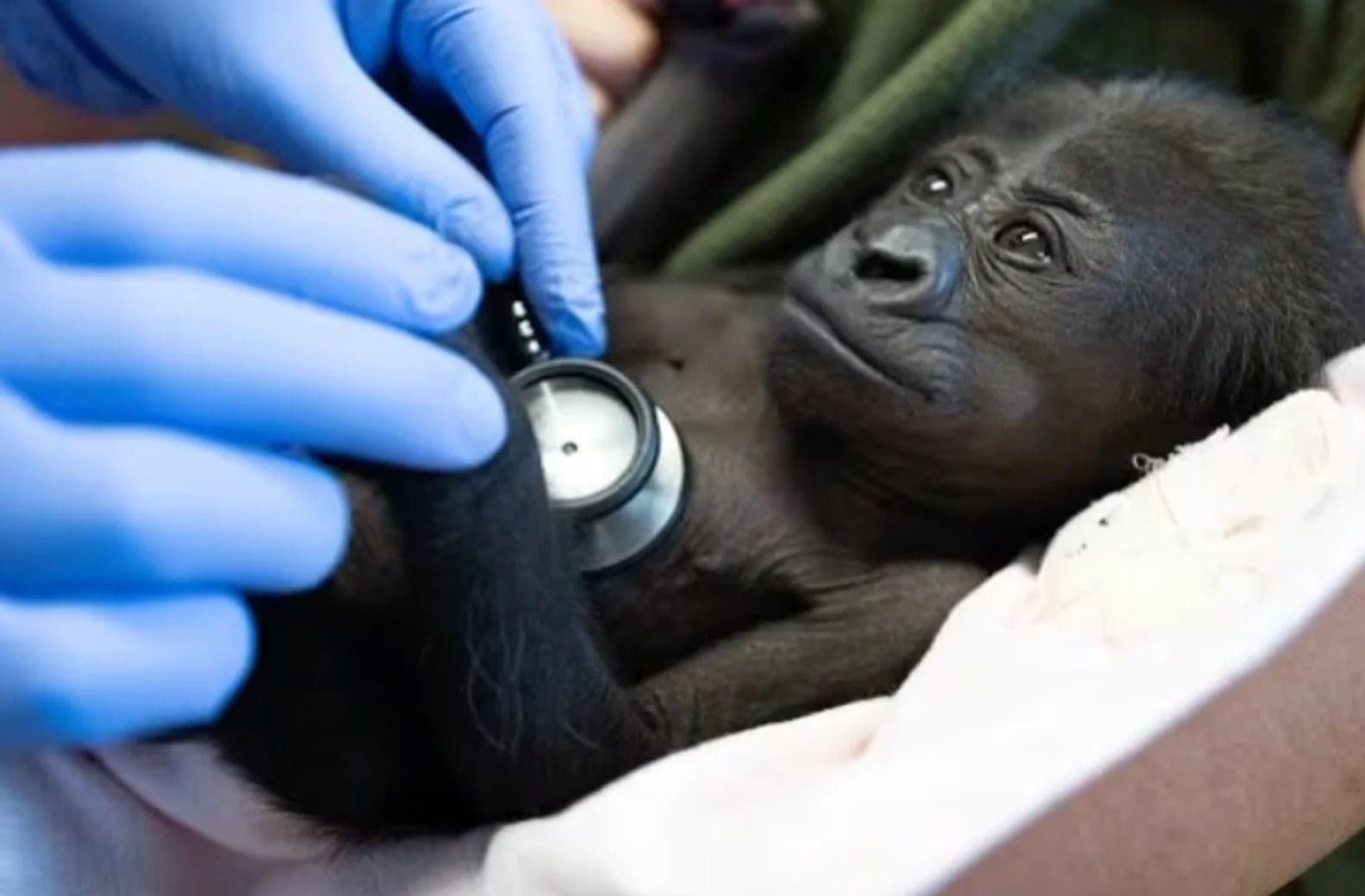
A critically endangered western lowland gorilla has given birth to a baby boy via caesarean section at Seattle’s Woodland Park Zoo, in only the twelfth such procedure ever performed on the species and the first in the zoo’s 126-year history.
Olympia, a 29-year-old gorilla weighing around 90kg, delivered the 5.4lb infant last month with the help of a combined team of human medical specialists and zoo veterinarians. The birth followed weeks of monitoring by Dr Sachita Shah, an emergency medicine physician who typically treats human patients, who had been visiting the zoo every Tuesday with portable ultrasound equipment to track the progress of both Olympia and another pregnant gorilla. “The mama gorillas were sweet and calm and getting fed blueberries while being scanned,” Dr Shah told the Sunday Times.
Tracking the gorilla pregnancy proved strikingly similar to monitoring a human one. “There are subtle differences – their arms are much longer than in a human – but the baby-face profile (is) exactly the same. Beating heart, exactly the same,” Dr Shah said.
Concerns began to mount when Olympia’s amniotic fluid appeared low and the baby’s heart had descended deep into her pelvis. Several days past her due date, the infant’s heart rate dropped, prompting Dr Tim Storms, the zoo’s director of animal health, to call in the full medical team. After Olympia was anaesthetised, doctors discovered her cervix had not fully dilated, ruling out a more straightforward delivery and necessitating surgery.
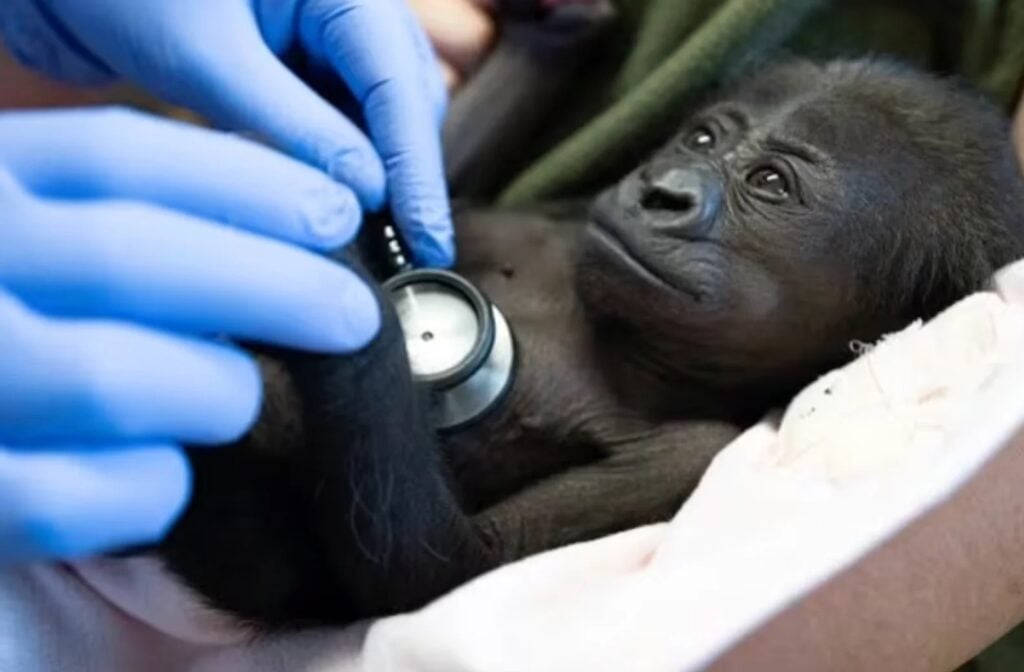
Olympia was transported to the zoo’s hospital, where the surgical team faced unfamiliar anatomical challenges. Dr Emily Norland, chief of obstetrics and gynaecology at Swedish Medical Center, had been advised by a colleague with previous experience of gorilla caesareans to use additional stitches, and deliberately avoided shaving excess fur from Olympia’s abdomen, since newborn gorillas rely on gripping their mother’s long hair. “Her skin is thicker and tougher and the uterus is longer and more narrow,” Dr Norland observed.
Once delivered, the infant was initially unable to breathe independently due to the effects of the anaesthetic. “We had to use a mask while we waited for his body to process the anaesthesia,” said Dr Andrew Beckstrom, a neonatologist and medical director at Swedish Medical Center, who recalled the surreal moment he realised the nature of his patient. “When I had a moment to pause and look down,” he said, “OK, this is not a human baby looking at me crying; it’s a gorilla. It was an incredible experience.”
Olympia’s recovery was remarkably fast. Within half an hour of waking in her enclosure, she was swinging from a fire hose, and her surgical wound had become almost invisible after just five days. Anticipating that Olympia would be unable to follow post-operative care instructions, surgeons closed her connective tissue in short, overlapping segments so that if one section gave way, others would hold. To keep her from interfering with the incision, staff used a technique common in primate surgery, painting her nails and tying distraction stitches into her hair to occupy her attention.
The birth came around a week after another of the zoo’s gorillas, 26-year-old Jamani, delivered a healthy boy naturally — a reminder that most gorilla births, following an eight-and-a-half-month gestation, require no human intervention at all. The two mothers subsequently swapped infants, with Jamani caring for Olympia’s baby while she recovered, a behaviour zoo staff said is not unusual among gorillas. Both infants share the same father, a gorilla named Nadaya.
For the medical team, the experience left a lasting impression. “After the baby woke up he grabbed my finger and held on,” Dr Beckstrom recalled. “He looked at me and I looked at him. When you talk about interconnectedness, he had that same look and the same connection that I’ve had with any other baby.” Dr Suzanne Peterson, director of the obstetrics and gynaecology residency programme at Swedish Medical Center, described it as life-changing, saying: “There is a profound biological interconnectedness. It was more similar than it was different.” Dr Norland reflected on the wider significance of the birth given the species’ status. “This endangered species is so precious, not just to Woodland Park but also to the world,” she said. Dr Shah summed up the feeling shared by everyone present: “Every person in the room who has ever held a new baby felt we are primates.”
