



The third generation of Audi’s flagship seven-seater, the Q7, has arrived with a striking decision at its core: rather than offering the multi-powertrain lineup buyers might expect, Audi has opted for a single 3.0-litre V6 diesel engine — one that can also run on vegetable oil.
The move sets the new Q7 apart from luxury rivals such as the Mercedes GL and BMW X7, both of which offer a wider range of engines and are pushing towards plug-in hybrid options. It also stands in stark contrast to cheaper Chinese “luxe” alternatives, which typically arrive as plug-in hybrids offering EV-only ranges of up to 91 miles.
The headline engine is a 3.0-litre V6 with mild hybrid plus (MHEV) technology, paired with an electric-powered compressor to deliver 295bhp and 630Nm of torque. The setup allows for short stretches of partially electric driving in urban environments, with the electric boost assisting power delivery across the speed range. Perhaps most notable, however, is that owners will be able to fill the Q7 with hydrotreated vegetable oil (HVO) — a fuel produced from waste materials such as used cooking oil, which can reduce CO2 emissions by between 70 and 95 per cent compared with conventional diesel. HVO can be used either pure or as an admixture. Audi has not yet confirmed whether additional powertrains will be added to match the breadth of petrol and plug-in hybrid options offered by the outgoing model.
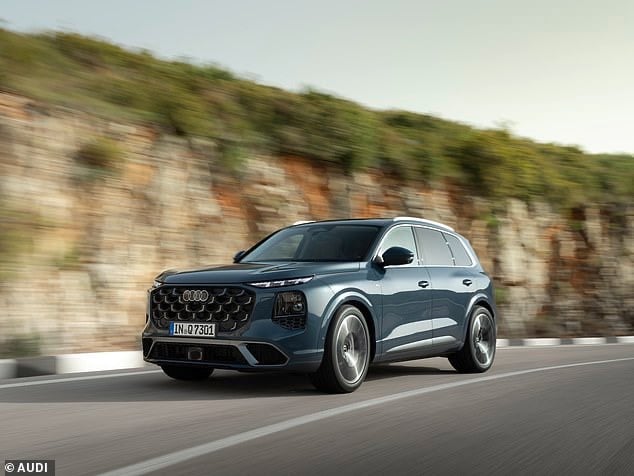
Visually, the new Q7 marks a significant departure from its predecessor. Where the second-generation model was curvy and elongated with an aggressive front end, the third generation is boxier and squarer, with straighter, hollowed-out sides, a higher bonnet and a more prominent nose — a leaner, more EV-influenced look that bears some resemblance to the Mercedes GLE.
Built on Audi’s new Premium Platform Combustion architecture, the Q7 will come with seven seats as standard, though five and six-seat configurations will also be offered for the first time, with UK availability yet to be confirmed. The six-seat option is designed to offer a “business class” experience, similar to the 4+2 layouts found in rivals such as the Hyundai Santa Fe and Jaecoo 8. Boot space ranges from 581 to 722 litres with the third row folded, expanding to 2,075 litres with the middle row also down. All seats are electronically adjustable.
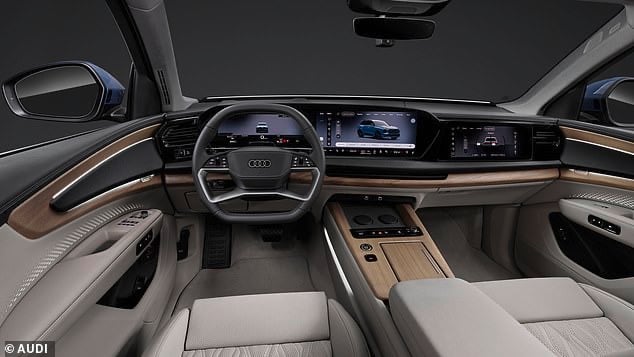
The interior has been thoroughly overhauled, featuring a panoramic sunroof with switchable transparency as a top-trim option, wireless smartphone charging, new decorative trim, contour lighting throughout the dash and doors, and indirect lighting designed to make the infotainment screen appear to “float.” The full-width infotainment display is paired with haptic steering wheel controls and rotary dials for climate functions, alongside a 4D sound system with headrest speakers that vibrate in response to low-end bass frequencies. A built-in voice assistant uses ChatGPT to answer questions while driving.
On the safety front, the Q7 introduces Audi’s digital Matrix LED headlights with what the company describes as a world-first: “advanced turn signals” that project onto the ground at night in sync with the vehicle’s indicators when activated alongside low beams. The rear features digital OLED light panels capable of displaying warning symbols in critical driving situations, including alerts when another vehicle approaches too closely from behind. A rhombus-shaped projection beneath the rear doors lights up to warn approaching cyclists or vehicles when a passenger is about to exit. The car also comes with a comprehensive suite of driver assistance technology, including a 360-degree camera, self-parking capability, and trailer manoeuvring assist and stability control for those towing.
UK sales of the new Q7 begin in July, with prices starting below £82,000 — more than £36,000 above the new Jaecoo 8 from China’s Chery Group. Audi says full details of the trim levels and pricing available to UK buyers will be confirmed next month.
