



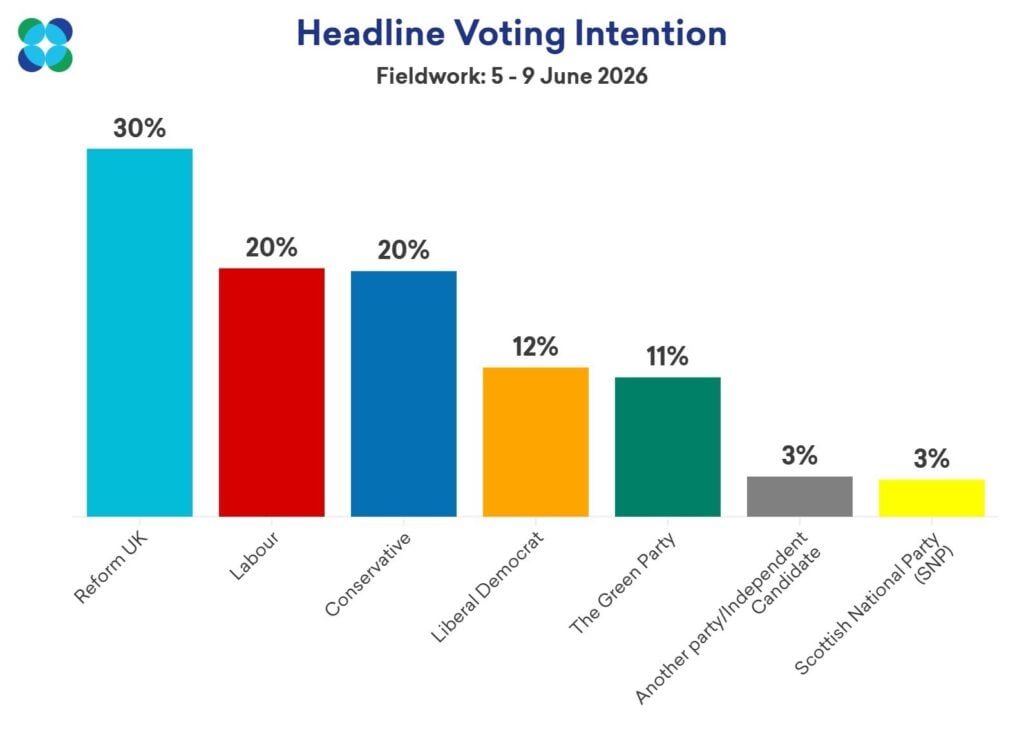
Reform UK has opened a ten-point lead over both Labour and the Conservatives in a new poll, with Nigel Farage’s party hitting 30 per cent as the two traditional parties of government slump to just 20 per cent each in a dramatic sign of the political realignment gripping Britain.
The More in Common survey of more than 2,000 adults, conducted between 5 and 9 June, puts Reform up one point to 30 per cent, Labour down two to 20 per cent and the Conservatives off one to match them at 20 per cent. The Liberal Democrats hold at 12 per cent while the Greens climb to 11 per cent. The findings are consistent with the broader polling picture: the PollCheck seven-poll moving average as of this week puts Reform at 27.7 per cent, Labour at approximately 19 per cent and the Conservatives at around 18 per cent, with aggregators across the board confirming Reform’s sustained national lead of eight to ten points.
The scale of the shift since the 2024 general election is remarkable. Reform received 14.7 per cent of the vote and five seats at that election. The party has since more than doubled its poll rating on the back of sustained voter frustration with the Labour government’s handling of immigration, tax rises and overall delivery under Sir Keir Starmer, compounded by a strong set of local election results earlier this year that added significant momentum.
Crucially, however, poll leads do not translate directly into seats under Britain’s first-past-the-post system. Seat projection models do give Reform the potential to win the most seats at a general election — with some estimates placing them as high as 245 — but a fragmented right-wing vote, with the Conservatives remaining competitive in many constituencies, limits how efficiently Reform’s support converts into parliamentary representation. Labour and the Conservatives are being squeezed simultaneously, while the Greens and Liberal Democrats continue to absorb protest votes in more affluent and urban areas.
The first major electoral test of the current polling picture comes on 18 June in the Makerfield by-election in Greater Manchester, opened by the resignation of Labour’s Josh Simons. Reform is polling strongly nationally but faces a split right-wing vote in the contest, with Restore Britain among the parties competing for similar support. By-elections frequently defy national trends due to local factors and turnout dynamics, making the result a significant but imperfect indicator of Reform’s true electoral strength.
