



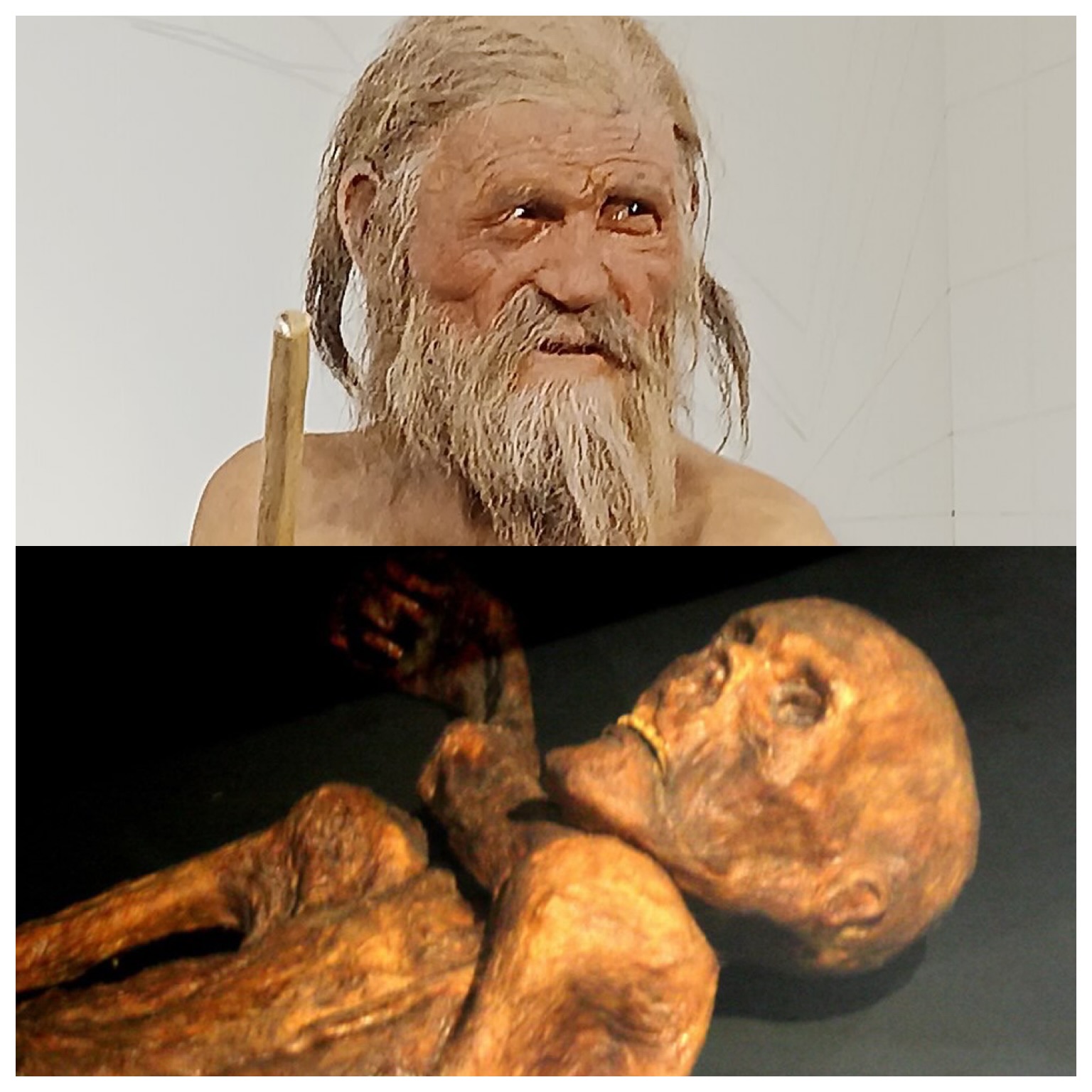
Scientists have baked sourdough bread using yeast extracted from the 5,300-year-old mummified remains of Otzi the Iceman — and the lead researcher says the dough turned out remarkably well, despite his having never baked bread before in his life.
Researchers from Eurac Research have produced the first detailed picture of the microbial community living on and inside Otzi’s remains, discovering a thriving ecosystem of ancient gut bacteria and cold-adapted yeasts that have survived for millennia inside the frozen mummy. The findings have opened up an unexpected culinary frontier, with the team already experimenting with bread-making and discussing plans to brew beer using the ancient micro-organisms.
Lead author Mohamed Sarhan said the bread experiment had gone better than anticipated, given that it was entirely uncharted territory for him personally. “We made some really good dough with it,” he said. “I’ve never baked bread before — and it showed. So the result definitely had room for improvement. But as I said, these were our very first experiments. We want to pursue this further and involve specialised research teams from the food sector in the process.”
The path to a working sourdough starter was not straightforward. When the team first attempted to cultivate the yeast in flour, nothing happened — the organisms had not yet adapted to the new environment. The researchers persisted, refreshing the starter approximately every two weeks over an extended period to allow the yeast to acclimatise slowly. “Eventually, we obtained a completely normal dough that rose within 24 hours — basically just like with ordinary yeast,” Sarhan explained.
What makes the yeasts particularly remarkable is not just their age but their biology. Otzi’s remains are kept at −6°C, conditions under which the long-term survival of micro-organisms would not ordinarily be expected. The yeasts, however, had adapted to thrive in precisely those extreme cold temperatures. “To cultivate them, we had to incubate them in the refrigerator — normally we store samples there to prevent the growth of microorganisms,” Sarhan said. Analysis also revealed that the yeasts contain both ancient and modern DNA, suggesting they may have originated from the glacial environment in which Otzi lay preserved for thousands of years rather than from the man himself.
The microbial analysis drew on samples taken from Otzi’s internal tissues, stomach contents and surface, as well as a soil sample collected from the discovery site in 1991 and kept frozen ever since. The internal samples showed that Otzi’s gut microbiome closely resembles the few known examples of gut flora from early human populations — a finding of significant archaeological value. The yeasts found on his skin and inside his stomach added an entirely unexpected dimension to that picture.
Beer is the next frontier. The team has already opened discussions with experts from Weihenstephan — one of the world’s oldest and most respected brewing institutions — about the possibility of producing a beer from the ancient yeast. “Bread is currently one of the obvious applications we’re considering; another is beer,” Sarhan said. “These are initial ideas; we’re open to further suggestions.”
Otzi was discovered on 19 September 1991 by German hikers in a melting glacier on the mountainous border between Austria and Italy. Subsequent analysis of his remains confirmed he lived during the Copper Age and died a violent death. More than three decades after his discovery, he continues to yield new scientific surprises.
