



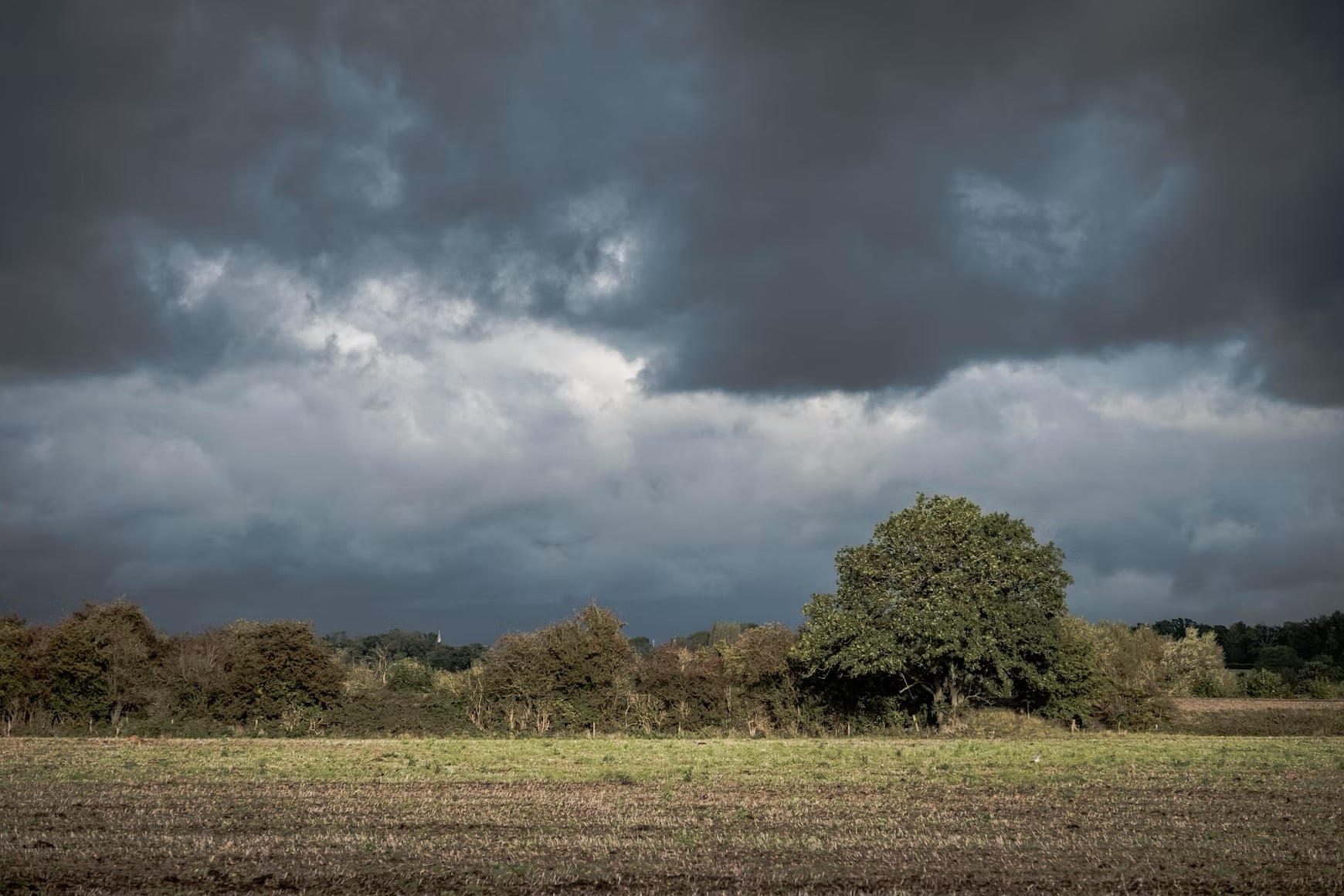
Thunderstorms, lightning and flash flooding caused widespread chaos across Britain overnight and into Monday morning, shutting parts of the London Underground, cancelling trains and setting houses ablaze — just hours before the country braces for what could become its hottest June day on record.
London was hit by around 3,000 lightning strikes overnight as severe storms swept across southern England. The London Fire Brigade responded to approximately 400 calls, including two house fires believed to have been triggered by lightning strikes and a series of flooded homes. Large parts of the South West were also battered by the storms, with hundreds of homes in Shepton Mallet, Glastonbury and Bristol losing power. A lightning strike is believed to have caused a house fire in Bristol, leaving the roof and first floor ablaze. “We are in the next road and the explosion was quite something,” one neighbour posted on social media. “We knew something had been hit as soon as it happened and then saw the smoke. I’m so glad no one was injured.” A fire service spokesperson confirmed: “Upon arrival, crews found the house well alight.”
Transport across the South East was thrown into disarray. The Circle line was suspended, the Hammersmith & City line suffered severe delays, parts of the District line were closed, and the Elizabeth line faced severe delays. Services between Heathrow Terminal 4 and Heathrow Terminals 2 and 3 were suspended due to flooding. Rail passengers across the South East also faced disruption as signalling systems were affected by the storms and precautionary speed limits were introduced. Southeastern warned passengers early in the morning: “With ongoing thunderstorms and heavy rain in a number of areas, speed restrictions have been imposed in many places across the network as a precaution. Trains are continuing to run on all routes but your journey may take longer than expected.”
The chaos comes at the start of what forecasters warn could become one of the most extreme June heatwaves ever recorded. Later today, June’s longstanding UK temperature record of 35.6C, set in Hampshire in 1976, is expected to be broken. Temperatures are forecast to surge dramatically before peaking on Wednesday and Thursday, when parts of England and Wales could approach 40C.
The Met Office has issued a rare red warning for extreme heat covering a vast swathe of the country stretching from London to Swansea and from Somerset to Birmingham, warning of “severe and significant impacts” including danger to life. The UK Health Security Agency has also issued a red heat health alert covering London, the South East, South West, East of England, East Midlands and West Midlands from 1am on Wednesday until 11pm on Thursday, warning of “a risk to life for even the healthy population” and highlighting threats to transport, power supplies, water resources and businesses.
The heatwave has already claimed at least one life. A woman in her 60s died on Bournemouth’s Southbourne beach on Monday after suffering a medical episode in the sea shortly after 2pm. Beachgoers and a beach hut owner called 999 and paramedics carried out CPR at the scene while a screen was erected around her, but she was pronounced dead at the scene. Dorset Police confirmed: “Sadly, a short time later a woman was pronounced dead at the scene. Her next of kin is aware and the coroner has been notified. The death is not being treated as suspicious.”
Network Rail has urged passengers to avoid non-essential travel on Wednesday and Thursday. Deputy chief executive Jake Kelly said: “Extreme heat can have a significant impact on the railway, so safety must come first. We’re asking passengers to check before travelling on Tuesday, and only travel if absolutely essential on Wednesday and Thursday if they are going to, from or within the red warning zone as temperatures are expected to peak.” Rail services will continue to run but at reduced speeds, as extreme heat causes rails to expand and overhead power lines to sag. There will be no rail replacement bus services during the peak of the heatwave.
Transport for London also warned of probable disruption, with chief operating officer Claire Mann saying services on lines sharing overground rail network infrastructure — such as the Overground and the Elizabeth line — were “likely to be more affected.” Dozens of schools across the country have already altered their plans, with some closing entirely on Wednesday and Thursday. The Buckingham School in Buckinghamshire will shut on both days, and schools across Wiltshire, London, Berkshire and Surrey have announced closures or reduced hours. National Association of Head Teachers general secretary Paul Whiteman said school leaders “will certainly be doing all they can to mitigate the effects of such high temperatures.” Road users are also being warned to be cautious, with the AA saying gritters could be deployed to spread stone chippings on roads at risk of softening.
