



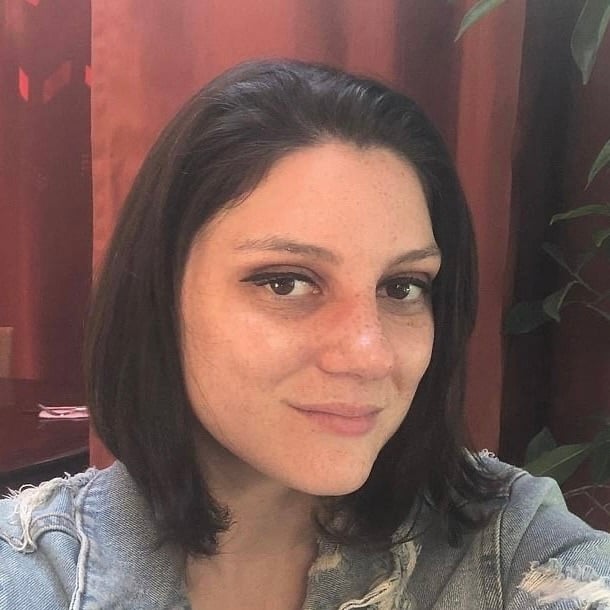
The 2022 death of a 34-year-old physicist who had publicly warned that her life faced danger whilst researching anti-gravity propulsion has generated renewed scrutiny following independent findings submitted to Congress suggesting the officially-classified suicide may have involved foul play—a conclusion that forms part of broader pattern where eleven individuals connected to America’s space or nuclear programmes have died or mysteriously disappeared since 2022.
Amy Eskridge was found dead from an apparent self-inflicted gunshot wound in Huntsville, Alabama on 11 June 2022, yet neither police nor medical examiners have publicly released investigation details—an absence of transparency that conspiracy theorists cite as evidence of cover-up alongside Eskridge’s own statements in a 2020 podcast interview where she described escalating harassment including alleged directed energy weapon attacks that left burns across her body.
“I need to disclose soon, man. I need to publish soon because it’s like escalating. It’s getting more and more aggressive,” Eskridge stated during the interview, describing incidents spanning four to five years that intensified over the final twelve months before her death. “Over the past 12 months, it’s been escalating, like more aggressive, more invasive digging through my underwear drawer and sexual threats.”
The physicist co-founded The Institute for Exotic Science with her father Richard Eskridge, a retired NASA engineer specialising in plasma physics and fusion technology, explicitly to create what she termed a “public-facing persona to disclose anti-gravity technology”—a strategy predicated on the theory that visibility provides protection. “If you stick your neck out in public, at least someone notices if your head gets chopped off,” she explained. “If you stick your neck out in private… they will bury you, they will burn down your house while you’re sleeping in your bed and it won’t even make the news.”
What Retired Intelligence Officer’s Investigation Concluded About Eskridge’s Death
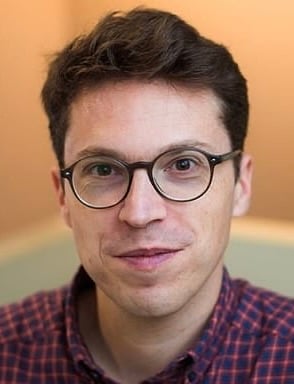
Before dying, Eskridge contacted retired British intelligence officer Franc Milburn for assistance investigating the harassment and intimidation she claimed to be experiencing. Milburn’s subsequent inquiry—whose findings were submitted to Congress by independent investigators in 2023—concluded that her death was not suicide, identifying what he characterised as sustained campaign to either prevent her research or debilitate her sufficiently to halt her work.
“Somebody was after her work. It was either one of two main objectives. One, trying to get her to desist from doing the work, and two, with these attacks, with the harassment, and the directed energy weapon attacks, to actually stop her, to debilitate her so she was unable to do the work,” Milburn stated on radio programme Coast to Coast AM—a platform specialising in paranormal and fringe science topics whose editorial standards differ substantially from mainstream investigative journalism.
The directed energy weapon allegations—claims that unknown assailants targeted Eskridge with powerful microwave devices causing physical burns—represent the sort of extraordinary assertion requiring extraordinary evidence that neither Milburn’s investigation nor subsequent congressional submission appears to have provided through verifiable documentation, forensic analysis, or independent witness corroboration. Medical professionals and weapons experts note that microwave burns would produce distinctive tissue damage patterns that pathologists could readily identify, yet no such findings have entered public record.
The Institute for Exotic Science has apparently closed since Eskridge’s death, with its website no longer accessible—a development that conspiracy theorists interpret as suppression yet which could equally reflect that the organisation depended on her leadership and lacked resources or personnel to continue operations after losing its co-founder.
The Pattern of Scientist Deaths That May or May Not Constitute Actual Pattern
Since Eskridge died in 2022, five other researchers connected to space or nuclear programmes have died including two murdered in their homes—statistics that national security observers cite as alarming yet which require contextual assessment against baseline mortality rates, occupational hazards, and the substantial population of scientists working in these fields across the United States.
Nuno Loureiro, 47, was assassinated at his Brookline, Massachusetts home on 15 December 2025 by Claudio Neves Valente, identified by authorities as a former classmate from Portugal. Whilst a former FBI official and independent investigators have speculated that Loureiro’s revolutionary work in nuclear fusion plasma physics may have made him target of broader conspiracy, police have not released evidence suggesting motives beyond personal grievance that prompted Valente—now facing murder charges—to travel from Portugal to execute the attack.
Astrophysicist Carl Grillmair, 67, was shot on his California front porch on 16 February 2026 around 6am local time. The Los Angeles County Sheriff’s Department charged Freddy Snyder, 29, with murder, carjacking and burglary—conventional criminal charges suggesting opportunistic violence rather than targeted assassination related to Grillmair’s work on NASA’s NEOWISE and NEO Surveyor infrared telescope projects tracking asteroids using physics applicable to military satellite and missile tracking systems.
NASA scientists Michael David Hicks and Frank Maiwald, both affiliated with the Jet Propulsion Laboratory, died from undisclosed causes at relatively young ages—Maiwald at 61 in 2024 just 13 months after leading research on detecting extraterrestrial life signatures, and Hicks at 59 in 2023 a year after leaving JPL where he contributed to the DART Project testing asteroid deflection capabilities. NASA’s JPL has not commented on either death nor responded to Britannia Daily inquiries about the nature of their work preceding their deaths—a silence that whilst frustrating for journalists seeking information does not inherently indicate suspicious circumstances given privacy considerations surrounding employee medical matters.
Pharmaceutical researcher Jason Thomas was found dead in a Massachusetts lake on 17 March 2026 after disappearing three months earlier whilst testing cancer treatments at Novartis. Local police have stated no foul play is suspected—an assessment that if accurate would classify Thomas’s death as tragic accident or suicide unrelated to his professional work despite the coincidental timing relative to other scientist deaths that conspiracy theorists have assembled into narrative of systematic targeting.
Why Missing Air Force General’s Disappearance Anchors UFO-Related Speculation
The disappearance of Air Force General William Neil McCasland on 27 February in New Mexico has generated particular speculation given Tennessee Congressman Tim Burchett’s claims to WABC radio that McCasland served as “the gatekeeper for the UFO stuff” whilst possessing substantial nuclear secrets accumulated through his career overseeing Air Force Research Lab operations at Wright-Patterson Air Force Base—a facility that UFO researchers have linked to alleged extraterrestrial technology study since the 1947 Roswell incident.
Four additional missing person cases—nuclear research workers Steven Garcia, Anthony Chavez, and Melissa Casias alongside NASA scientist Monica Reza—have been connected to McCasland through his AFRL oversight role. Reza, 60, disappeared whilst hiking with friends in California on 22 June 2025 shortly after becoming director of the Materials Processing Group at JPL, where she worked on Mondaloy, a space-age metal for rocket engines whose funding McCasland reportedly approved during his Wright-Patterson tenure.
The three nuclear facility workers were all last seen walking out of their homes without phones or keys—circumstances mirroring McCasland’s own disappearance in ways that investigators cite as suggesting coordination yet which could equally reflect coincidental similarity in how individuals experiencing mental health crises or planning voluntary disappearances might behave when abandoning their previous lives.
The difficulty with assessing whether these eleven deaths and disappearances constitute genuine pattern or mere statistical clustering lies in establishing appropriate comparison baselines. Thousands of scientists work on space and nuclear programmes across the United States; determining whether eleven fatalities or vanishings over four years significantly exceeds expected mortality and missing person rates requires actuarial analysis accounting for age distributions, occupational hazards, regional crime rates, and mental health factors that casual observation cannot provide.
Conspiracy theories thrive precisely in these evidentiary gaps where absence of definitive explanations permits speculation to flourish unconstrained by requirements for proof that criminal investigations or academic peer review would demand. That Eskridge warned of threats before dying, that Loureiro and Grillmair were murdered in their homes, and that McCasland disappeared under mysterious circumstances provides narrative foundation that true believers cite as validation whilst sceptics note that two solved homicides with identified perpetrators facing charges hardly constitute evidence of coordinated assassination programme targeting American scientists.
The UFO and anti-gravity technology dimensions add layers of intrigue that simultaneously make stories more compelling for certain audiences whilst reducing credibility amongst mainstream security analysts who note that if such revolutionary propulsion systems existed and posed genuine threats justifying scientist elimination, the targeting would presumably extend to far larger populations of researchers than eleven individuals over four years. The US government’s denial that alien technology exists—a position conspiracy theorists dismiss as expected cover-up—reflects either genuine truth or remarkably disciplined information security given the substantial numbers of military, intelligence, and scientific personnel who would require involvement in concealing such discoveries.
For Eskridge’s family and the relatives of others who have died or vanished, the conspiracy theories provide alternative narratives to random violence, suicide, or accidents that might offer meaning to losses that senselessness renders unbearable. Whether these narratives reflect suppressed truths or comforting fictions that grief generates remains unknowable absent evidence that four years of speculation, congressional submissions, and independent investigations have failed to produce in forms that criminal justice systems or mainstream journalism can validate.
