



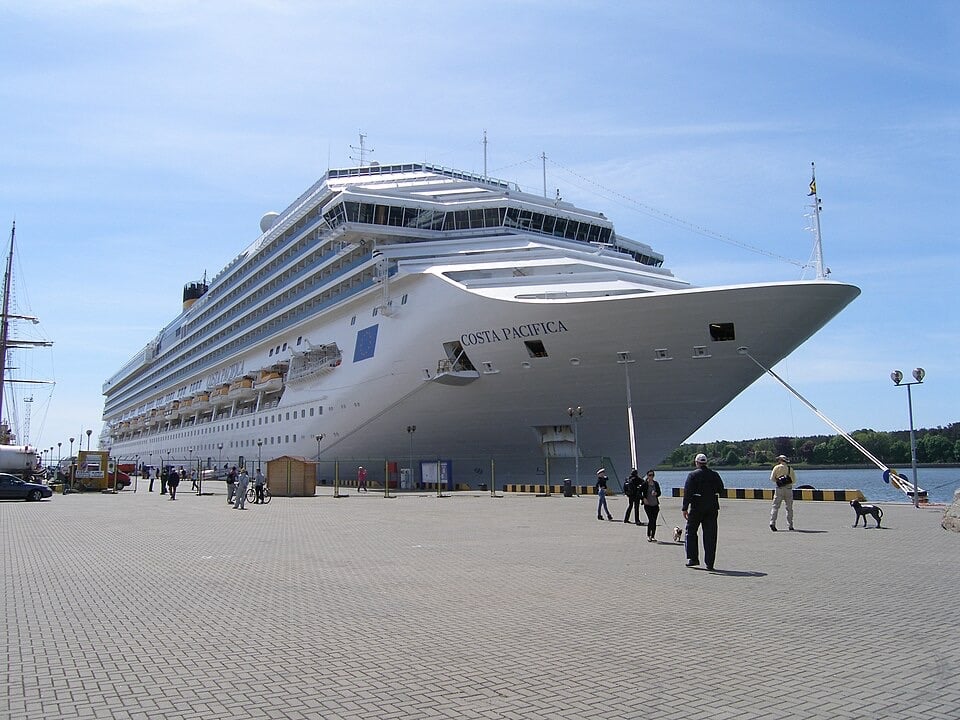
The world’s cheapest major cruise line is threatening to charge passengers £51 if they are caught taking food from its buffet back to their cabins — a policy that has divided holidaymakers and sparked a heated debate about where the line falls between hygiene rules and heavy-handed enforcement.
Costa Cruises, the Italian operator owned by Carnival Corporation, has introduced a strict €60 cleaning charge for guests found with buffet food in their rooms, pool areas, public lounges or other indoor spaces. A notice sent to passengers on board one of its ships, reported by Crew Center, states that “all food must be consumed exclusively in designated dining areas,” citing health, hygiene and the prevention of food contamination and parasites as justification for the rule.
In a statement to Fox News Digital, the cruise line said the communications had been shared “as a preventive and deterrent measure, in line with our existing policies, to encourage guests to responsible behaviour,” adding that it remained “committed to ensuring a high-quality, safe and enjoyable experience for all guests on board.”
The policy sits in notable contrast to the line’s broader reputation for affordability. Costa is best known for offering full-board Mediterranean, Caribbean and South American cruises with cabins starting from as little as £50 per night, with unlimited drinks packages available from £59 for two nights. Its largest vessels, the Costa Smeralda and Costa Toscana, carry up to 6,500 passengers each and between them serve around 50,000 plates of food a day — including, reportedly, more than 500kg of pasta and 1,500 bottles of prosecco consumed daily on each ship.
Reaction to the new rule has been sharply divided. Some passengers welcomed the crackdown. “I say good, nothing worse than plates and cups lining the hallways, it’s not a good look. Never ever in 47 cruises needed to take food to my cabin,” wrote one commenter under a Costa Instagram post. Another agreed, arguing that other cruise lines should follow suit given the number of passengers who leave plates stacked in corridors or outside neighbouring cabin doors. A third, however, was sceptical the fine would solve the problem: “Now other people are going to place their plates in front of their neighbours’ doors to avoid the fines.”
Critics of the policy were equally vocal. “Let people eat where they want. Collect the dishes. It’s a cost. Bear it and pass it on to the cruiser. But these kinds of policies with policing never end well for the company,” argued one passenger. Another defended the habit of taking food to a balcony cabin as a reasonable alternative to eating in crowded dining rooms. “I do it all the time so I don’t have to sit with loads of people coughing everywhere and have a relaxed meal. Plus sometimes there are no decent seats free,” they said.
Costa Cruises appears to be the only major cruise line currently enforcing this specific rule. The company has navigated reputational challenges in the past, most notably following the 2012 grounding of the Costa Concordia off the Italian island of Isola del Giglio, in which 32 people died and the ship’s captain — who abandoned the vessel before the evacuation was complete — was later jailed for 16 years for manslaughter.
