



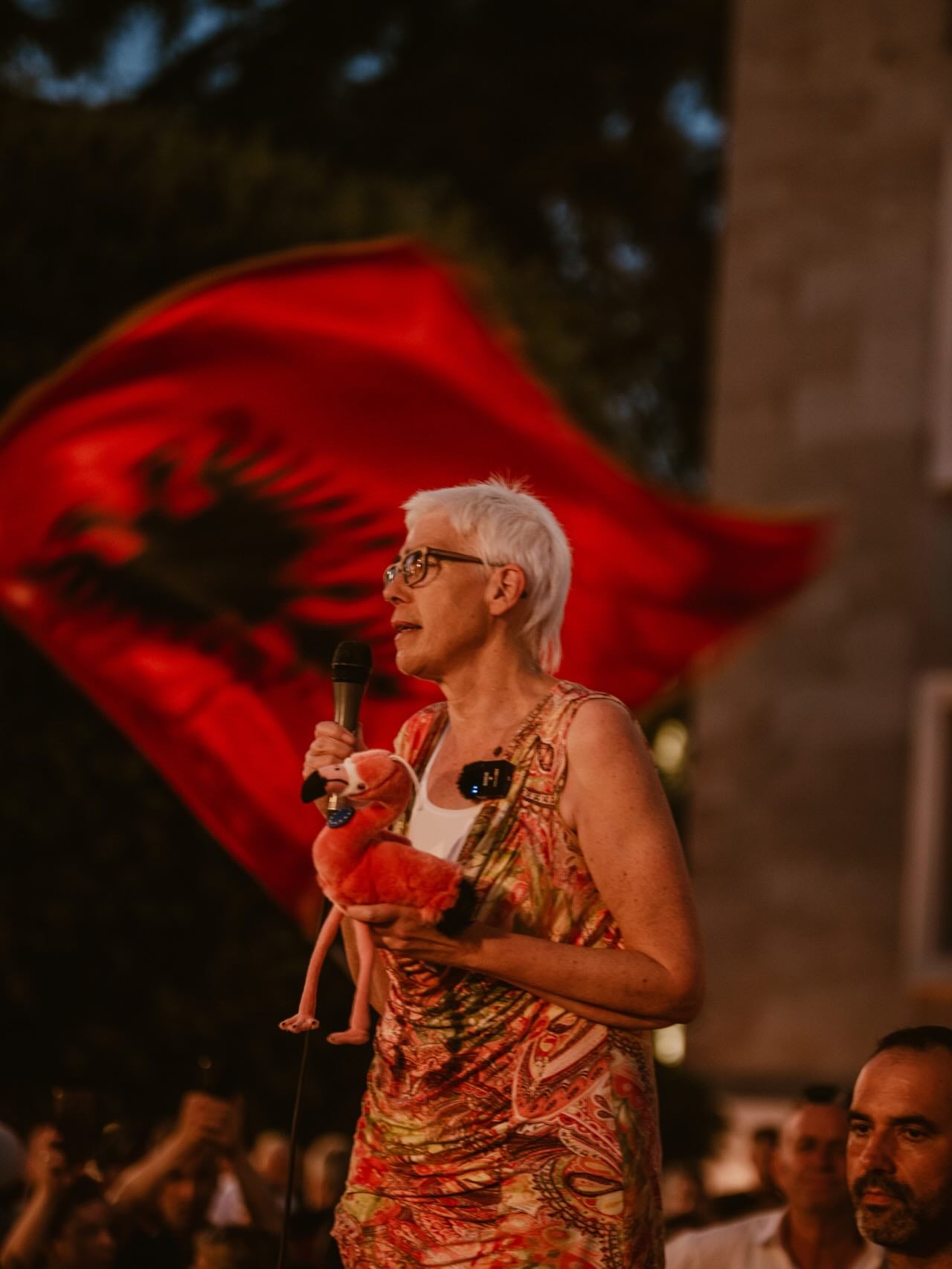
In an exclusive interview with Britannia Daily, German Green MEP Jutta Paulus says many Albanians feel they are watching their homeland “sold off to billionaires”, explains why she opposed Albania’s Protected Areas Law amendments and discusses what the controversy could mean for the country’s EU ambitions.
‘Watching Their Homeland Sold Off To Billionaires’
A senior Member of the European Parliament has said many Albanians feel they are watching their homeland “sold off to billionaires”, arguing that, in her view, the country’s environmental protests have evolved into a broader movement centred on democracy, the rule of law and corruption.
Jutta Paulus, a German Green MEP who recently visited Albania, has emerged as one of the most prominent voices in the European Parliament on the controversy surrounding the country’s Protected Areas Law. She told Britannia Daily that what she observed on the ground reflected something far more fundamental than an environmental dispute.
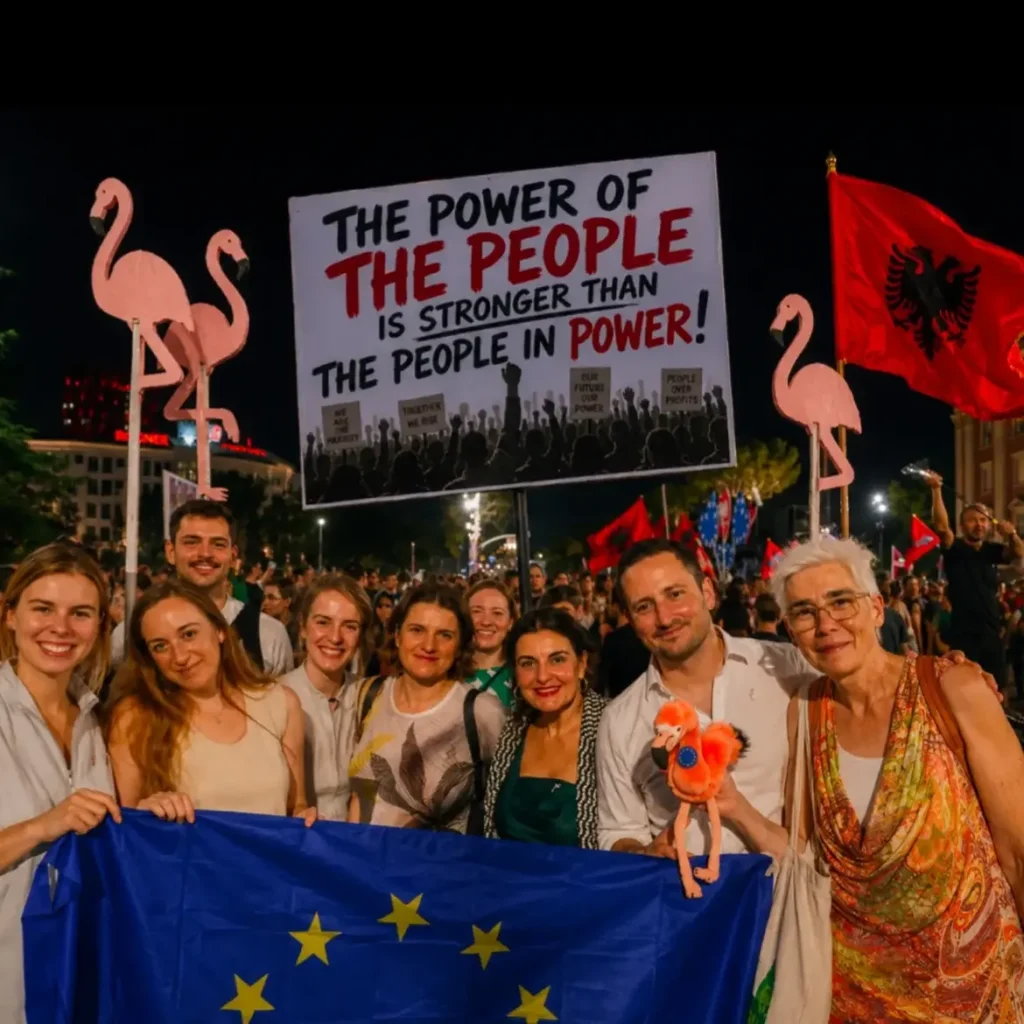
“These protests also reflect a strong desire for an Albania that can join the European Union as a democracy founded on the rule of law and free from corruption,” she said. “Environmental protection may have sparked the Flamingo Revolution, but the underlying problems run much deeper.”
Her comments suggest that, in her view, the demonstrations have evolved beyond environmental concerns into a broader debate about governance, democracy and the rule of law in Albania.
“People on the ground are struggling with inadequate social systems while watching their homeland and natural environment being sold off to billionaires,” she told Britannia Daily. “But it’s inspiring that environmental concerns are the trigger for the biggest demonstration in Albania since 1991. It is also not surprising as the natural heritage of a country belongs to its citizens.”
Albanian Ministers Used An Approach ‘Not The Way We Negotiate In The EU’
Paulus told Britannia Daily she was “quite taken aback” when she received an email from Taulant Balla and Bora Muzhaqi urging her not to support Amendments 4 and 17 of legislation concerning the Protected Areas Law. The amendments formed part of a European Parliament resolution expressing concern about recent changes to Albania’s Protected Areas Law and their potential impact on protected ecosystems.
“To demand that a Member of Parliament votes in a certain way is not the way we negotiate in the EU,” she told Britannia Daily. “Had they asked for an exchange on topics and offered information only, I would not have become so suspicious.” She added: “Even though at first glance it may appear to be standard lobbying, it is unusual that a non-EU country is attempting to influence the voting behaviour of MEPs.”
‘Construction Started Before Any Impact Assessment Was Conducted’
At the centre of the dispute are Albania’s 2024 amendments to its Protected Areas Law, which were criticised by a large majority in the European Parliament last month — a majority that Paulus stressed extended well beyond her own political group. “Members from all political groups are active on the topic,” she told Britannia Daily, adding that the resolution and the Greens’ amendment on environmental concerns “were adopted by a large majority.”
Paulus rejected the Rama government’s argument that criticism of the amendments is based on misinformation. “We have seen with our own eyes what the Amendment to the Protected Areas law means in Vjosa-Narta,” she said. “Construction works have started before any impact assessment was conducted. But also legally speaking the changes in the law are far-reaching and that’s why the European Parliament has criticised with a large majority last month.”
She expressed particular alarm at provisions granting exemptions to “five star resorts and the corresponding infrastructure,” describing this as a “cheque blanche to virtually all construction which could take place even in the most protected areas.” Paulus also pointed to other projects — including the proposed Vjosa airport and developments on Sazan Island and the Zvërnec peninsula — as examples of what she called “structural issues” in Albanian governance.
‘It Is Unacceptable That SPAK’s Work Is Being Obstructed’
Asked about recent corruption investigations in Albania, Paulus said arrests and prosecutions of corrupt officials are part of how democratic societies should function, adding that “the crucial part is the ability of citizens and societies to defend their rule of law.”
She added: “I trust the upcoming investigation by the independent body SPAK.”
Paulus said it was unacceptable if Parliament obstructed SPAK’s work by refusing to lift politicians’ immunity, adding: “It is unacceptable that their work is obstructed by parliament not lifting the immunity of corrupt politicians.”
Albania Among EU Front-Runners — But Reforms Cannot Wait
Despite her serious concerns, Paulus acknowledged Albania’s considerable progress toward EU membership. “Albania is among the front-runners for EU accession and the Albanian citizens can be very proud of what they have achieved,” she said.Paulus also said the recent developments surrounding Vjosa-Narta had brought Albania into a more prominent position on the European Parliament’s agenda, adding that the outcome of investigations by SPAK and the European Commission would be important as the accession process continues.
The European Parliament’s resolution, adopted with support from members across all political groups, acknowledged significant progress while registering clear alarm at recent developments.
Asked what Albania must now prioritise to maintain its accession trajectory, Paulus was direct. “As raised by the Resolution by the European Parliament, the Amendments on the Protected Areas Law need to be repealed,” she told Britannia Daily. “SPAK investigations will show what else will be needed.”
While expressing concern over the Protected Areas Law, Paulus said she trusted the European Union’s accession process, describing it as a long-established system supported by experts who have worked on enlargement for many years.
◆ EXCLUSIVE INTERVIEW ◆
© 2026 Britannia Daily.
This interview is original reporting by Britannia Daily. Publications quoting or reproducing any part should credit Britannia Daily and link to the original source.
Why Albanians Are Protesting: The Background
The demonstrations, commonly referred to by supporters as the Flamingo Revolution, began after Albania’s Parliament approved amendments to the country’s Protected Areas Law, allowing exceptions for strategic tourism developments inside protected landscapes.
Environmental groups involved in campaigning against the amendments argue they weaken legal protections for some of Albania’s most important ecosystems by allowing exemptions for certain tourism developments inside protected areas. Critics say the legislation could open the door to large-scale construction in environmentally sensitive locations, including areas around Vjosa-Narta, Sazan Island and the Zvërnec peninsula. The controversy intensified after concerns were raised over proposed luxury tourism projects linked to Jared Kushner’s Affinity Partners. Critics argue the developments have become symbolic of wider concerns over transparency, governance and environmental protection.
The protests have since grown beyond environmental issues, with demonstrators calling for stronger rule of law, greater government accountability and action against corruption.
“Environmental protection may have sparked the Flamingo Revolution, but the underlying problems run much deeper,” Paulus told Britannia Daily.
◆ EXCLUSIVE INTERVIEW ◆
© 2026 Britannia Daily.
This interview is original reporting by Britannia Daily. Publications quoting or reproducing any part should credit Britannia Daily and link to the original source.
