



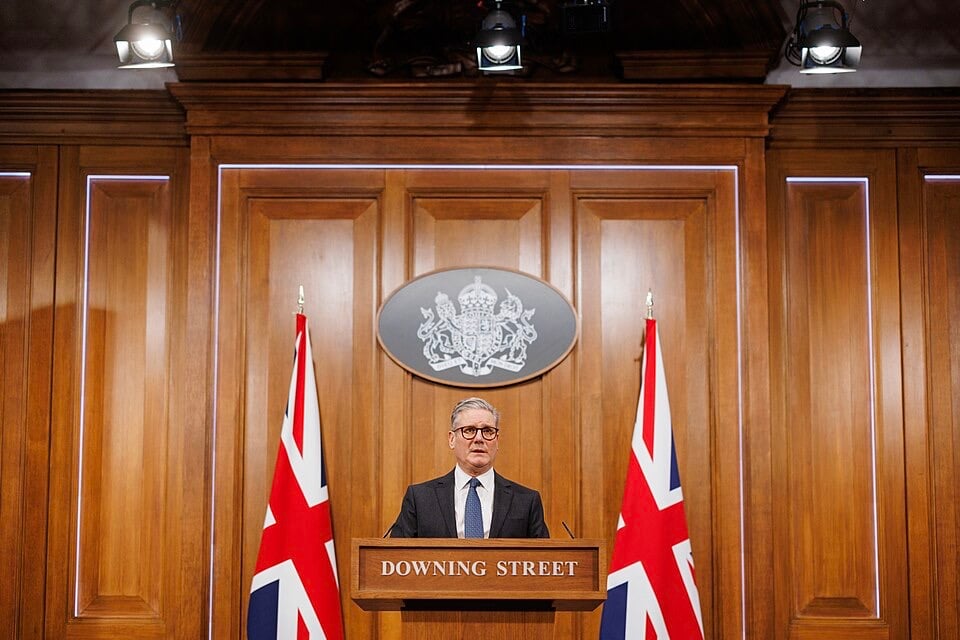
Sir Keir Starmer has unveiled a £15 billion defence investment plan he says will protect Britain in an increasingly “volatile” world, but the package falls billions of pounds short of what military chiefs say they need and will see the UK scrap older equipment including Storm Shadow cruise missiles and a range of military helicopters.
The plan, delayed for months by Treasury wrangling over funding, follows the resignation of John Healey as defence secretary earlier this month in protest at insufficient cash being made available. The Treasury subsequently agreed to give the Ministry of Defence an extra £1.5 billion, pushing the total uplift to £15 billion in spending power over four years, though only £11.6 billion of that is genuinely new money, with the remainder representing a reallocation of existing resources.
New Defence Secretary Dan Jarvis warned that “tough choices” had been necessary “to stop doing things which were designed for another age.” Among the most significant cuts is the phasing out of Storm Shadow cruise missiles, a weapon that has proven vital both for RAF fighter jets and for Ukrainian forces in their war against Russia. “We are now pivoting to the next generation of low-cost cruise missiles,” the plan states. More than 30 Wildcat helicopters and a number of Chinooks will also be axed, alongside plans to upgrade a satellite communications system. An ambition to grow the military cadet force by 30 per cent by 2030, seen as central to rebuilding national resilience, has been pushed back to 2035.
Across its 80 pages, the plan sets out how £298 billion in total funding will be invested across defence over the next four years. More than £20 billion will go toward renewing the UK’s fleet of four nuclear-armed submarines, the cornerstone of Britain’s deterrent capability. A further £11.1 billion will be spent on munitions and weapons, including six new weapons factories, to allow the armed forces to sustain a fight beyond a few short days. Just £790 million has been allocated to bolster air defences against missile and drone threats — a fraction of what experts say would be required for a credible system comparable to Israel’s Iron Dome. A further £330 million is earmarked to protect critical underwater pipelines and communication cables vulnerable to hostile attack from Russia, while £1.6 billion will go toward artificial intelligence and other technologies reshaping how military decisions are made.
The government claims the additional funding will push total defence spending to 2.7 per cent of GDP by 2030, a rise of just 0.1 percentage points from current levels. That figure includes spending on intelligence agencies rather than purely military capability, and falls well short of the 3 per cent target that Healey had been pushing for before his resignation, alongside armed forces minister Al Carns, who also quit after Starmer was unable to secure the additional tens of billions required to reach that figure within the planned timeframe.
The plan does state that “funding and plans” behind a longer-term ambition to reach 3 per cent of GDP in the next parliament will be set out in the next spending review, expected in 2027, where defence is described as the “number one priority.” However, that commitment will only carry weight if it is endorsed by whoever succeeds Starmer as Prime Minister.
Military chiefs believe the funding now allocated is insufficient to rearm at the pace necessary to be ready for a possible war with Russia by 2030, a timeline previously set by the outgoing Prime Minister. Jarvis stressed the need to prioritise autonomous weapons and artificial intelligence to ensure the armed forces are “fit for the next war, not the last one.” The plan also outlines £10.7 billion in savings the MoD aims to achieve through reform and efficiencies over four years, a figure included toward the back of the document, with the government stating any such savings would be reinvested in frontline capabilities.
