



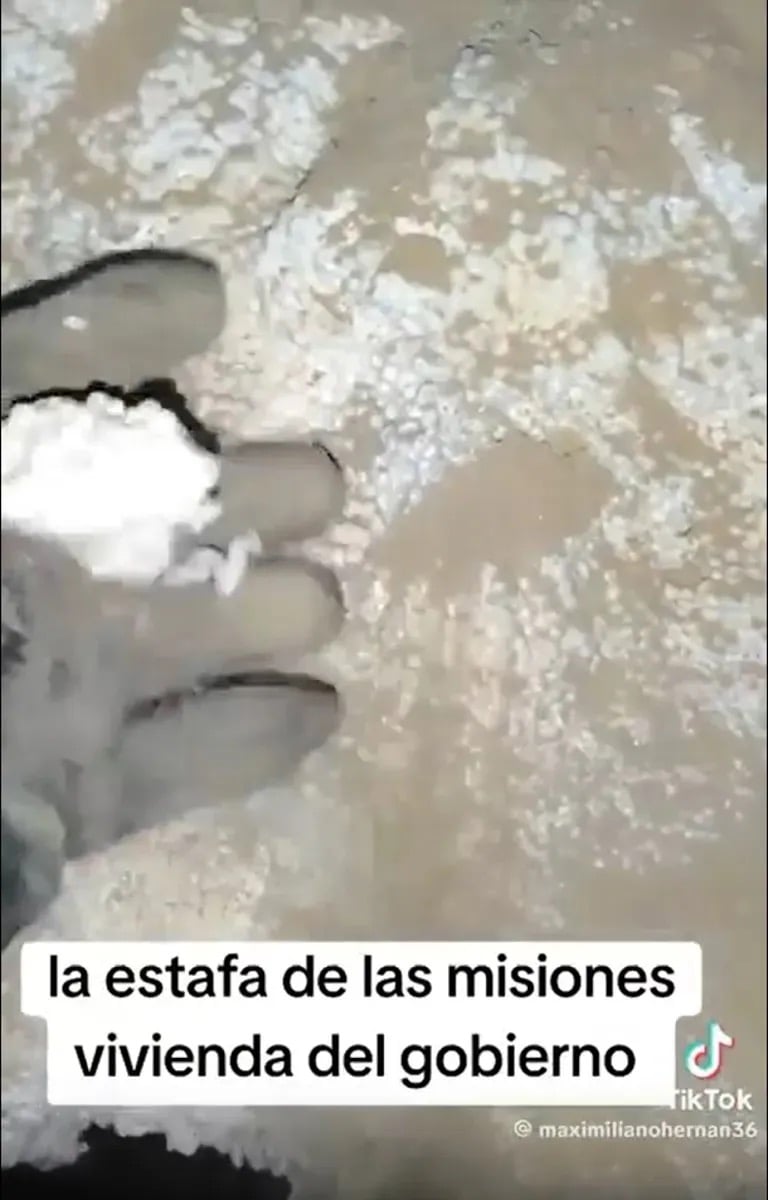
Rescue teams searching for survivors of Venezuela’s devastating twin earthquakes have made a shocking discovery in the rubble — collapsed buildings whose walls appear to have been filled with styrofoam rather than solid construction materials, prompting fury over the quality of the housing built under the country’s socialist government.
A rescuer posted a video on TikTok showing himself pulling apart collapsed wall sections with his bare hands, revealing a thin outer layer of concrete concealing what appears to be styrofoam or a similar lightweight material underneath. Digging his finger into the material with ease, he said in Spanish: “Look at this s***. No wonder everything crumbled like cardboard.”
The buildings are understood to include apartment blocks constructed under the late president Hugo Chavez’s “grand housing mission,” a programme launched in response to devastating floods and landslides in 1999 that displaced tens of thousands of people. Construction was accelerated to meet political deadlines, particularly after Nicolas Maduro took power in 2013, with an earthquake risk-reduction specialist who worked in Chavez’s government telling the Washington Post that Venezuela’s building codes and laws to protect structures against natural disasters were loosely followed.
The consequences of that alleged negligence are now visible across entire levelled neighbourhoods in the coastal state of La Guaira, the hardest-hit region after the magnitude 7.2 and 7.5 earthquakes struck just 39 seconds apart on 24 June in what the National Assembly’s president Jorge Rodriguez described as “the most disastrous event” Venezuela had suffered in 123 years.
With the search now entering its sixth day, Rodriguez warned that rescuers were in “critical hours to continue rescuing lives.” The official death toll stands at more than 1,450, but the US Geological Survey has estimated the final figure could reach as high as 10,000. According to a missing persons website, 46,628 people remain unaccounted for, with 3,250 injured and 12,721 families affected — all figures expected to rise.
The human reality behind those numbers was laid bare in accounts from survivors at the rubble. The family of Carlos Eduardo, 31, told the BBC they could still hear him groaning beneath the debris. “We started calling him: Carlos, Carlos, son… and then he made a sound,” his cousin said. “Since then, we haven’t heard anything from him — he hasn’t spoken again or given any sign of life. But he had done this before. Yesterday afternoon he did the same — groaning and then going silent. And so here we are, waiting for help, hoping we can get him out alive.” Soldiers and Mexican volunteers have repeatedly called for silence to listen for signs of life beneath the wreckage.
Foreign and domestic volunteers have been clawing through broken concrete with their bare hands. Satellite imagery shows entire districts razed to the ground. Rodriguez said: “Every person saved is a miracle. We will not hide anything about the scale of this tragedy.”
International help has been arriving, with rescue teams from Mexico, Spain, the UK and the United States on the ground. The US announced it was deploying a disaster response team of more than 250 personnel including specialist units with dogs. Rodriguez confirmed she had spoken with President Donald Trump and Secretary of State Marco Rubio, who she said “reaffirmed their commitment to supporting the response efforts.”
The government’s response has nonetheless drawn bitter criticism from those on the ground. Rodriguez was heckled during a visit to one of the destroyed neighbourhoods, with residents shouting: “The government isn’t doing anything for the people.” Locals have repeatedly said authorities mobilised too slowly in the critical first 48 to 72 hours after the quakes, the window during which the chances of finding survivors alive are highest.
