


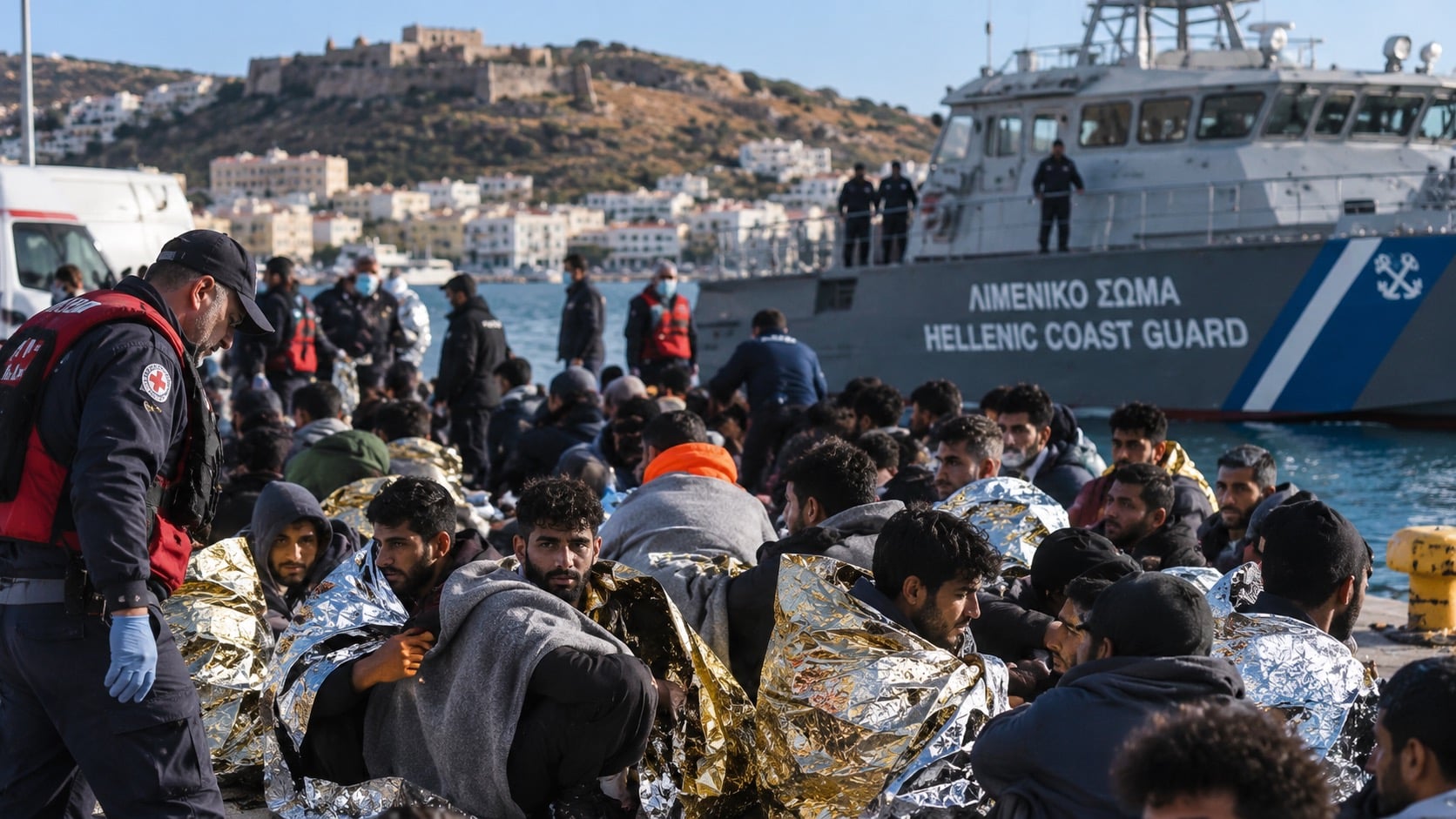
Later reports put the number recovered on Saturday alone at more than 1,260, and local officials say reception facilities on Crete are overwhelmed. The cause of the two deaths has not been established.
Two migrants died and hundreds more were rescued in a series of operations off the Greek islands of Crete and Gavdos, authorities said on Saturday. Greek coastguard figures showed more than 1,100 people reached the islands between Friday morning and Saturday afternoon, and later reports put the number recovered on Saturday alone at about 1,267. The two victims were among 43 people found at a rocky coastal area of Gavdos, a small island south of Crete. The cause of their deaths has not been established.
The Gavdos deaths
Rescuers found two people unconscious and brought 41 others to safety on Saturday. The operation involved the European Union’s border agency Frontex and a private vessel. Four survivors were taken to Crete for medical treatment. Local media reported that the boat struck rocks near Ampelos, on Gavdos, throwing passengers into the sea. The Associated Press said local reports described an apparent collision with rocks but that the precise cause of death had not been established.
In a separate operation, 102 migrants, including 16 women and five minors, were taken to the port of Heraklion, Crete’s largest city.
Rescues through the day
The first rescues began at about 12.30am on Saturday. Around 583 people were recovered in the first wave, near Gavdos, Kali Limenes and Trypiti beach in Sfakia. A Frontex unmanned aircraft detected four boats south of Kali Limenes that morning, and a Frontex vessel recovered about 274 people.
Four further operations in the afternoon accounted for about 201 more people:
- 52 people, located by a Frontex vessel 20 nautical miles east of Kali Limenes
- 36 people, recovered by the Greek coastguard 43 nautical miles south of Kali Limenes
- 54 people, recovered 10 nautical miles west of Chrissi Island after a passing ship spotted their boat
- 59 people, recovered by coastguard patrol vessels 3.5 nautical miles south-east of Ierapetra
Boats were directed to Kali Limenes and Ierapetra. Greek media said 31 migrant boats were recorded in the area south of Heraklion during the day, and three more carrying 47, 37 and 45 people were logged after 7pm. Totals have not been reconciled across all reporting.
Reception facilities under pressure
Local media reported that more than 1,500 people were at Heraklion port by Saturday evening, a figure that includes people who arrived on earlier days. Hundreds, including women and young children, were sitting or lying outside in a car park because the former refrigerated warehouse used as temporary accommodation was full. Local authorities were considering using a separate reception facility in the Athanatoi area.
In Ierapetra, more than 500 people were reported to be gathered in the seafront square. The municipality’s civil protection service covered outdoor shelters with tarpaulins ahead of worsening weather. Deputy mayor Kougioumtzakis appealed for urgent government help. He said the municipality could provide basic food and blankets but lacked adequate facilities, and he described conditions as a public-health concern.
Why arrivals rose
Gavdos mayor Lilian Stefanaki told Greek media that calmer seas had allowed many boats to attempt the crossing in a short period. She said the island lacks facilities for large numbers of arrivals, who generally have to be moved on to Crete. She also warned that many of the boats are small plastic vessels carrying far more people than is safe on a long Mediterranean crossing.
A busy and dangerous route
Crete and Gavdos have become more prominent entry points into the EU for people travelling from North Africa, with many boats leaving eastern Libya. More than 23,000 migrants had reached Crete and nearby islands this year as of early November, putting pressure on local reception facilities. Crossings are especially dangerous in winter, when strong winds and rough seas can leave overcrowded boats in distress. At least 22 migrants died earlier this month trying to reach southern Greece from Libya.
The International Organization for Migration (IOM) has warned that the rise in crossings has exposed shortcomings in search and rescue. The arrivals come as European governments seek to tighten migration policies. Greece is one of five European countries backing a proposal for a so-called return hub in Rwanda for rejected asylum seekers, a plan human rights organisations have criticised.
