


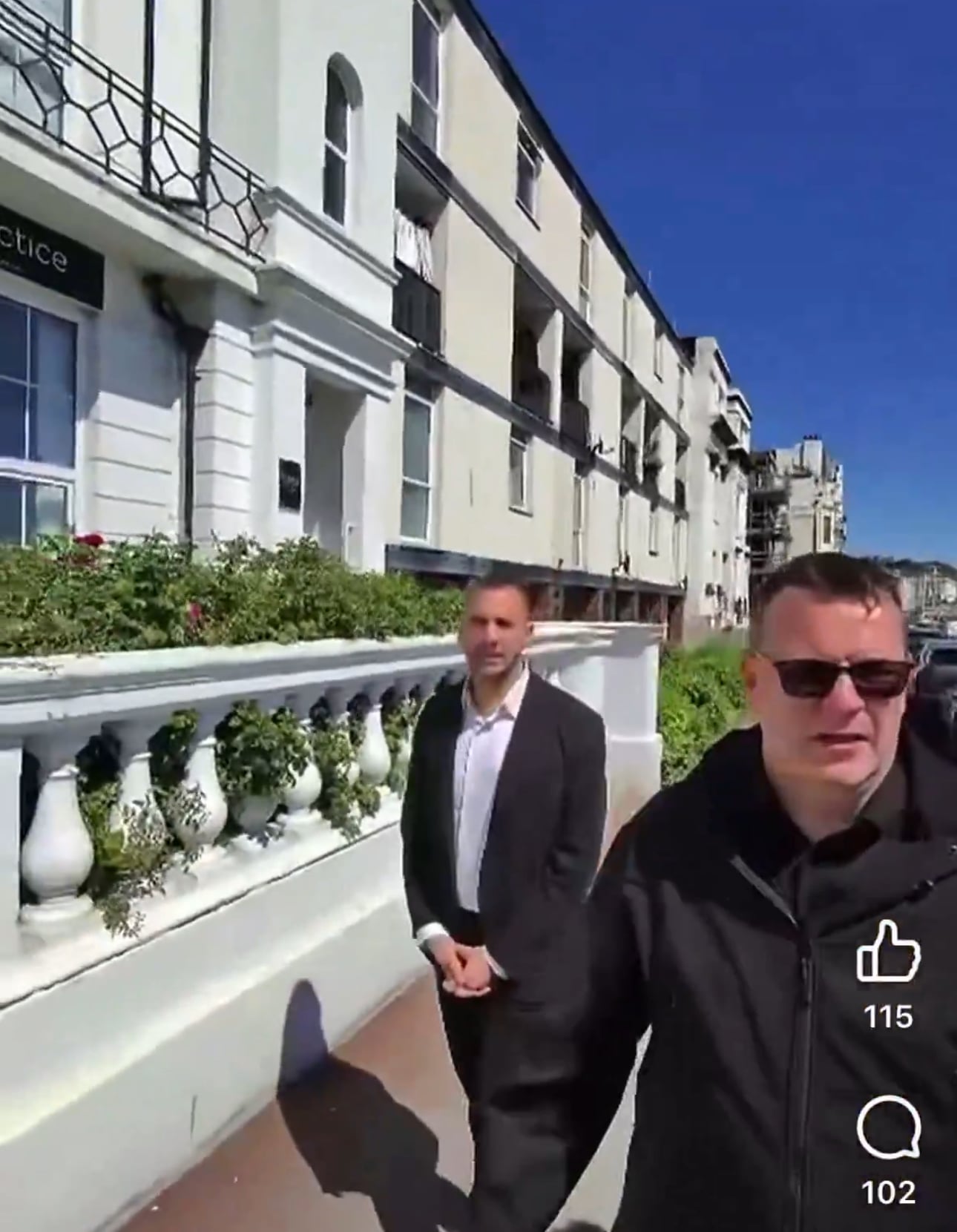
Zack Polanski was confronted on a street in Hastings by a Jewish resident who challenged him directly over his earlier suggestion that Jewish fears of antisemitic attacks may amount to a “perception of unsafety” — a confrontation filmed days after two Jewish men were stabbed in a terrorist attack in Golders Green and which has since gone viral.
The video shows a man approaching the Green Party leader and asking repeatedly: “Was yesterday’s attack on the Jewish community a perception of unsafety? I’m not going to cause any trouble. I’m just asking you, Zack.” As Polanski continues walking without responding, the confronter becomes more heated, calling him a “weasel” and invoking his parents by name. “How dare you? You’re supposed to be Jewish,” the man says. The clip has divided viewers sharply, drawing praise from right-leaning voices and claims of harassment from others on the left.
The exchange centres on remarks Polanski made to Israeli newspaper Haaretz in which he said: “There’s a conversation to be had about whether it’s a perception of unsafety or whether it’s actual unsafety — but neither is acceptable.” The comment was made against a backdrop of arson attacks on synagogues and the firebombing of Jewish community ambulances in north London. Critics, including Prime Minister Sir Keir Starmer, branded the remarks “disgraceful,” while Jewish organisations argued they minimised a demonstrably real and escalating threat.
The Golders Green attack — which took place on 29 April — saw Essa Suleiman, 45, stab two visibly Orthodox Jewish men on Highfield Avenue in what police formally declared a terrorist incident. The victims, aged 34 and 76, both survived. Polanski condemned the attack as “horrendous” and posted a message on social media saying he was “thinking of the victims, their families and everyone who will once again be shaken by this attack.”
However, his response to the attack also drew its own controversy. Polanski shared a post online criticising Metropolitan Police officers for allegedly kicking a “mentally ill man” in the head after Tasering him during the arrest of the suspect — footage that showed the attacker continuing to hold a knife as officers restrained him, with no knowledge of whether his backpack contained explosives. Met Commissioner Sir Mark Rowley publicly criticised Polanski’s repost, saying it undermined officers and amplified misinformation. Polanski subsequently deleted the post and apologised, citing haste and a desire to “lower the temperature.”
The confrontation in Hastings came from a local resident linked to Sussex Friends of Israel, who said he wanted answers rather than platitudes from a party leader who uses his own Jewish heritage as a defence against accusations of antisemitism. The fact that Polanski walked away in silence has drawn its own interpretation — seen by supporters as choosing not to engage with bad-faith harassment, and by critics as an inability to defend a position that has become increasingly difficult to justify in the wake of a terrorist attack.
UK antisemitic incidents have risen sharply since October 2023, with Jewish organisations and police data documenting real increases in assaults, vandalism and targeted violence. The Community Security Trust recorded 3,700 anti-Jewish hate incidents in 2025 — the second-highest annual total since records began. Against that backdrop, the argument that fears may be partly “perception” has struck many in the Jewish community not as nuance but as a failure of political will at a moment when it matters most.
