



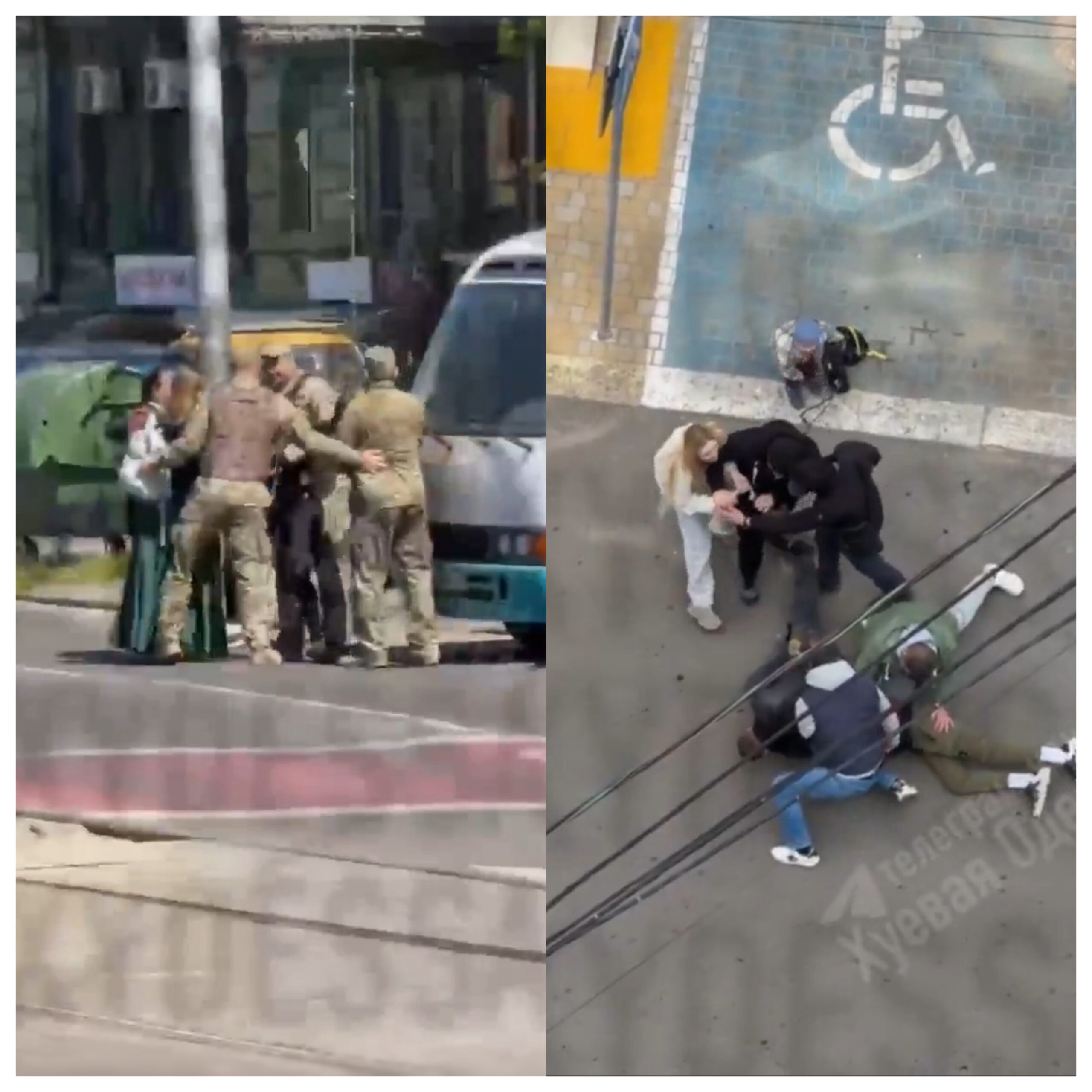
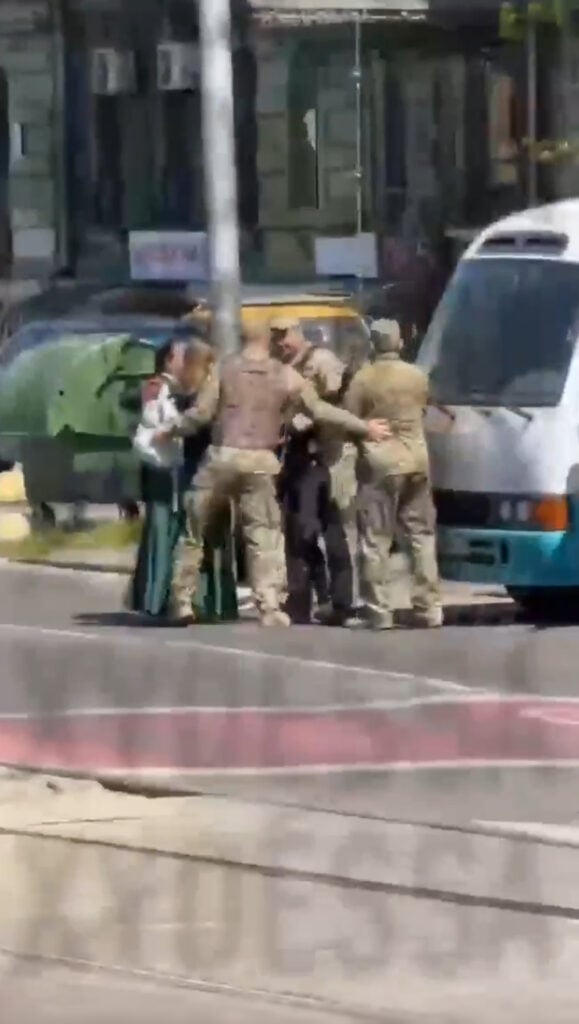
Harrowing footage from Odessa has shown women physically fighting with Ukrainian military recruitment officers as their husbands and partners were forced onto a van during a street conscription operation, in scenes that have gone viral and reignited fierce debate about the human cost of Ukraine’s mobilisation drive.
The approximately 38-second clip, posted on 2 May , shows uniformed Territorial Recruitment Centre officers detaining and escorting a group of civilian men toward a white-and-teal minibus parked on a city street. Several women can be seen intervening aggressively — arguing face-to-face with officers, grabbing at them and throwing themselves in front of the vehicle in desperate attempts to prevent their partners from being taken. Shaky handheld footage captures pushing, close-quarters scuffles and the visible anguish of bystanders as the confrontation unfolds at the kerbside.
The footage is consistent with dozens of similar clips that have circulated from across Ukraine over recent months, showing TCC enforcement teams stopping men on streets, in shopping centres, gyms and other public spaces. These scenes — referred to by Ukrainians themselves as “busification” — have become an increasingly visible symbol of the brutal human arithmetic of a war now entering its fourth year.
Ukraine has expanded its conscription powers significantly as frontline casualties mount and voluntary enlistment has dried up. Under martial law, men aged 18 to 60 are prohibited from leaving the country, and authorities have listed more than two million men as evaders or non-compliant with registration requirements. TCC teams are empowered to issue summonses and detain those in breach on the spot.
Odessa, a predominantly Russian-speaking port city with historically complex loyalties, has been a particular flashpoint for such confrontations. The scenes captured in the latest footage reflect growing public anger at conscription methods that critics describe as amounting to kidnapping — an accusation Ukrainian authorities reject, insisting operations target only documented evaders.
President Zelensky has himself acknowledged abuses by some TCC personnel and said officers found to have acted improperly have been dismissed or investigated. He has nonetheless defended the mobilisation programme as a military necessity, arguing that without it Ukraine cannot sustain its defence against Russian forces continuing to press offensives along the Donbas front.
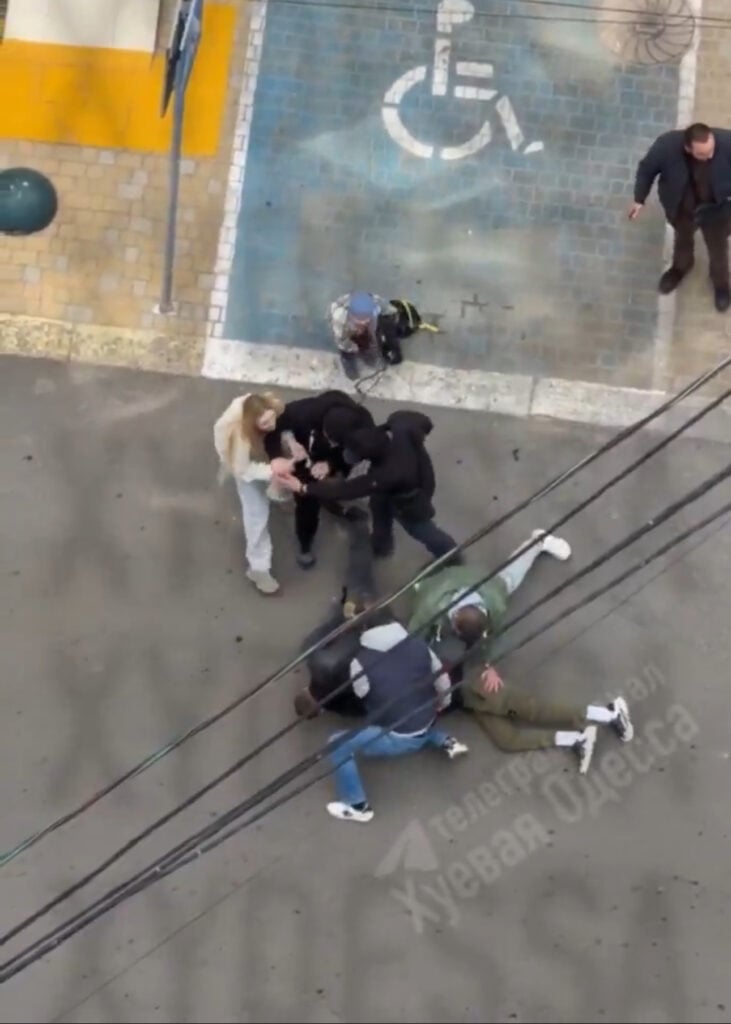
Ukraine Turns To African Migrant Workers To Fill Demographic Void
The brutal scenes from Odessa’s streets sit within a broader demographic crisis that the Ukrainian government is now scrambling to address through an entirely different means — by opening the country’s borders to migrant workers from Africa.
Kyrylo Budanov, head of President Zelensky’s Presidential Office, outlined the proposals at the CEO Club Ukraine, saying the government intended to introduce new legislation governing the legal entry and residency of foreign workers. A revised list of designated “migration-risk” countries would be established as part of the framework, with the stated aim of making it easier for migrant workers to remain in Ukraine legally and contribute to the economy. “They enter, obtain documents, and then move on,” Budanov said, describing the current situation as a barrier for business that the new measures were designed to resolve.
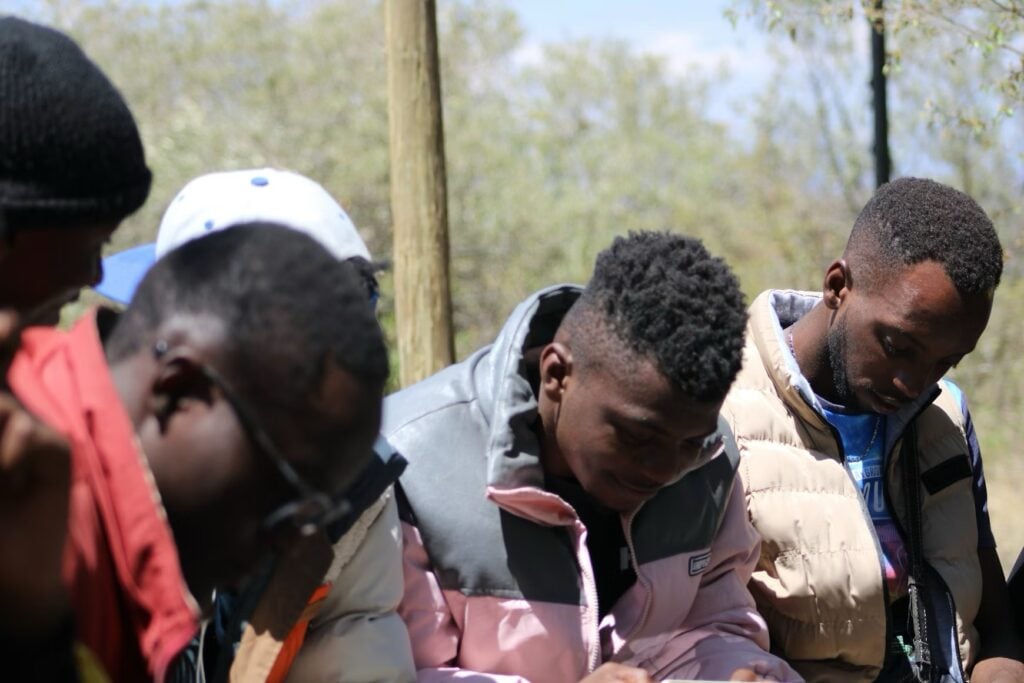
The announcement reflects a growing acknowledgement within Ukrainian government circles that the country’s demographic crisis — already the worst in Europe before the war — has been pushed to a critical point by the scale of frontline casualties and the flight of millions of Ukrainians abroad. Former foreign minister Dmytro Kuleba said last autumn that Ukraine may have no choice but to open its borders to migrants from Asia, calling for people “who need this country and are ready to rebuild it.” Vasyl Voskobojnik, president of the Ukrainian Association of Foreign Employment Agencies, has argued that mass immigration from developing nations represents the only viable response to the population decline, urging the government to have a formal migration policy in place by 2026.
The practical challenges are considerable. Ukraine’s economy and public infrastructure have been severely damaged by the conflict, raising serious questions about the country’s capacity to house, employ and integrate large numbers of new arrivals. The country has also struggled historically with the integration of established minority communities. The proposals are further complicated by Ukraine’s ambitions to join the European Union, with Brussels already navigating significant political tensions over migration policy among its existing member states.
The videos circulating from Odessa and other Ukrainian cities offer an unflinching view of what wartime conscription looks like on the ground — families separated on the pavement, women in tears or fury, men with no military training being loaded into vehicles — while the government simultaneously tries to recruit foreign workers to fill the economic void left by those same men. It is a portrait of a country caught between the demands of survival at the front and the need to keep functioning at home.
