



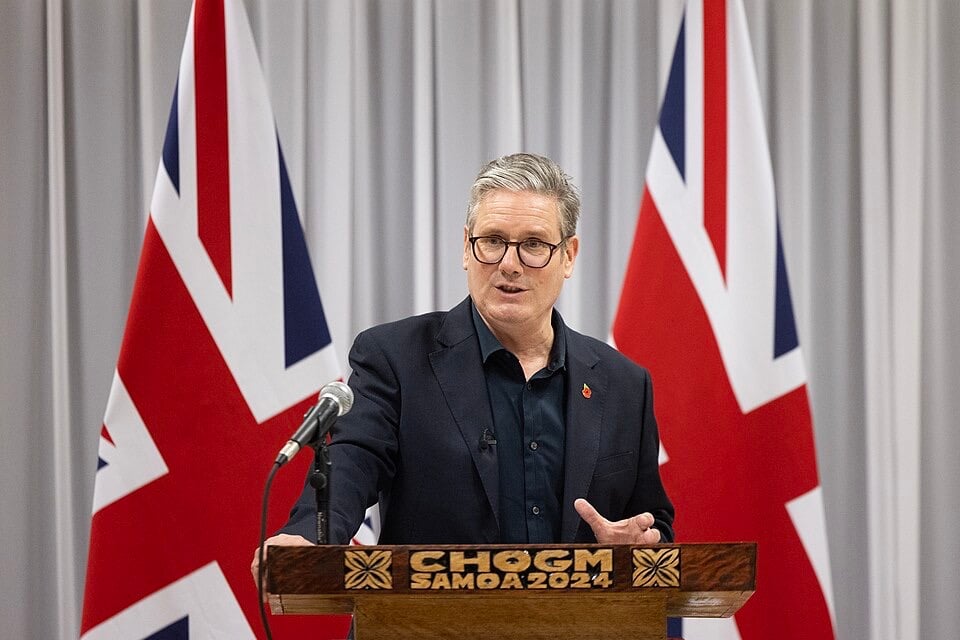
Sir Keir Starmer has told the British public to brace for an inflation spike caused by the Iran war, warning that even when the Strait of Hormuz reopens “it will not all return to normal” — and using the crisis to make the case for pulling Britain significantly closer to the European Union.
Speaking to BBC Radio 4’s Today programme ahead of next week’s local elections, the Prime Minister endorsed stark Bank of England projections that inflation could rise above six per cent, and said the country faced a choice between reverting to a failed status quo or taking “a different course” in response to the economic upheaval the conflict has unleashed.
“It is a war on two fronts,” Starmer said, “and the person who benefits most from the war in Iran at the moment is Putin because he will feel emboldened.” He repeated his refusal to be drawn militarily into the conflict, insisting it was “not in our national interest,” but acknowledged it had inflicted serious damage on what he had described as a recovering economy — one that had been showing inflation at three per cent and falling, six consecutive interest rate cuts and stronger-than-expected growth figures before the crisis hit.
The most striking passage of the interview was Starmer’s explicit embrace of closer EU ties, framing it not as an ideological position but as an economic and security necessity. “We have to be much closer to the EU,” he said, arguing that Britain needed to reduce its exposure to global energy markets and build greater resilience against future shocks. “Energy independence is not an ideological argument anymore. There is a climate change element but it is more than that. All the time we are on the oil and gas market internationally, we will be impacted by what is happening globally. We have to take control.”
On defence and European security, he was equally direct. “Britain needs to be at the heart of a stronger Europe,” he said, adding that European nations had “not done enough” on defence for at least two decades and that it “falls upon us as leaders to step up into that space.” He also acknowledged criticism from former defence secretary George Robertson, who led last year’s Strategic Defence Review and warned of “corrosive complacency in Britain’s political leadership.” Starmer conceded the welfare budget — currently five times the size of the defence budget — was unsustainable and needed to be addressed.
Comparing the current crisis to the 2008 financial crash, Brexit and Covid, Starmer argued that each time Britain had faced a major shock, the government of the day had aspired simply to return to normal — despite the status quo not working. “We flatlined for 20 years,” he said. “We have to take a different course in response to this crisis.”
The interview was also notable for what Starmer said about his own position. With local election results widely expected to be catastrophic for Labour and leadership rivals including Wes Streeting and Angela Rayner increasingly openly manoeuvring, he refused to countenance any early departure. “I was elected in July 2024 to a five-year term on a manifesto of change with a landslide victory,” he said. “I will be judged at the end of that period at the next election on whether I have delivered what I have promised.”
On the Mandelson affair, he acknowledged making a “mistake” in the appointment but insisted much of the parliamentary activity around the scandal was being driven by political opponents seeking to “undermine me and bring the government down” rather than genuine accountability.
