



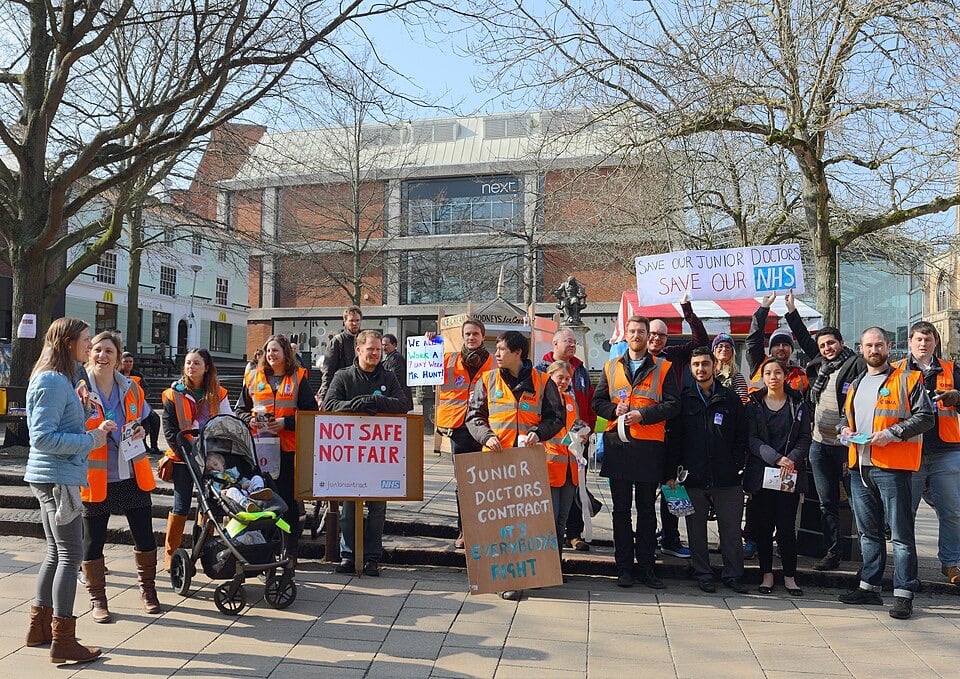
Resident doctors in England have voted to accept a pay and conditions offer from the government, bringing to an end three years of strikes that led to hundreds of thousands of patient appointments being cancelled across the NHS.
The British Medical Association announced that 53 per cent of eligible members voted in favour of the deal in a referendum, on a turnout of 57 per cent, with 32,932 doctors casting votes. The result draws a line under one of the longest and most disruptive periods of industrial action in NHS history.
The package includes a 3.5 per cent pay rise this year, as recommended by an independent review body, with pay backdated to 1 April 2026. Under the wider deal, doctors will receive an average increase of 4.9 per cent, rising to an average of 6.6 per cent by April 2027 with a further increase to follow, according to the BMA. Starting salaries will rise to just over £40,000, while the most senior resident doctors will receive £76,500 in basic pay, with the potential to earn considerably more through working unsociable hours and additional shifts. The deal also includes a promise of 4,500 extra training places for newly qualified doctors and a commitment to cover out-of-pocket expenses including exam fees.
Dr Jack Fletcher, chair of the BMA’s resident doctors committee, welcomed the outcome but said the dispute should never have lasted as long as it did. “These strikes did not need to happen,” he said. “We spent far too long at loggerheads with the government when a solution in everyone’s interest was waiting for us: more jobs for doctors, better pay for doctors, and a better-staffed NHS secured for patients well into the future.”
The resolution ends a period of significant turbulence for the NHS, during which repeated strike action over pay and working conditions forced the cancellation of hundreds of thousands of appointments, adding to the pressure on waiting lists that the health service has been struggling to reduce.
