



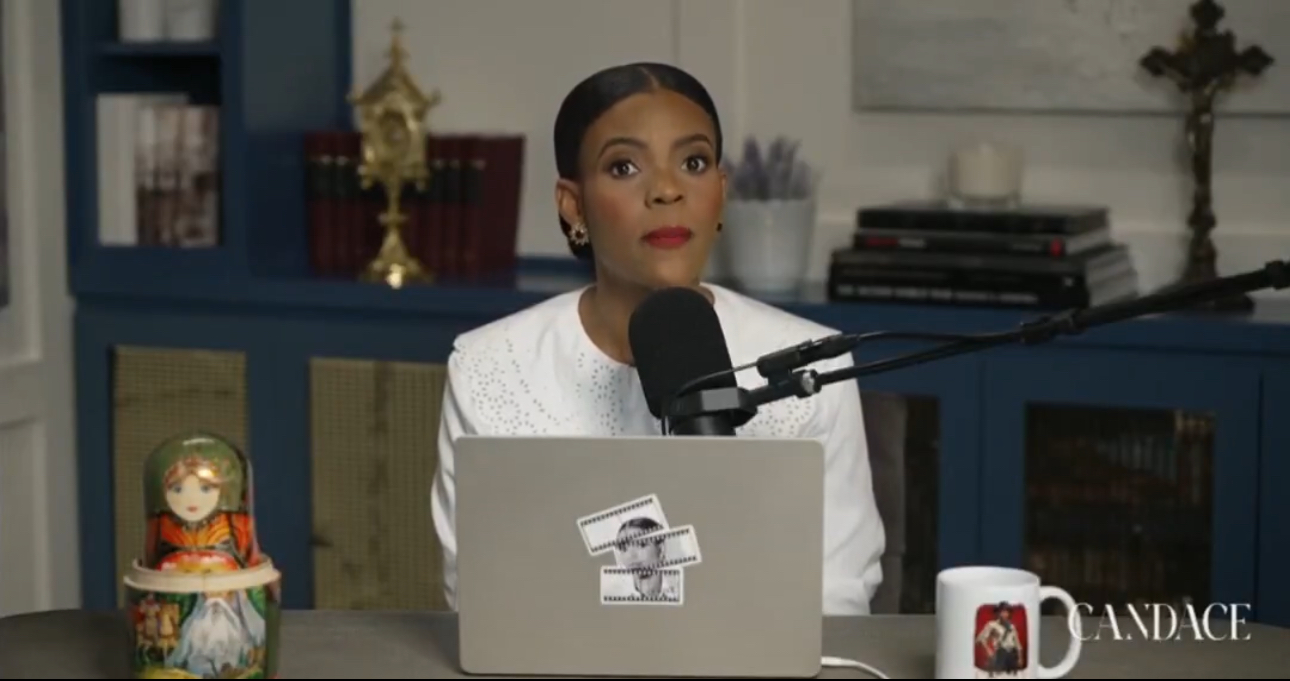
American conservative commentator Candace Owens has sparked fierce debate after spending a family holiday in Russia that extended into a speaking role at President Putin’s flagship economic forum, returning to heap praise on Moscow’s cleanliness, food, Christian heritage and family values while contrasting it sharply with what she described as America’s social and economic decline.
Owens described Moscow as “magnificent” in a podcast recorded on 9 June, telling listeners the city was clean, safe and family-friendly, with beautiful churches and better everyday experiences than Western media coverage suggests. She shared an anecdote about Russian doctors treating her American security guard after a medical emergency, presenting it as evidence of a country the mainstream press had misrepresented for decades. She questioned US aid to Ukraine, cited what she called American fatigue and a lack of transparency over the conflict, and framed her visit as an attempt to cut through what she described as Cold War hangover narratives driving division between ordinary Russians and Americans.
The trip went beyond sightseeing. Owens spoke on family values panels at the St. Petersburg International Economic Forum between 3 and 6 June — a major annual event used by the Kremlin as a platform for international soft power — and was present when Putin addressed delegates. She highlighted Russia’s pro-natalist policies, its explicit rejection of certain Western cultural trends, and what she presented as a society maintaining Christian expression and traditional family structures that she believes the United States has abandoned.
Critics have pointed out that Owens’ observations were drawn from curated, high-profile tourist and forum experiences in showcase cities during a state-organised event. Russia’s central Moscow and St. Petersburg are maintained for optics. Beyond those areas, economists and analysts note a starkly different picture: Russia’s nominal GDP per capita sits at approximately $14,000 to $18,000, against the United States’ $80,000 to $90,000. Russia’s overall economy is roughly one-tenth to one-twelfth the size of America’s despite a larger population. Rural poverty and stagnation are documented and widespread. The ongoing war in Ukraine has driven conscription, inflationary pressure, brain drain and international isolation.
Freedom House and similar bodies consistently rate Russia low on political rights and civil liberties, with opposition figures jailed or worse, media tightly controlled and public dissent severely limited. Some conservative commentators have criticised Owens’ commentary as “Russia-glazing” — presenting a sanitised version of a repressive state in a way that serves Kremlin messaging, whether or not that was her intention.
Owens is not alone in observing that Russia’s urban centres are aesthetically impressive and that the country has made genuine investments in natalist policy and public infrastructure in certain areas. Nor is her critique of American decline without basis — the country’s national debt exceeds $36 trillion, family breakdown is well documented and military intervention fatigue is real. But critics argue that framing Russia as a countermodel to Western decline requires ignoring the systematic trade-off of individual liberty for centralised order that defines Putin’s state, and the gap between Kremlin signalling on traditional values and the lived reality of ordinary Russians outside the showcase cities.
