



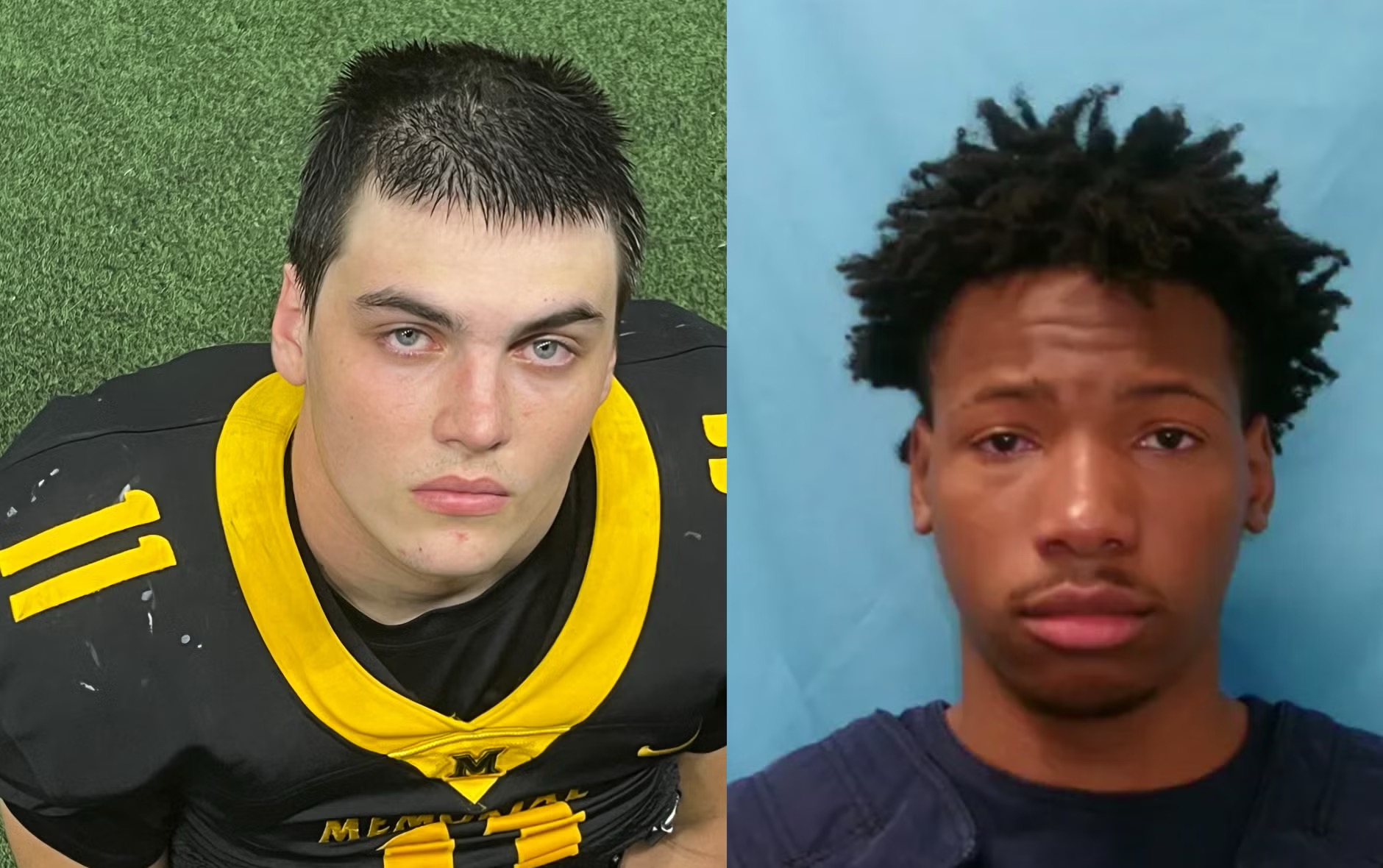
A courtroom fell silent before erupting in gasps as 19-year-old Karmelo Anthony was sentenced to 35 years in prison for the murder of fellow student Austin Metcalf, stabbed to death at a Texas high school track meet last year in a case that convulsed America with racial tension and bitter debate about self-defence law.
Anthony sobbed as the sentence was handed down at Collin County courthouse on Tuesday, with his family bursting into tears beside him. The sentence came hours after the same jury found him guilty of murder following less than three hours of deliberation — and follows an emotional plea from his mother Kala Hayes, who had begged jurors to show her son mercy before they retired to determine his punishment.
“He’s my oldest. He’s my firstborn. He will always be my baby. I love him very much,” Hayes told the court through tears. “I know my son, and he’s very sorry for what he did. Please have mercy on my son.”
The killing took place on 2 April 2025 during a district-wide track meet in Frisco, a Dallas suburb, when Anthony — then 17 and attending Centennial High School — stabbed 17-year-old Austin Metcalf of Memorial High School once in the chest with a folding knife. The blade pierced through the bone at the centre of Metcalf’s chest and punctured the right side of his heart, a medical examiner testified. Metcalf died in his twin brother Hunter’s arms. Jurors gasped when shown previously unseen photographs of the punctured heart during the trial.
Anthony had claimed self-defence throughout the proceedings, arguing that Metcalf attacked him first after a confrontation under a rival school’s tent. But prosecutors systematically dismantled that account. “What is important is not motive. It’s mindset. He took a knife to a track meet,” Collin County First Assistant District Attorney Bill Wirskye told the jury. “You don’t get to meet a shove with a stab, especially if you provoke the shove. Why didn’t he just walk away? He could have left the tent at any time. He didn’t.” Witnesses described Anthony as the aggressor, testifying he told Metcalf “touch me and see what happens” before Metcalf pushed him and Anthony drew the knife.
Prosecutors said Metcalf’s twin Hunter rushed to his brother’s side as Anthony fled and attempted to blend into groups of students leaving the stadium. Body camera footage played in court showed Hunter hysterical, crying “Oh my God. He’s my best friend. He’s my brother,” before becoming incoherent as he begged for help.
The sentencing remains subject to a further legal question. Prosecutors agreed to consider “sudden passion” — a legal argument allowing a defendant to claim they acted in an intense emotional state — as a factor in determining Anthony’s punishment. Judge John Roach has not yet ruled on whether to accept the application. If he does, it could reduce the murder to a second-degree felony and potentially lower Anthony’s sentence to as little as two years, with a maximum of 20. If Roach rejects it, jurors retain the power to impose a life sentence.
The case became racially charged almost immediately after the stabbing, with Metcalf being white and Anthony Black. Anthony’s supporters argued he had been treated unfairly because of his race. His defence attorney Mike Howard told jurors: “It’s not about race. As much as people on the outside want to make it about that, one or the other. It’s not.” Civil rights organisation Next Generation Action Network had condemned the racial composition of the jury — which included no Black members — as potential grounds for appeal. Defence attorneys had raised a Batson challenge during jury selection, a legal objection used when jurors are believed to have been dismissed on racial grounds, which may feature in any future appeal.
