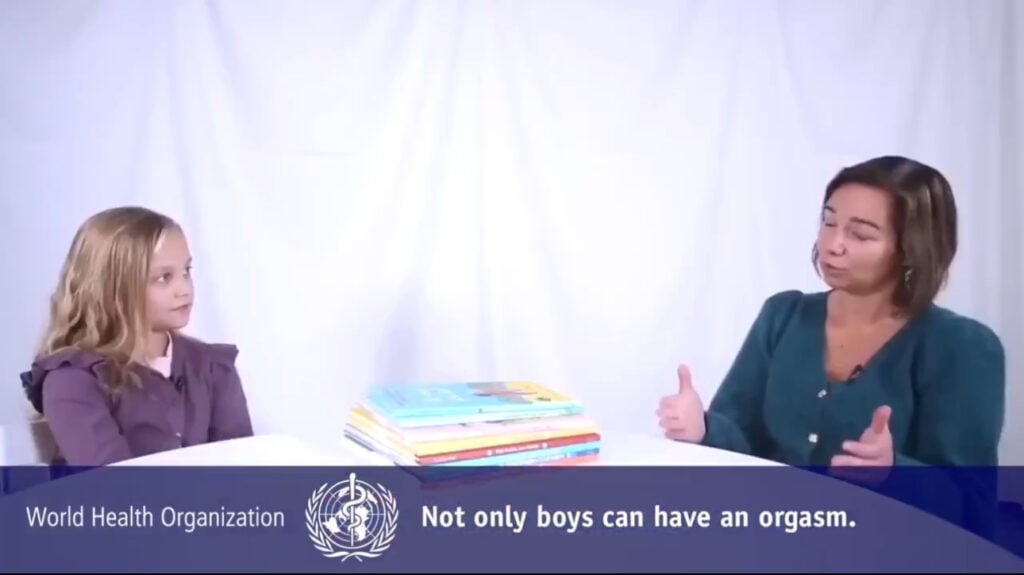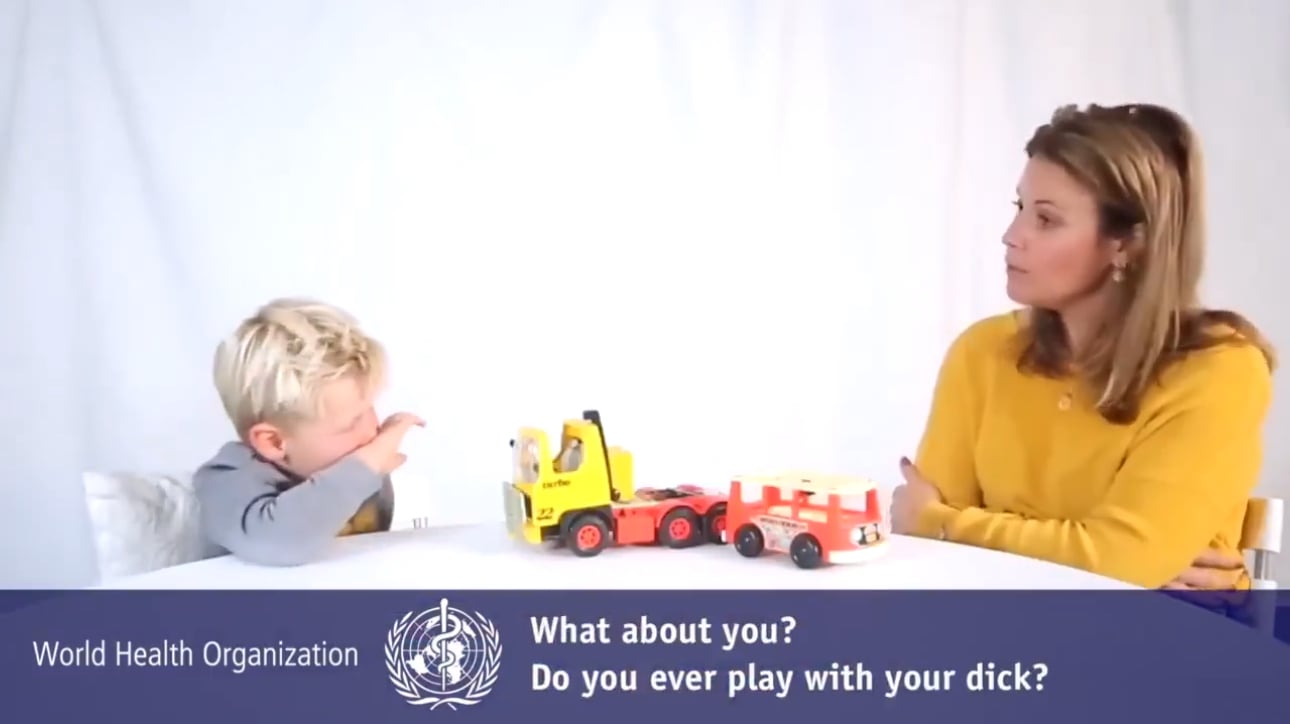
Britannia Daily has obtained a deeply controversial video produced by a World Health Organisation collaborator showing a facilitator discussing masturbation and genital pleasure with children as young as four — footage that has sparked widespread outrage from parents and critics across the world.
The footage, which Britannia Daily can reveal was produced by Rutgers — a Netherlands-based sexual health organisation and formal WHO collaborator — shows a female facilitator calmly questioning young children about touching their bodies. In the clip, a girl aged approximately nine and a younger boy are asked directly about their genitals. The facilitator explains to the girl that touching her clitoris “can feel nice when rubbed” and asks the boy whether he touches his “willie,” to which he responds awkwardly that he does so “at home.”
WATCH VIDEO DOWN BELOW:
Britannia Daily has established that Rutgers operates internationally across dozens of countries, promoting what it describes as comprehensive sexuality education — a model that introduces body awareness, pleasure and self-exploration to children from as early as age four through programmes including its Spring Fever curriculum, currently used in Dutch schools.
The organisation works in close partnership with the WHO, UNESCO, UNFPA and other international bodies. Britannia Daily can confirm that WHO co-developed the Standards for Sexuality Education in Europe, a framework to which Rutgers experts directly contributed, which includes guidance suggesting that children aged zero to four should receive “information about enjoyment and pleasure when touching one’s body.” WHO has maintained publicly that such guidance is framed as developmental education rather than instruction, aimed at reducing shame and teaching children about bodily privacy and boundaries.
Critics are not convinced. Since Britannia Daily began covering the story, the footage has ignited fierce debate, with many parents and commentators arguing that directly questioning young children about genital touching and explaining clitoral pleasure crosses a clear line — regardless of the educational framing applied to it. Many have described the content as an inappropriate intrusion into childhood, with serious concerns raised about the role of international health bodies in pushing such material into school systems across the world.
Proponents of the Dutch model point to outcomes: the Netherlands records some of the world’s lowest teenage pregnancy rates, low rates of sexually transmitted infections, and high levels of contraceptive use among young people at the time of their first sexual experience. Supporters argue the evidence supports early, open education on bodies and consent.
The cultural and political divide the video has exposed, however, is stark — and growing. Parental opposition to explicit sexuality education materials for pre-teenage children has intensified across numerous countries in recent years, with many arguing that decisions of this nature belong to families rather than international health organisations and their partner networks.
Rutgers and the WHO had not responded to Britannia Daily’s request for comment at the time of publication.