



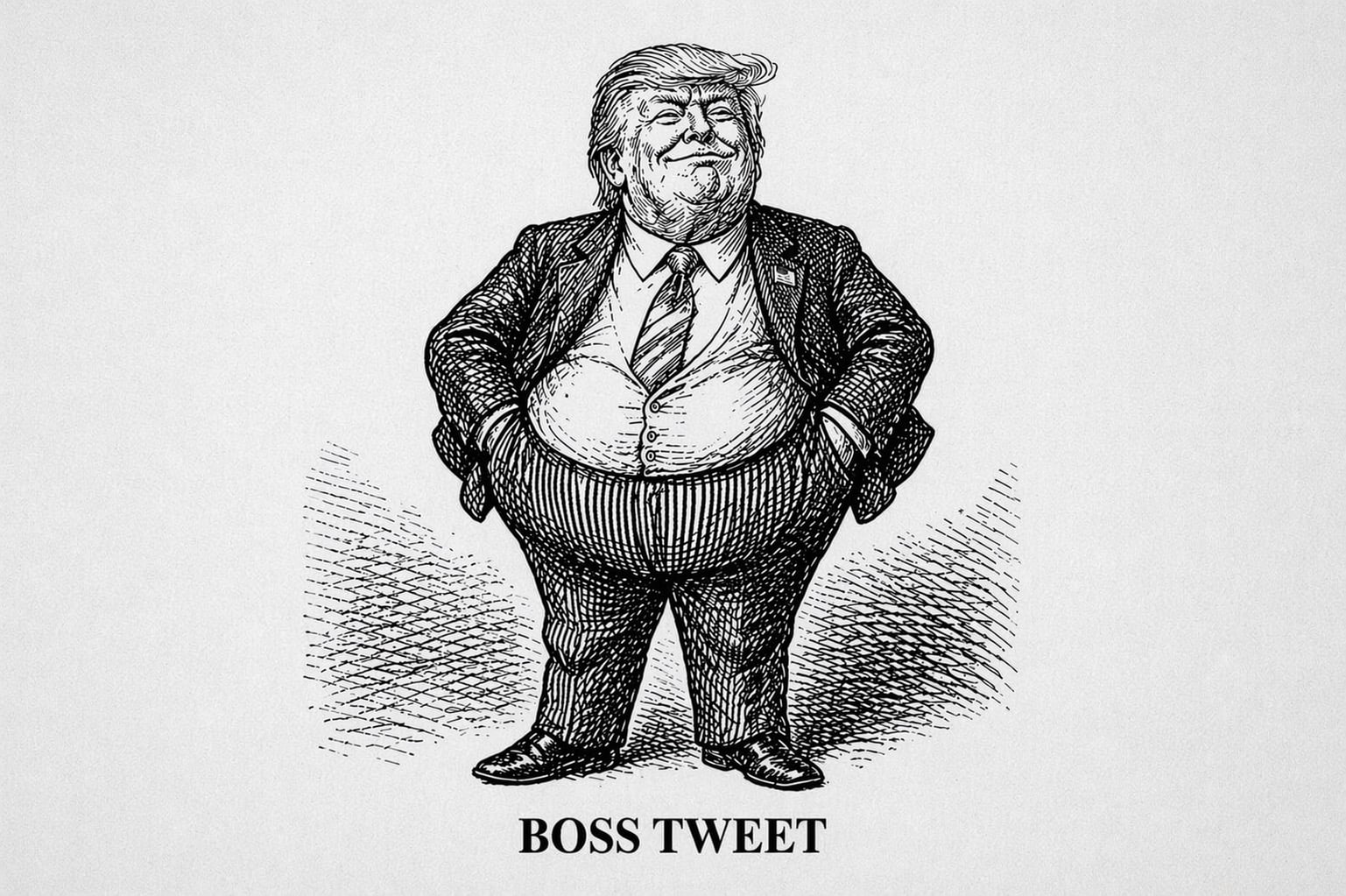
For the fourth time in as many weeks, an anonymous trader placed a nine- or ten-figure bet against the price of oil in the minutes before Donald Trump announced a shift in American policy on the Iran war. Each time, the direction of the wager was correct. Each time, the profits materialised almost the instant the president typed out his Truth Social post. And each time, regulators, members of Congress and industry analysts have asked the same uncomfortable question: who knew, and how did they know?
The pattern — sitting alongside a separate, wider set of questions about the Trump family’s financial entanglement with the Gulf monarchies pressing the United States to escalate and sustain the conflict — has moved the debate over presidential self-enrichment into new territory. What began as a trickle of “unusual activity” alerts on energy markets has become one of the defining ethical controversies of the war.
What the trading pattern actually shows
The latest episode unfolded on Tuesday evening. Between 7.54pm and 7.56pm GMT, 4,260 lots of Brent crude futures were sold into the market in what the industry calls post-settlement hours — a thinly traded window after the 6.30pm official close, when such volumes are highly conspicuous. The combined value of the sell orders was roughly $430m at prevailing prices. At 8.10pm, fourteen minutes later, Trump announced on Truth Social that he was extending the US-Iran ceasefire indefinitely. Brent, which had been at $100.91 before the trades, fell within a minute of the post to as low as $96.83.
That is not an isolated datapoint. On 23 March, about 15 minutes before Trump announced a delay to threatened American strikes on Iranian energy infrastructure, around $500m in bets on falling oil prices went through; oil subsequently dropped more than 10 per cent, and Bloomberg data showed contracts for at least six million barrels of Brent and West Texas Intermediate changing hands that morning — roughly ten times the recent daily average for that time of day. On 7 April, $950m in short positions were opened hours before a two-week ceasefire was declared. On 17 April, a further $760m bet against oil came through about 20 minutes before Iran’s foreign minister announced that the Strait of Hormuz would be reopened to commercial shipping. Taken together, April’s pre-announcement bets alone come to around $2.1bn.
The Commodity Futures Trading Commission is already investigating the March 23 and April 7 trades, a person familiar with the matter confirmed on 15 April. Two Democratic congressmen — Sam Liccardo of California and Ritchie Torres of New York — have formally written to both the CFTC and the Securities and Exchange Commission, urging a joint investigation and describing the sequence as presenting “a textbook basis for insider trading and market manipulation concerns” under the Securities and Exchange Act of 1934, the Commodity Exchange Act of 1936 and the 2012 STOCK Act. Torres went further, writing that the March 23 episode “may constitute one of the largest instances of insider trading in history”. Matt Saincome, chief executive of the anomalous-trading analytics firm Unusual Whales, told the Daily Mailthat the data “demands an investigation” and that regulators “should explain to the public what happened here”.
Inside the White House, the nervousness is visible. Staff were sent a notice last month reminding them that they are prohibited from using non-public information to place bets on financial or prediction markets. The memo did not mention Iran, but it arrived in the middle of the war, and was understood internally as a direct response to concerns that administration insiders could be using the unique informational edge of proximity to Trump to trade. White House spokesman Kush Desai told Axios that any suggestion officials were engaged in such conduct without evidence was “baseless and irresponsible reporting”.
Why the suspicion is harder to shrug off this time
There is no public evidence that Trump personally has traded on the war, and no administration official has been formally implicated in wrongdoing. But two structural features of this particular conflict are what have driven the suspicion beyond its usual partisan boundaries.
The first is the extraordinarily small number of people who can plausibly know, at a given moment, what the president is about to post. Every one of the suspicious trades coincides not with a scheduled policy announcement — a Pentagon briefing, a State Department statement, a joint press conference — but with an unscheduled Truth Social post. Truth Social posts are, in practical terms, a product of Trump’s own pen and a handful of aides. That makes the universe of people with genuine advance knowledge unusually narrow, and the coincidence of precision-timed multi-hundred-million-dollar bets unusually difficult to explain as speculation.
The second is the broader constellation of financial interests around the president’s family. Jared Kushner, Trump’s son-in-law and one of his lead Middle East envoys, runs the private equity firm Affinity Partners, whose largest and earliest investor is Saudi Arabia’s Public Investment Fund — a $2bn commitment made in 2021, reportedly forced through by Crown Prince Mohammed bin Salman over the objections of his own advisers. Affinity also took in more than $200m from the United Arab Emirates and further sums from Qatar. Senator Ron Wyden and Congressman Robert Garcia have calculated that Kushner has since collected more than $110m in management fees from the Saudi government alone.
Both Saudi Arabia and the UAE reportedly lobbied Trump to start the war and, according to Washington Post and New York Times reporting, have pressed him to keep it going. The Associated Press has reported that Powerus, a Florida-based drone manufacturer partly owned by Donald Trump Jr. and Eric Trump, has been demonstrating defensive drone interceptors to Gulf states under Iranian attack — states dependent on the American military commanded by the president’s father. Qatar’s royal family has provided a $400m Boeing 747-8 to serve as Air Force One. Congressman Jamie Raskin, the ranking Democrat on the House Judiciary Committee, opened a sweeping investigation on 17 April into what he described as Kushner’s “glaring and incurable conflict of interest”, writing bluntly that “you cannot both be a diplomat and a financial pawn of the Saudi monarchy at the same time.”
Kushner’s firm has said he does not intend to take in new capital while he is “volunteering for the government”. The White House counsel’s office has told Axios that “the president has no involvement in business deals that would implicate his constitutional responsibilities”. Neither statement fully answers the point Raskin and others are making, which is less about any single transaction than about the architecture of incentives surrounding a war whose timing, pace and duration are being set by a president whose closest family members are being paid, directly and lucratively, by the foreign governments with the greatest stake in how the war unfolds.
The problem for the markets — and for the rule of law
For the oil market, the practical damage is already being done. The International Energy Agency has called the disruption to the Strait of Hormuz the most serious energy security shock in its history. Roughly 20,000 seafarers and 2,000 ships remain stranded in the Persian Gulf; Lufthansa has cancelled 20,000 flights through October as jet-fuel prices have doubled; British polling suggests one in ten consumers has begun stockpiling fuel. Against that backdrop, the idea that a small group of traders — identity still unknown — has been reliably extracting hundreds of millions of dollars from the same volatility that is squeezing households and airlines is politically radioactive in a way that ordinary market manipulation is not.
It is also, legally, a harder problem than it first appears. If the traders turn out to be sophisticated hedge funds reading the tea leaves of satellite imagery, ship-tracking data and public statements, the activity may be legal — aggressive, but legal. If they are federal employees, elected officials, or people acting on information passed from them, it falls squarely within the prohibitions the STOCK Act was written to address. If they are foreign actors with access to American decision-making — a possibility raised by the sheer scale of the sums involved and the Gulf states’ documented interest in the war’s outcome — the case edges into counter-intelligence territory. The anonymity of exchange-traded futures makes untangling which is which genuinely difficult. It is why Liccardo’s letter insists that regulators obtain “beneficial ownership information” for every account involved.
The Trump administration has, since returning to office, systematically weakened many of the institutions that were designed to catch exactly this kind of conduct: inspectors-general have been fired, ethics officials sidelined, and disclosure norms eroded. The CFTC probe is therefore something of a stress test — not only of whether anyone profited illegally from the president’s Truth Social output, but of whether the federal machinery still has the capacity to find out. Democrats, who are favoured to retake the House in November, have begun laying the groundwork for investigations that could run well beyond this presidency.
For now, the question that hangs over the trades is the same one that hangs over Affinity’s ledgers, the Qatari jet, the Powerus drone contracts and the conflict itself. Who is the war being fought for, and who is being paid for it? In the absence of serious answers, every new Truth Social post, and every new burst of post-settlement selling, will be read as another data point in the same unsettling pattern.
