



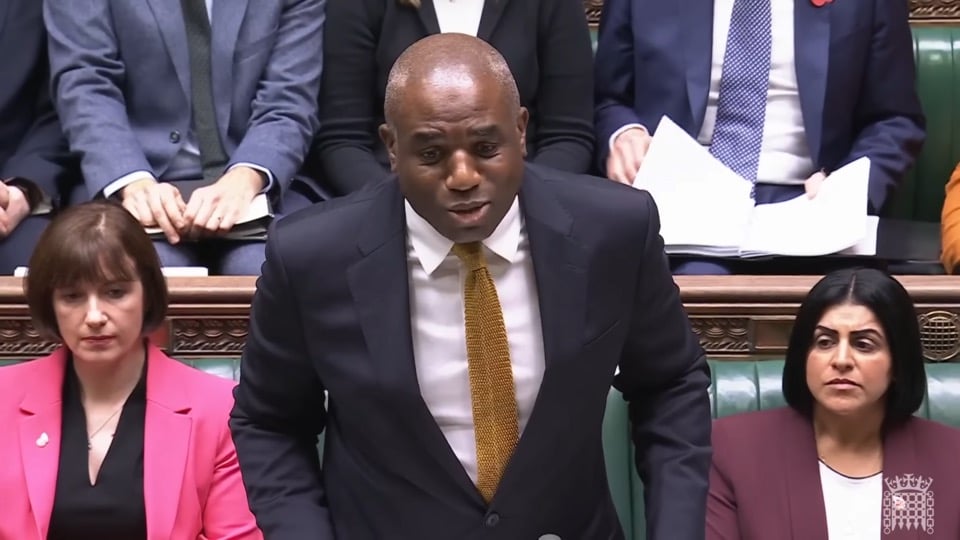
The Government is considering raising the age of criminal responsibility from ten years old in England and Wales, Justice Secretary David Lammy has confirmed — a move that risks becoming the latest flashpoint in a growing row over Labour’s approach to crime and punishment.
A new youth justice White Paper published by the Ministry of Justice on Monday stopped short of proposing a specific new minimum age, but explicitly raised the possibility of change for the first time, noting that comparable jurisdictions have adopted higher thresholds and that the UN Committee on the Rights of the Child recommends a minimum age of 14.
Lammy said in his introduction to the review: “We will carefully consider whether the age of criminal responsibility — currently set at just 10 years old — still reflects modern understanding of childhood, vulnerability and development in today’s society.”
The document highlighted several international examples, including Scotland, where the age was raised from eight to 12 in 2021, and Ireland, where the general age of 12 applies — but children as young as 10 can still be charged with murder, manslaughter, rape and aggravated sexual assault. The White Paper noted that fewer than 50 sentences had been handed to children under 12 in the past five years, none of which were custodial.
The current minimum age of ten was set in 1963, making England and Wales an outlier among comparable nations. The Government said it would “carefully consider and respond” to ongoing work on the issue by the Bar Council before deciding whether to pursue reform.
However, the timing of the announcement is awkward for a government already under sustained attack over its criminal justice record. Labour has faced fierce criticism for a scheme that has seen more than 60,000 offenders released early from prison, and critics have accused the party of pursuing a systematic programme of “soft justice.” The prospect of raising the age at which children can be charged with a crime — effectively placing older primary school-age offenders beyond the reach of prosecution — is likely to deepen that perception.
The Daily Mail, which reported the story, noted the significant political risks attached to any change that could be framed as giving young offenders “no fear of prosecution.” Any reform would require primary legislation and is unlikely to command universal support even within Labour’s own parliamentary party.
