



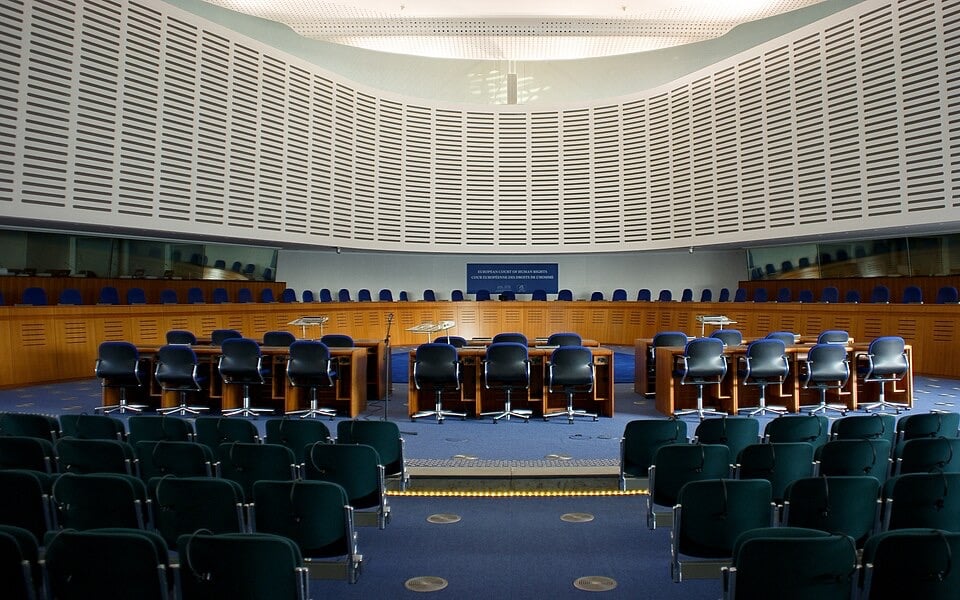
Nearly half of the judges sitting at the European Court of Human Rights had no experience as judges in their own countries before being appointed to the Strasbourg court, according to an analysis by the Daily Mail that has reignited debate about the quality and legitimacy of Europe’s top human rights tribunal.
The Daily Mail’s audit of judges’ CVs found that 19 of the court’s 46 justices had never presided over a case before joining the ECHR. Among them are career academics, civil servants and diplomats with no judicial background whatsoever. A further two judges were appointed as so-called “ad hoc” justices despite similarly having no prior experience on the bench in their home nations. Germany, Spain, Turkey, Greece and Austria were among the countries whose representatives had no judicial background before their appointment to the court.
Judges are nominated by member states and voted on by the Parliamentary Assembly of the Council of Europe — a body separate from the European Union of which Britain remains a member. The Council of Europe defended the composition of the court, with a spokesman saying that many judges were “highly specialised legal academics, who are well qualified for adjudicating on human rights issues,” and pointing out that other international courts, including the International Court of Justice, also include prominent academics among their judges.
Lord Blencathra, a member of the Parliamentary Assembly of the Council of Europe, was far less measured in his assessment. “Some of these people have never tried a case in their lives and some of them would not be good enough to teach in one of our worst polytechnic universities,” he said. “We tend to think that we must follow what the Court says because we are dealing with top class judges like our Supreme Court. We’re not.”
The findings come amid deepening scepticism about the court’s reach and judgment. In April 2024 the Strasbourg court ruled that Switzerland had violated the human rights of its own citizens by failing to take sufficient action on climate change — a decision that provoked a furious response across Europe. The court also issued an eleventh-hour interim injunction in June 2022 that halted the then Conservative government’s Rwanda deportation scheme, while refusing to identify the judge responsible for the ruling. It has further found that the UK’s blanket ban on prisoner voting breaches the right to free elections, and that whole-life sentences for violent offenders amount to inhuman or degrading treatment on the basis that they offer no possibility of review or release.
Both the Conservative Party and Reform UK have pledged to withdraw Britain from the ECHR if they win the next general election. The issue has gained fresh relevance after Sir Keir Starmer’s government signed a “political declaration” at a summit in Moldova this week, aimed at curbing the use of the Convention by illegal migrants and foreign criminals seeking to avoid deportation. Critics have dismissed the declaration as a “waste of time,” arguing that previous political statements of similar intent have produced little practical change and that the Convention’s underlying treaty text remains untouched.
