



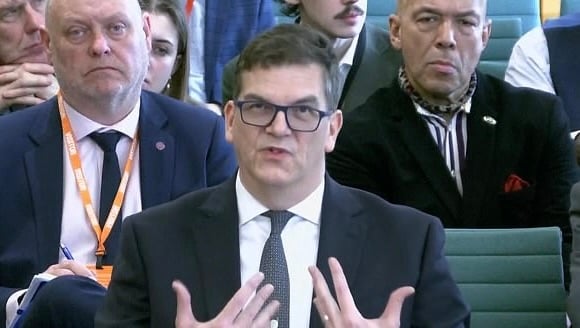
Sir Keir Starmer’s political position has been severely weakened after the senior civil servant he publicly blamed for the Mandelson vetting scandal struck back, telling MPs he had been subjected to an “atmosphere of pressure” from Downing Street and had felt the appointment was being driven through regardless of security concerns.
Sir Olly Robbins, who was dismissed from his role as the Foreign Office’s top official last week, gave explosive testimony to a parliamentary committee in which he said No10 had “chased” the posting and been “dismissive” of the need for formal security vetting. He described walking into a situation in which there was already a “very, very strong expectation” that Mandelson needed to be in post in Washington as quickly as possible.
The intervention directly contradicts the account Sir Keir offered during a bruising two-and-a-half hour Commons appearance the previous evening, during which he insisted he had been “deliberately” kept in the dark by officials who failed to tell him that security advisers had recommended against granting Mandelson the clearance he needed. Labour MPs drifted away from the benches behind the Prime Minister as the session wore on, with Sir Keir at one point acknowledging that his own version of events “beggars belief” — a concession that drew mocking laughter from across the chamber.
Sir Olly told the committee he had been verbally briefed that the UK Security Vetting service considered Mandelson “a borderline case” and was “leaning towards recommending that clearance be denied,” but that the Foreign Office’s own security team believed the identified risks could be managed. He also pointed out that Sir Keir had not followed advice from the Cabinet Secretary, issued in November 2024, recommending that security clearance be obtained before any political appointee was selected for the Washington role. Sir Olly confirmed he had received a letter terminating his employment and is understood to be consulting lawyers, raising the prospect of a significant financial settlement.
The Prime Minister’s difficulties were compounded further when Ed Miliband, the Net Zero Secretary, publicly revealed he had warned Foreign Secretary David Lammy before the appointment was announced that it could “blow up.” Miliband said Lammy had shared his concerns at the time. Despite those admissions, Miliband insisted Sir Keir should not lose his job, telling Sky News that “prime ministers make errors” and are “fallible.” He has denied harbouring any leadership ambitions, though many at Westminster regard his recent interventions as politically calculated.
Mandelson spent nine months as US ambassador before fresh details of his relationship with convicted paedophile Jeffrey Epstein forced his departure. He had been a political rather than a career appointment, chosen in part because Sir Keir hoped his experience and charm would prove effective in dealings with Donald Trump — a calculation that appeared briefly to pay off when Trump praised Mandelson’s “beautiful accent” during a trade announcement in May 2025.
That goodwill has evaporated entirely. Trump waded into the row overnight, writing on Truth Social that Mandelson had been “a really bad pick” and appearing to relish the Prime Minister’s discomfort. “Prime Minister Keir Starmer acknowledged that he ‘exercised wrong judgement’ when he chose his Ambassador to Washington,” Trump wrote. “I agree. Plenty of time to recover, however.”
The scandal has reignited questions about Sir Keir’s long-term survival in Downing Street. Scottish Secretary Douglas Alexander raised eyebrows by saying it was “not certain” the Prime Minister would lead Labour into the next election. The crisis arrives less than a fortnight before local elections at which Labour is widely expected to suffer significant losses to Reform UK. Sir Keir survived a coup attempt in February, but allies acknowledge the next few days will be critical. One senior Government figure told journalists the week ahead “could go either way.”
Angela Rayner is meanwhile expected to call on Labour to be “bolder” at a conference appearance this evening — language that will do little to quieten speculation about the party’s direction and leadership.
