



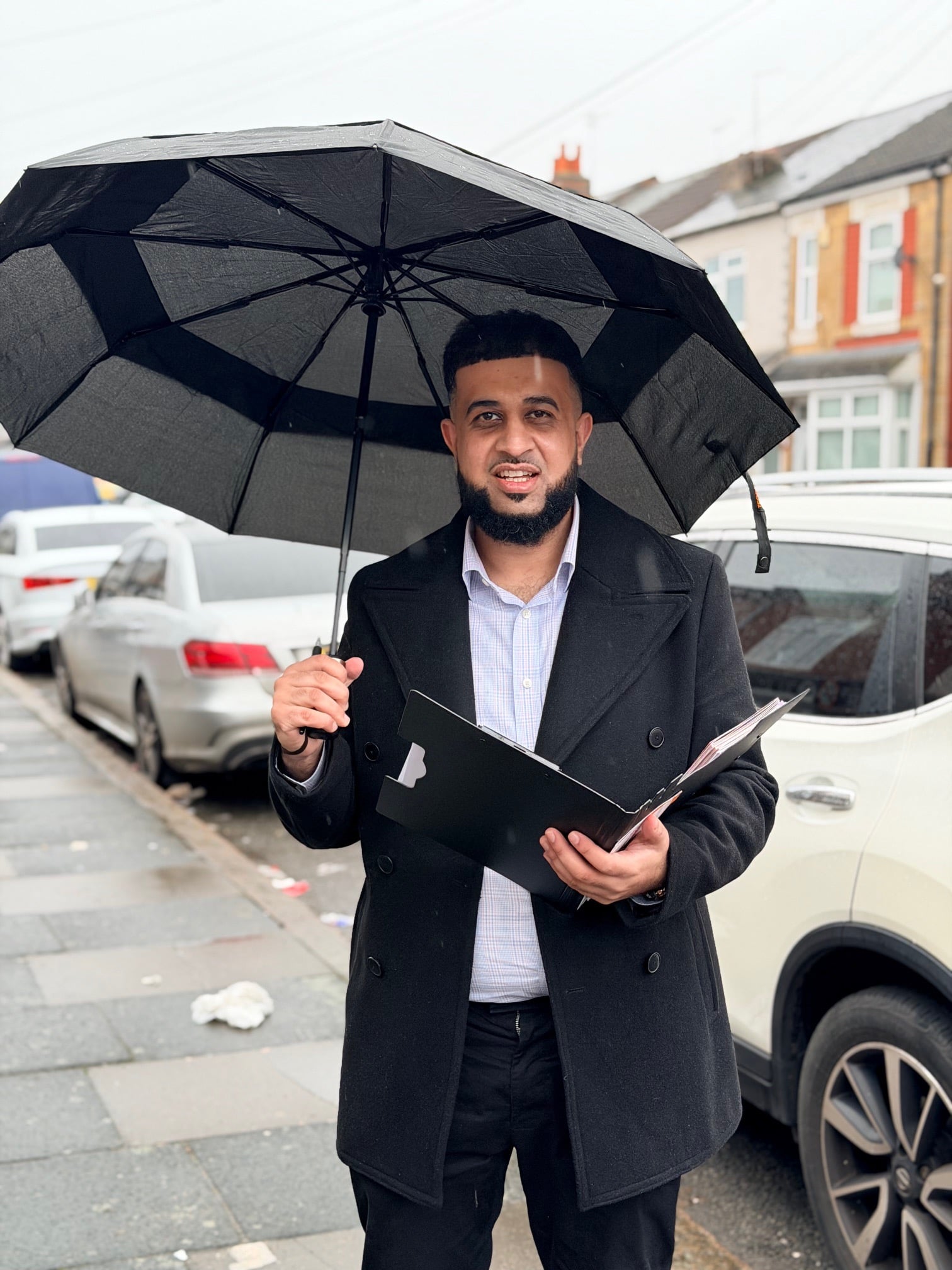
Britannia Daily can exclusively reveal an interview with Harris Khaliq, the independent candidate standing in Birmingham’s Ward End district, who has spoken candidly about Labour’s treatment of Muslim communities, his reasons for leaving the party and what he would do if elected.
As a growing number of independent candidates prepare to contest traditionally safe Labour seats across Birmingham — threatening to end the party’s decades-long grip on Britain’s second city — Britannia Daily spoke exclusively with one of the most prominent challengers to hear directly from him about why he believes Labour has forfeited the right to govern communities it once took for granted — amid accusations the party has treated Muslim voters as a ‘vote bank’ for decades.
Harris Khaliq, 34, an IT project manager standing in Ward End in the north-east of the city — where three-quarters of the population are Muslim — has been a visible presence on the campaign trail. But he is keen to make clear that his campaign extends far beyond a single issue.
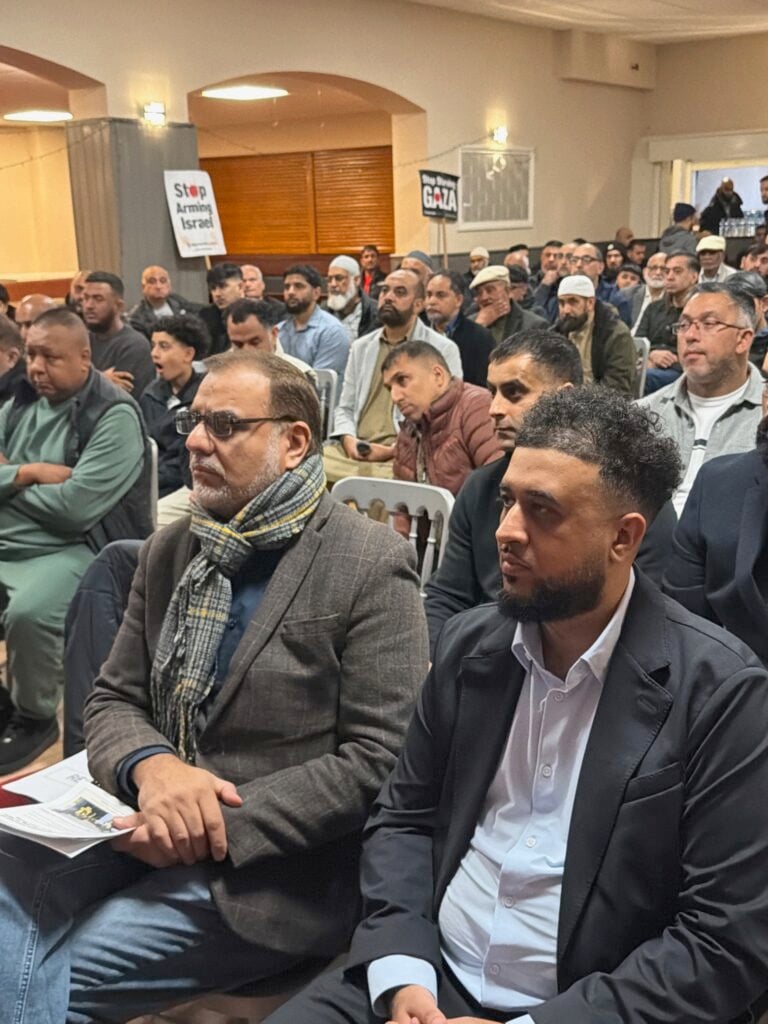
Supporters attend a campaign launch event in Birmingham, backed by Ayoub MP.
Labour Has ‘Treated Communities As A Means To An Electoral End’
When Britannia Daily asked whether Labour had cynically used Muslim communities and pro-Palestine supporters as a convenient vehicle to gain power, Khaliq was unequivocal. “Yes — historically, Labour has relied on a form of bloc or clan-based politics, where support from Muslim communities was often taken for granted,” he said. “Engagement was frequently limited to a small number of self-appointed community gatekeepers, with promises made that were rarely meaningfully delivered. This approach treated communities as a means to an electoral end, rather than as equal stakeholders deserving genuine representation and long-term investment.”
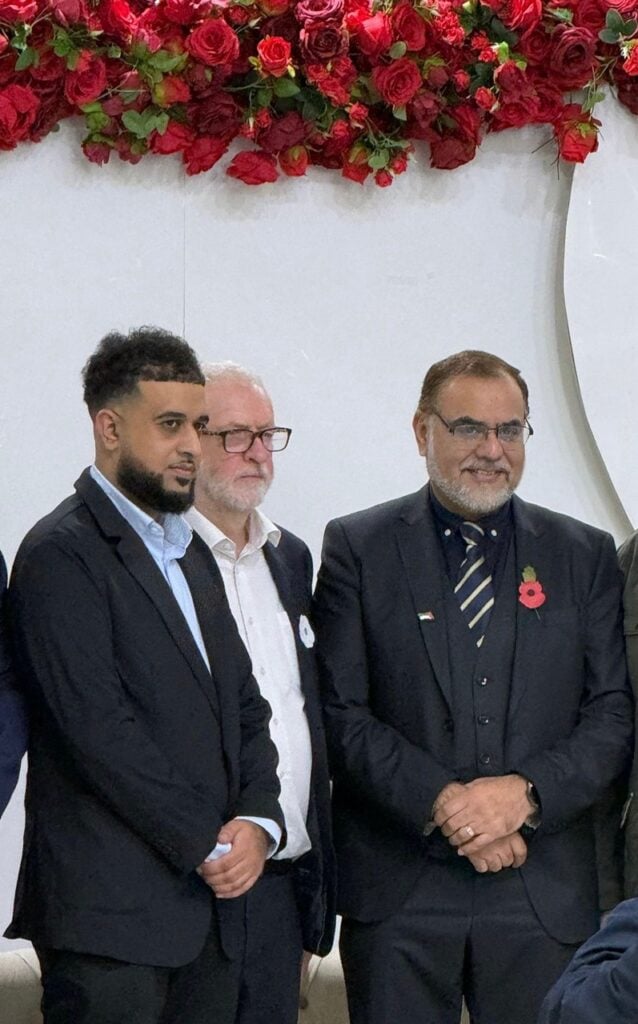
Harris Khaliq (left) alongside Jeremy Corbyn (centre) and Ayoub MP at a Birmingham rally.
A Sense Of Betrayal That Drove Him To Stand
That feeling of being used and discarded is, Khaliq acknowledges, a significant reason behind his decision to leave Labour and contest the seat as an independent. “It is certainly a major factor,” he told Britannia Daily. “Over time, Labour has shifted so far from its traditional values that the distinction between it and the Conservatives has become increasingly blurred. In some cases, it has even mirrored rhetoric associated with parties like Reform, particularly around immigration. Policies such as extending the pathway to Indefinite Leave to Remain as a political signal rather than a principled position highlight this drift. I could no longer reconcile my values with the direction the party has taken.”
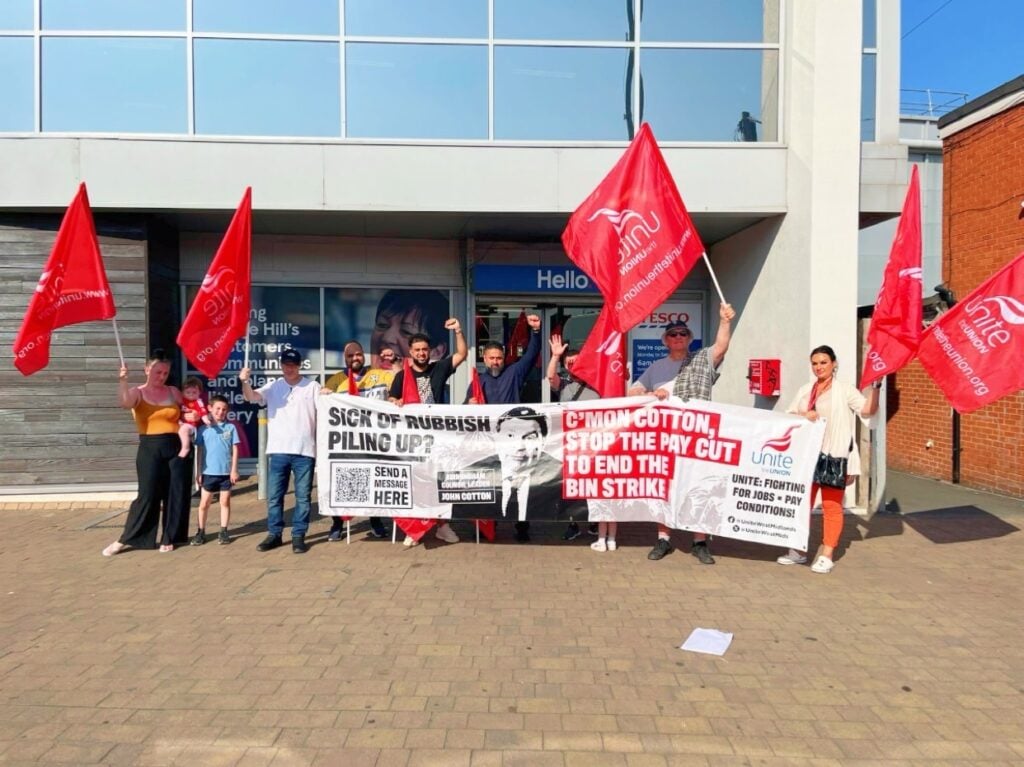
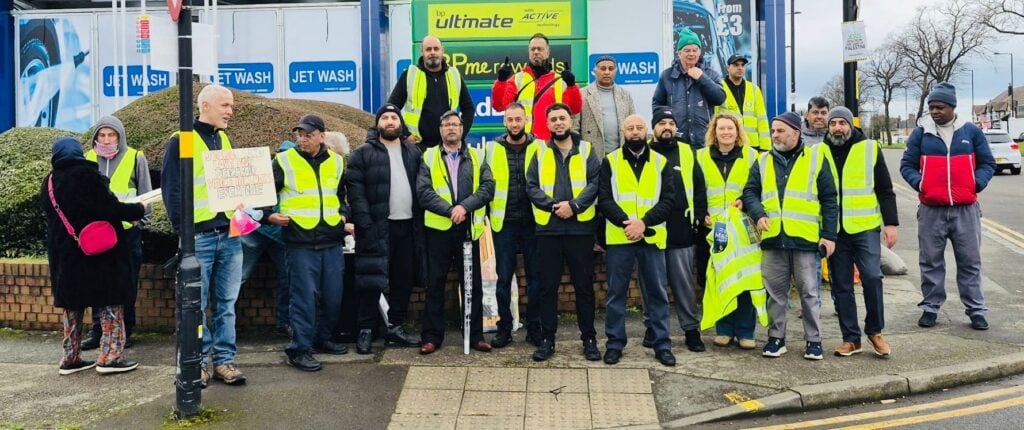
Campaigners, including Birmingham candidate Harris Khaliq, protest outside a Tesco store in Birmingham over the ongoing bin strike.
Where Labour Went Fundamentally Wrong
On the deeper question of Labour’s failures, Khaliq points to a loss of ideological grounding that predates the current crisis. “Labour has allowed itself to be influenced by right-leaning think tanks and internal factions that prioritise electoral triangulation over principle,” he said. “The treatment of its own members and leadership — particularly the sustained campaign against Jeremy Corbyn, who was one of the most popular leaders among grassroots members in recent memory — marked a turning point. That period eroded trust, fractured the base, and signalled a move away from the party’s core mission of social justice.”
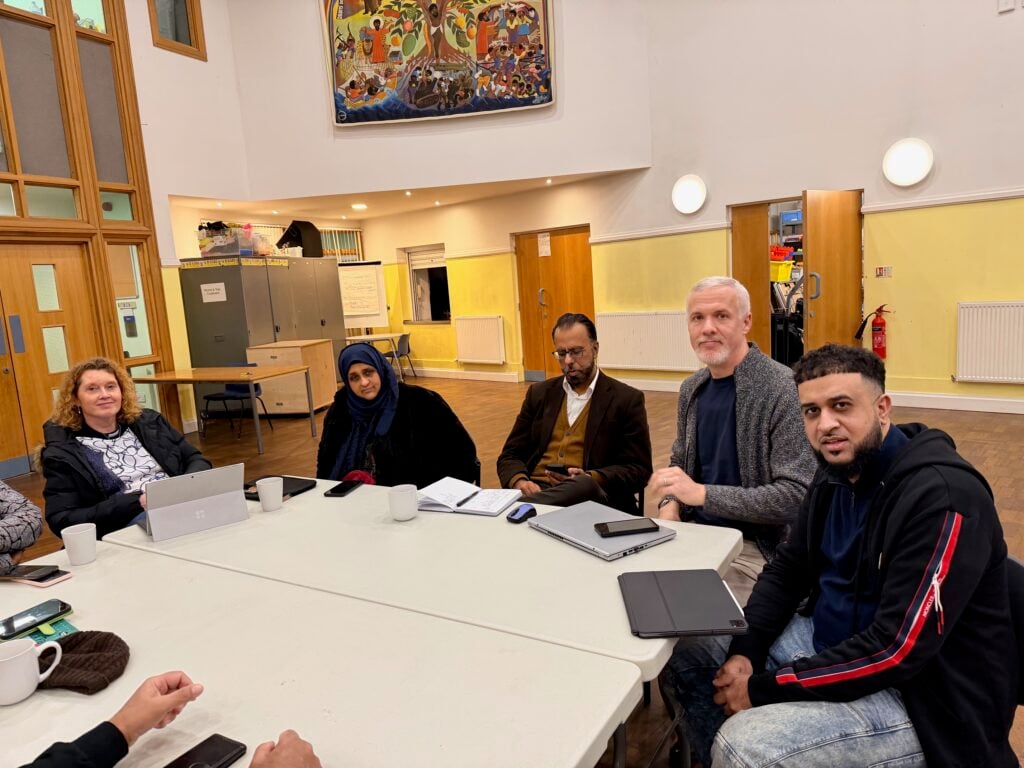
Members of a community interfaith alliance meet in Birmingham to discuss local issues and community cohesion.
The Feeling On The Ground
When asked about the mood within his community, Khaliq described widespread disillusionment that goes well beyond individual grievances. “There is a deep sense of frustration,” he said. “Many people feel taken for granted after decades of loyal support. This is reflected not just in conversations on the ground, but in voting patterns — Labour’s vote share has been significantly eroded in many of these communities. People feel ignored on both local issues, such as waste collection and infrastructure, and on broader moral and international concerns.”
Birmingham’s Labour-run council has been in crisis for years. It effectively declared itself bankrupt in 2023 after a £760 million equal pay settlement and £100 million wasted on a failed IT system. Council tax has risen by ten per cent for two consecutive years, government commissioners were brought in to impose deep cuts, and a bin strike has ground on for over a year — a grievance Khaliq hears about on every doorstep he knocks on.
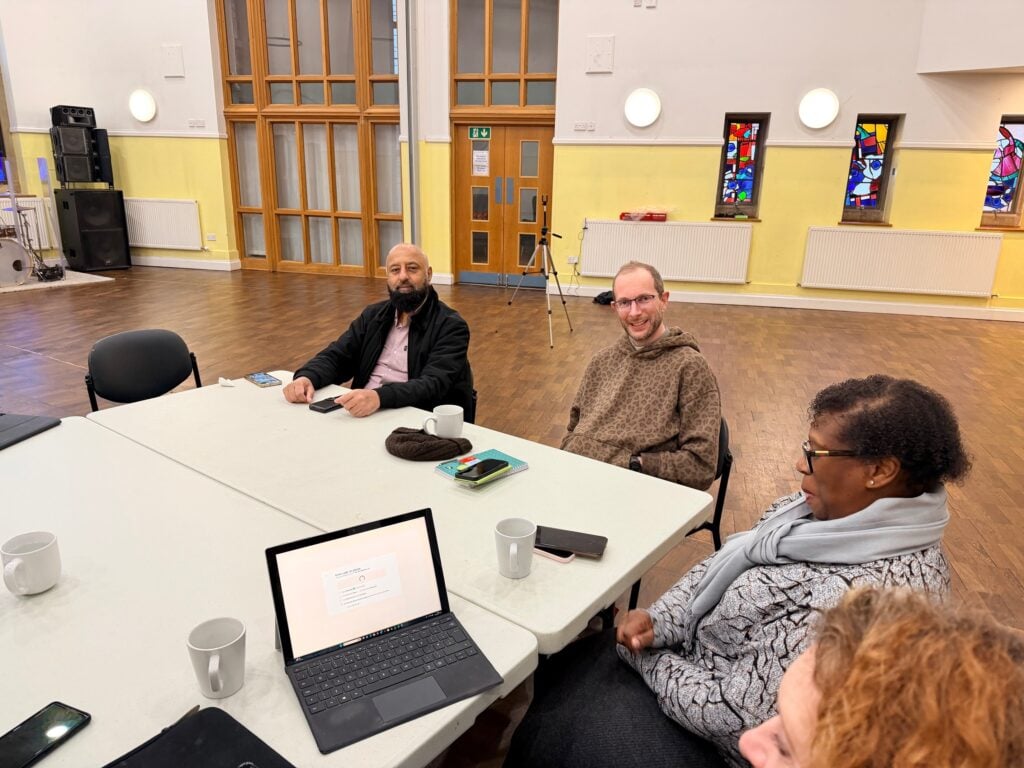
Members of a community group meet in Birmingham to discuss local issues and community engagement.
What He Promises If Elected
If elected to represent Ward End, Khaliq’s pledges are rooted in direct accountability and community empowerment. “My approach is rooted in visibility, accountability, and empowerment,” he told Britannia Daily. “I will hold regular surgeries and maintain a consistent presence in the community so residents know they are being heard. I plan to support the formation of resident-led groups, ensuring that local people are directly involved in decision-making rather than decisions being imposed from above.”
On practical issues, he is committed to tackling waste management, road maintenance and public safety, while also investing in longer-term opportunities. He has particular personal commitment to Special Educational Needs provision — an area he says is critically underfunded and one he has been directly involved in professionally. He also intends to support social mobility projects and youth development initiatives, reflecting values he says inform everything he does in public life.
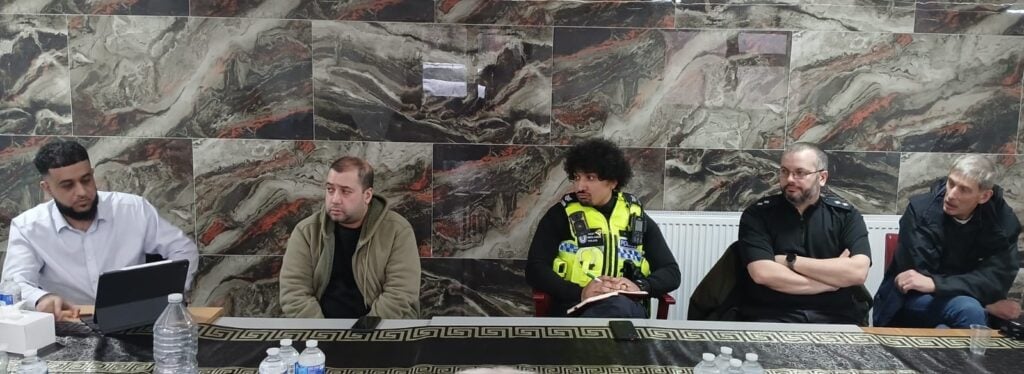
Police and community representatives meet in Birmingham to discuss preparations for a planned protest linked to UKIP.
On Future Political Arrangements
When Britannia Daily asked about discussions around forming or joining another political party, Khaliq said his immediate focus was on collaboration rather than formal structures. He confirmed he has the endorsement of Your Party and said he was open to working with other progressive representatives, including the Greens, where there was shared ground. “The priority is to challenge one-party dominance and ensure proper representation,” he said. “As for future political arrangements, I am keeping my options open.”
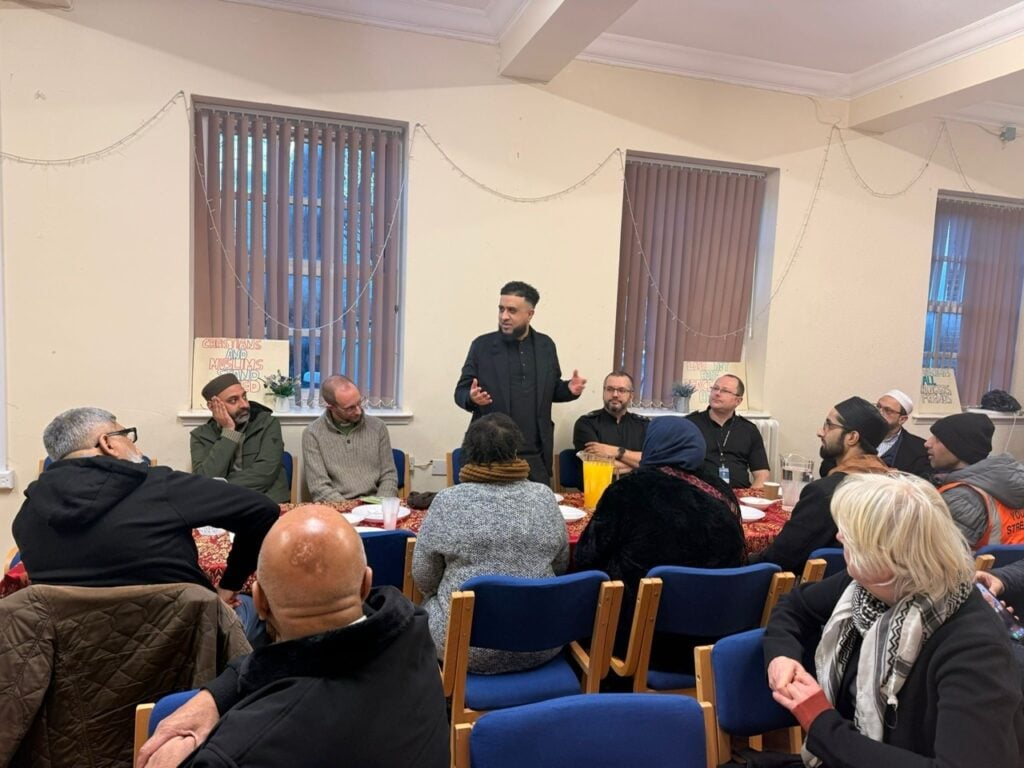
Police, church and mosque leaders join community members for a Ramadan iftar in Birmingham.
Who is Harris Khaliq
Beyond politics, Khaliq described a background rooted in community engagement, professional development and advocacy. His professional work has focused on helping people build skills, confidence and independence — values he says directly inform his approach to public service. He has been actively involved in addressing challenges around Special Educational Needs, advocating for better support systems for families navigating the system. Full details of his background and vision for community-led change are available on his websites.
Counter-protesters gather in Birmingham’s Ward End during a demonstration linked to UKIP.
A Turning Point In Local Politics
Khaliq closed his interview with Britannia Daily with a message that speaks to the broader moment the city — and arguably the country — finds itself in. “I believe we are at a turning point in local politics,” he said. “People are no longer willing to accept being taken for granted, and there is a growing demand for authenticity, accountability, and action. My campaign is about restoring trust — ensuring that representation is not just symbolic, but meaningful and effective. I am standing to give residents a genuine voice and to build a model of politics that is rooted in service, not self-interest.”
Birmingham’s local elections take place on 7 May.
Labour has been contacted for comment.
Wider Political Context
Recent projections suggest Birmingham City Council could become increasingly fragmented following the upcoming local elections, with no single party expected to secure a majority. Labour is forecast to lose significant ground in several wards, reflecting broader shifts in voter sentiment across the city.
Nationally, the party faces mounting challenges of its own. Reports indicate Labour could suffer substantial losses across England, with declining support in key areas contributing to what many within the party privately acknowledge could be a damaging set of results.
This comes amid intensifying internal tensions within Labour, with Sir Keir Starmer facing significant pressure over the controversial appointment of Peter Mandelson — an issue that has sparked considerable debate within the party and prompted widespread calls for further scrutiny. For many voters in wards like Ward End, the drama playing out in Westminster only reinforces the sense that Labour’s priorities lie elsewhere.
