



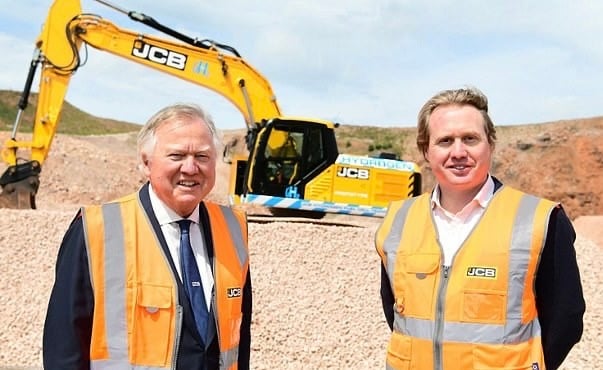
A comprehensive survey revealing two-thirds of Britain’s ultra-wealthy have considered emigration for tax reasons has gained explosive reinforcement from JCB heir Jo Bamford, who warned the Staffordshire manufacturing giant could relocate to America escaping Rachel Reeves’ inheritance tax changes.
The BDO accountancy firm poll of 200 tycoons worth at least £50 million exposed a fundamental “trust gap” between Britain’s wealthiest and the Labour government, with policy uncertainty proving a bigger emigration driver than tax rates themselves—42 per cent cited chaotic tax policies as their main concern versus just 18 per cent naming high rates.
Mr Bamford’s threat to move the £6 billion-turnover heavy machinery manufacturer—employing over 8,000 workers across 11 British factories—underscores the political rather than purely financial nature of wealthy discontent, with the JCB chairman’s son characterising the inheritance levy as a “real problem” threatening the firm’s British future.
“It could quite easily become an American business,” Mr Bamford told City AM, though emphasising: “I love being in Britain. I love being here. I love our factories here. But there’s only so much you can ultimately do.”
From 6 April, full inheritance tax relief applies only on the first £2.5 million of firm assets, with anything exceeding that threshold facing 20 per cent charges—a limit raised from £1 million after fears about destroying family farms, though critics argue it remains punitive for major manufacturers.
Sir James Dyson has similarly condemned the levy as “revenge economics,” warning his company would need finding “billions of cash” upon his death, potentially forcing sales: “What it means is you’d have to sell the business. And who wants to start a family business if you can’t leave it to your children?”
The Dyson founder—who has introduced son Jake into operations—emphasised his desire seeing the firm “going from strength to strength” under family stewardship rather than facing forced disposal.
BDO expert Elsa Littlewood diagnosed “change fatigue” amongst wealth creators suffering “constant pressure,” stating: “Year on year there’s been change after change, and living with that instability is wearing them down. For many, the final straw came when the government started making big changes to inheritance tax.”
The survey revealed 55 per cent of ultra-wealthy individuals and heirs felt people had responsibility—not obligation—paying tax, whilst 82 per cent considered taxation a “social responsibility to be paid in full,” suggesting willingness contributing provided policy stability existed.
JCB—established 1945 by Joseph Cyril Bamford, Lord Bamford’s father—represents one of Britain’s largest family-owned manufacturers producing construction, agriculture, waste handling and demolition machinery.
A Treasury spokesman defended the changes: “We’ve listened and raised the relief threshold to £2.5m to protect more small family businesses, while ensuring the largest make a fair contribution.”
