



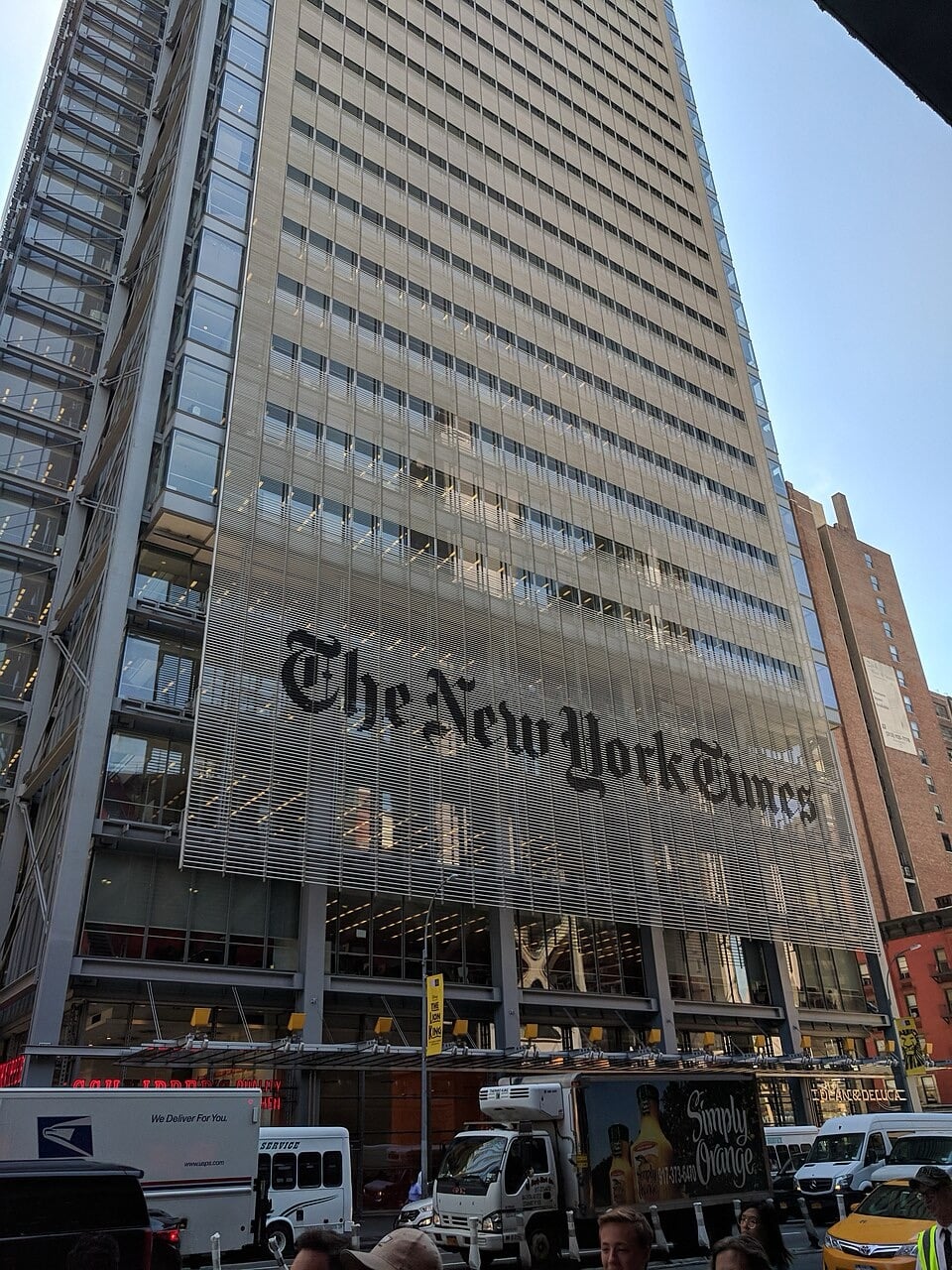
Israel has launched a fierce denunciation of The New York Times after the paper published a column alleging widespread sexual abuse of Palestinian prisoners by Israeli security forces, with the government’s foreign ministry describing it as one of the worst “blood libels” to appear in the modern press.
The piece, written by Times columnist Nicholas Kristof and published on Monday, was titled “The Silence That Meets the Rape of Palestinians.” In it, Kristof interviewed 14 individuals who alleged they had been sexually abused while in Israeli detention. Several sources claimed to have been raped repeatedly with batons by prison guards; others alleged their genitals had been beaten or yanked, with one reportedly requiring amputation as a result of the injuries sustained. Kristof also quoted an anonymous Gazan journalist who alleged he had been raped by a dog while soldiers photographed the assault.
The columnist argued that while Israeli leaders may not have explicitly ordered such conduct, the country’s security apparatus had created conditions in which sexual violence had become a feature of Palestinian mistreatment. He drew a direct parallel with Prime Minister Benjamin Netanyahu’s demand for international condemnation of Hamas’s conduct on 7 October, writing: “Think of it this way: The horrific abuse inflicted on Israeli women on Oct 7 now happens to Palestinians day after day.” Kristof also claimed the United States bore partial responsibility, given that American taxpayers fund the Israeli security establishment.
Israel’s Ministry of Foreign Affairs responded swiftly and in forceful terms. In a statement posted to social media, it said the Times had “chosen to publish one of the worst blood libels ever to appear in the modern press,” accusing Kristof of turning “the victim into the accused” through what it described as “an endless stream of baseless lies.” The ministry added that the timing of the article was deliberate, calling it “part of a false and well-orchestrated anti-Israel campaign aimed at placing Israel on the UN Secretary-General’s blacklist.” The term blood libel refers to a deeply rooted antisemitic trope, originating in the Middle Ages, that falsely accused Jews of murdering Christians for ritual purposes. Its modern usage has broadened to describe malicious false accusations directed at Jewish people or the state of Israel.
Pro-Israel media watchdog Honest Reporting alleged inconsistencies in the account of a key complainant, claiming the individual had previously expressed support for Hamas. Journalist David Collier accused the Times of “acting like a Hamas mouthpiece to deliberately spread misinformation,” while commentator Emily Schrader said the claims involving dogs made a “mockery” of genuine victims of sexual violence.
The column’s publication comes in the context of a prior incident at Sde Teiman military prison, where CCTV footage emerged in July 2024 appearing to show Israeli guards sexually abusing a Palestinian detainee. A prisoner subsequently required hospital treatment for severe internal injuries. Soldiers were charged with aggravated abuse and causing serious bodily harm, though those charges were dropped in March 2026 — a decision publicly praised by Netanyahu.
Kristof’s piece appeared just days before the release of what is described as the most comprehensive account to date of sexual violence committed during the Hamas-led attacks of 7 October 2023. The report, produced by The Civil Commission — an independent Israeli women’s rights organisation — runs to more than 180 pages and draws on over 430 testimonies from witnesses, survivors, medical staff, returning hostages, and expert analysts. Funded by philanthropic organisations, with its archive supported by the German Embassy in Israel, the commission reviewed more than 10,000 photographs and videos amounting to over 1,800 hours of visual material, alongside geolocation data, text messages, and open-source intelligence.
The report documents a recurring pattern of rape and gang rape, sexual torture, mutilation, forced nudity, genital burning, and post-mortem sexual humiliation. It finds the abuse was not isolated but systematic — a deliberate tactic employed across the Nova music festival and kibbutz attacks. According to the report, Hamas terrorists carried Arabic-to-Hebrew phrase lists instructing victims to remove clothing and adopt positions consistent with sexual assault. The Civil Commission also found that men were subjected to sexual abuse and that in at least one case gang rape occurred. Young relatives were reportedly forced to commit sex acts on one another — described in the report as a premeditated strategy intended to destroy family units long after any survivors were released from captivity.
