



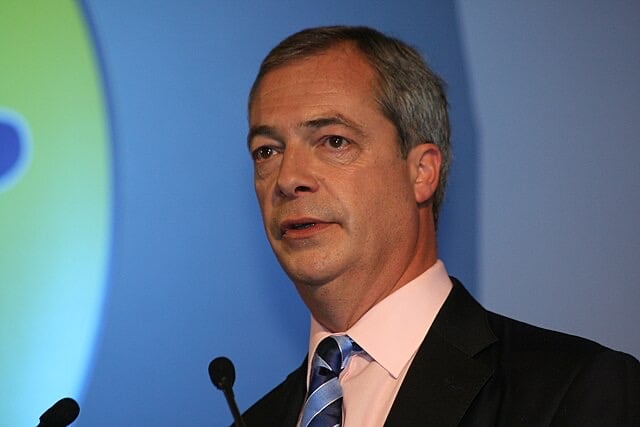
Nigel Farage faces mounting pressure to dismiss two additional local election candidates after investigations uncovered racist and anti-Muslim social media content, intensifying questions about Reform UK’s candidate screening processes ahead of May’s council polls.
Labour has characterised the party’s vetting procedures as “clearly not fit for purpose” following revelations that Alan Stay, standing for Reform on the Isle of Wight, shared Facebook posts featuring explicit racial epithets whilst defending their usage as harmless language.
Stay’s social media activity included responding to a news story about a DJ’s dismissal for playing a record containing racist terminology by repeatedly using the slur himself and arguing it carried no harmful connotations, according to images of the posts.
Separately, Caroline Panetta, a Reform candidate in the outer London borough of Bexley, retweeted anti-Islamic statements including claims that Mayor Sadiq Khan sought to transform the capital into “Londonstan” where women would face danger.
In her own posts, Panetta characterised Islam as “the religion of rape, incest and paedophilia,” whilst her retweets included assertions that George Floyd’s 2020 murder conviction represented a miscarriage of justice, describing the victim killed by a Minneapolis police officer as a criminal.
The discoveries compound a series of controversies surrounding Reform candidates across England’s 7 May local elections alongside individuals standing for the Scottish and Welsh parliaments, despite Farage’s repeated assurances that the party had substantially strengthened its vetting mechanisms.
Labour party chair Anna Turley demanded immediate action from the Reform leader. “What will it take for Nigel Farage to finally act?” she stated, noting his repeated boasting about improved screening procedures. “Farage must condemn these vile remarks, sack them as Reform candidates and kick them out of his party without delay.”
The episodes raise fundamental questions about Reform UK’s capacity to identify problematic candidates before nominations close, particularly given Farage’s public commitments to enhanced due diligence following previous scandals involving prospective office-holders.
Social media histories have emerged as a persistent vulnerability for political parties seeking rapid candidate recruitment, though the frequency of Reform-related controversies suggests systemic rather than isolated screening failures.
The timing proves particularly damaging given the proximity to May’s elections, with insufficient opportunity remaining to replace candidates on ballots already printed, potentially forcing Reform to campaign for individuals whose views contradict stated party positions.
