



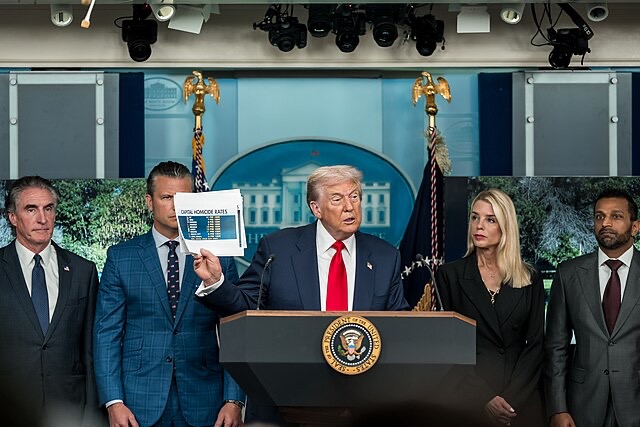
Iran’s overnight closure of the Strait of Hormuz has plunged President Donald Trump’s proclaimed Middle East “victory” into immediate crisis, with the US leader threatening “bigger, and better and stronger” attacks whilst Britain risks fresh transatlantic tensions over control of the world’s most critical energy chokepoint.
Tehran cited ongoing Israeli bombardment of Hezbollah positions in Lebanon as justification for halting tanker traffic through the waterway carrying 20 per cent of global oil and gas supplies, sending petroleum prices soaring and triggering renewed stock market declines hours after Wednesday’s ceasefire announcement.
Iranian authorities released maps showing “danger zone” areas in the Traffic Separation Scheme marked in Farsi, with state media warning unauthorised vessels would be “targeted and destroyed” whilst charts dated 28 February through 9 April suggested Islamic Revolutionary Guard Corps paramilitary forces had mined portions of the strategic passage.
The regime demanded ships notify IRGC-linked intermediary companies of cargo, destinations and ownership whilst paying tolls of at least $1 per barrel in Chinese yuan or cryptocurrency—potentially amounting to £2.2 million per vessel.
Mr Trump initially dismissed the toll concept before reversing course, telling ABC: “We’re thinking of doing it as a joint venture. It’s a way of securing it—also securing it from lots of other people. It’s a beautiful thing.”
The abrupt policy shift set the stage for diplomatic confrontation with Britain, where Prime Minister Sir Keir Starmer warned Gulf allies during a United Arab Emirates visit that Iran “must not hold the Strait of Hormuz to ransom.”
Foreign Secretary Yvette Cooper declared it “crucial” Iran not apply tolls, with her Lady Mayor’s Easter Banquet speech tonight expected to state rights of passage “must not be unilaterally withdrawn or sold off to individual bidders.”
“Nor can there be any place for tolls on an international waterway,” Ms Cooper will add, according to advance briefing.
Iranian Deputy Foreign Minister Saeed Khatibzadeh told BBC Radio 4’s Today programme his country “sent a message” to Washington by closing the Strait in response to Lebanese attacks, adding he remains “very doubtful” negotiations will yield definitive agreement.
Vice President JD Vance characterised the arrangement as a “fragile truce” whilst claiming Iran submitted three versions of its 10-point peace plan with the first “probably written by ChatGPT,” additionally questioning whether chief negotiator Mohammad Bagher Qalibaf understood English.
Key Trump advisers remain sceptical the ceasefire holds according to the New York Times, with tensions exacerbated by the President’s fury over NATO allies refusing to dispatch warships assisting Strait reopening efforts.
“NATO WASN’T THERE WHEN WE NEEDED THEM AND THEY WON’T BE THERE IF WE NEED THEM AGAIN,” Mr Trump declared on Truth Social following a scheduled meeting with Secretary General Mark Rutte.
