



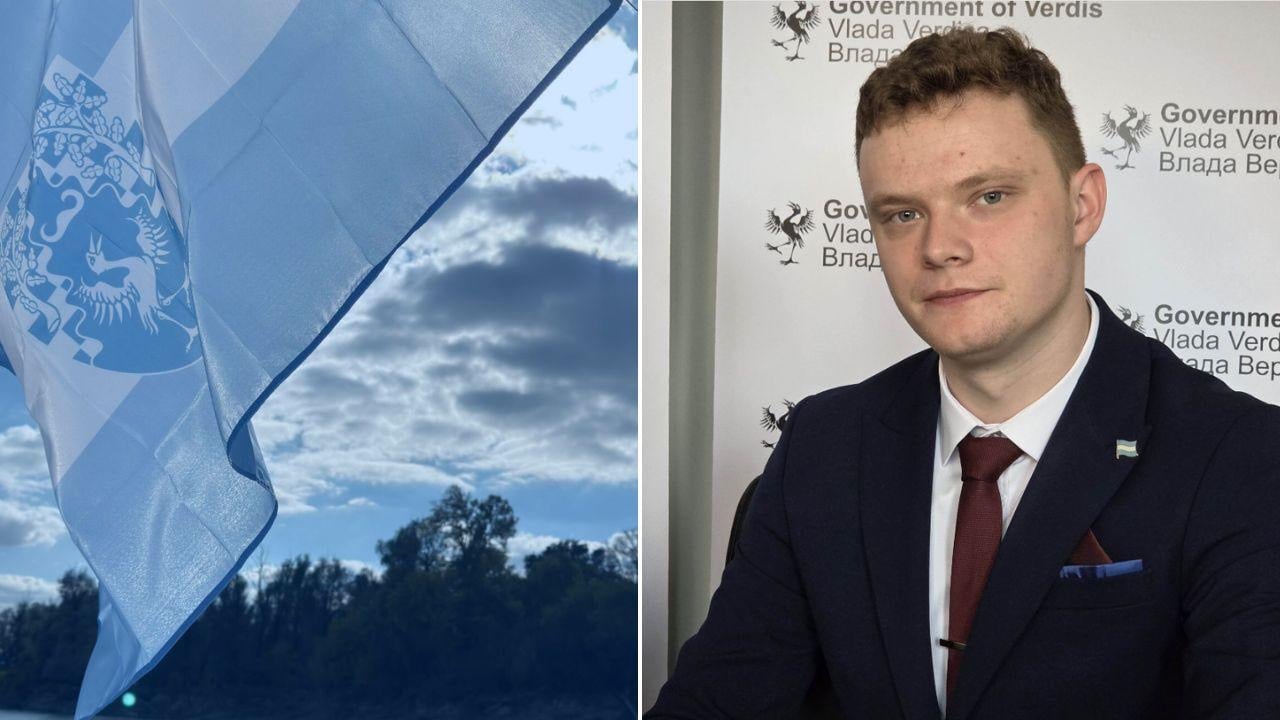
A 21-year-old Australian operates what he describes as a functioning state apparatus—complete with citizenship programmes, government ministries and international representation—for a sliver of disputed Balkan forest he has never been permitted to settle, following his detention and expulsion by Croatian authorities.
Daniel Jackson’s Free Republic of Verdis has attracted over 4,000 e-residency participants since its 2019 proclamation, with the membership base surging 300 per cent in five months despite the self-styled president being physically barred from the 0.5 square kilometre territory he claims along the Croatia-Serbia Danube border.
The Upper Ferntree Gully native identifies the land—known as Pocket 3—as terra nullius, asserting Yugoslavia’s dissolution left the narrow strip legally unclaimed and available for nation-building. The area sits within a longstanding border dispute where competing historical and geographical claims have created jurisdictional limbo.
Jackson’s 2023 attempt to establish permanent presence through settlement construction and humanitarian operations ended abruptly when Croatian forces removed occupants and imposed an ongoing blockade preventing physical access. He operates the venture from the United Kingdom and Serbia, where a representative office recently opened.
“Even while operating in exile, Verdis still has a responsibility for its citizens, just like any other country,” Jackson maintains, describing daily activities spanning cabinet management, diplomatic correspondence and citizen engagement alongside surveying expeditions to the disputed zone and Ukrainian humanitarian missions.
The project charges participants from €29.99 annually for e-residency status enabling business registration and citizenship pathways, though membership confers no residential rights and citizens cannot occupy the territory—accessible only by boat and surrounded by areas potentially containing landmines.
Legal scholars dispute Jackson’s statehood claims, noting absence of permanent population and effective territorial control violates core sovereignty requirements under international law. He rejects categorisation as a micronation, insisting Verdis’ legal basis and diplomatic engagement distinguish it from “entities that claim a backyard.”
The venture joins a distinctly Australian tradition of self-declared states, with University of Technology Sydney research identifying the country as hosting one of the world’s highest concentrations of such projects. The Principality of Hutt River operated from 1970 until COVID-19 financial pressures forced 2020 dissolution, whilst Atlantium has functioned since 1981 as what proponents term philosophical sovereignty.
Jackson envisions eventual blockade lifting, infrastructure development and constitutional elections he claims he will not contest. “I don’t plan to run… I plan to step down and live as a normal Verdisian citizen,” he states, positioning his presidency as temporary stewardship rather than permanent leadership.
