



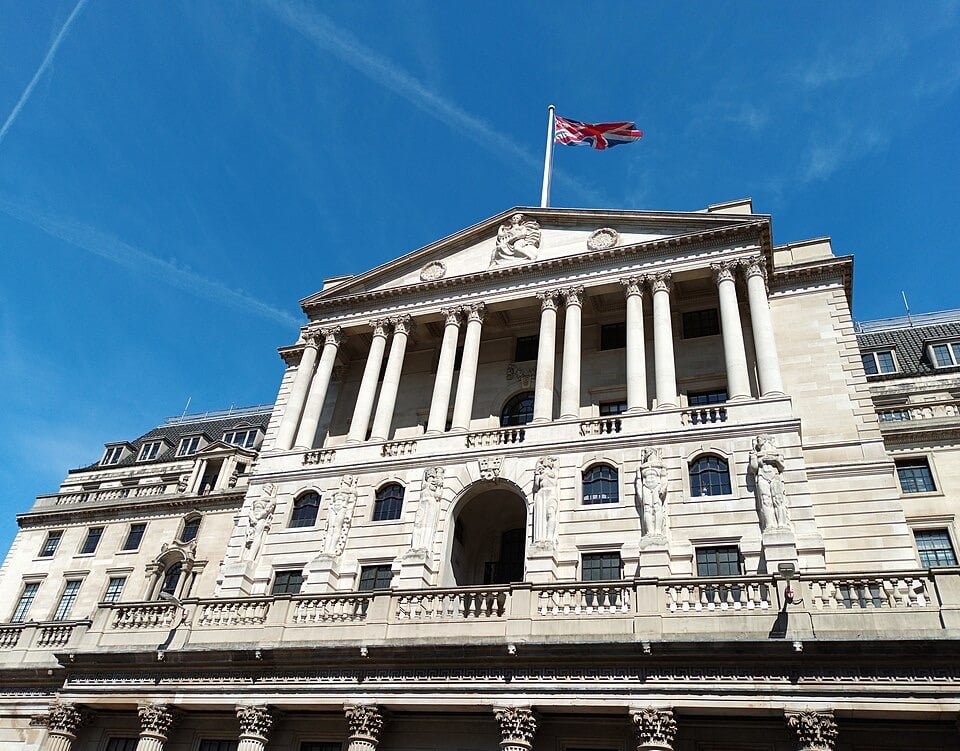
The Bank of England decided to remove Winston Churchill, Alan Turing and Jane Austen from British banknotes after commissioned research told officials the figures were “elitist and divisive” — with one focus group participant even describing the celebrated Bletchley Park codebreaker as “imperialistic,” newly obtained documents reveal.
A market research study conducted by Savanta in October 2025, reported by The Telegraph, gathered views from 119 focus group participants and concluded that depicting historical figures on currency was “potentially divisive, elitist and disconnected from their own experiences.” Researchers advised the Bank that such portraits presented “a backward-looking vision of the UK that carries too great a risk of division and controversy” and were “contentious and not representative of the UK’s cultural and natural diversity.” Younger participants were particularly sceptical about whether current banknote subjects remained relevant, with a “clear desire for banknote imagery to evolve and better reflect modern Britain by being more inclusive.”
In one of the more striking passages from the research, a participant described Alan Turing — the mathematician whose codebreaking work at Bletchley Park is widely credited with shortening the Second World War — as emblematic of an “imperialistic” mindset. “It does kind of still feel a little bit imperialistic,” the participant said. “Even Alan Turing, who was obviously a famous scientist, is within the context of winning the Second World War. It does feel like there is that kind of boomer, imperialistic, ‘we’re the ones who won the Second World War and saved the world’ feeling to the notes.”
The Bank of England has publicly justified the move to wildlife imagery on different grounds. Governor Andrew Bailey wrote in The Telegraph this week that the Bank’s “foremost objective is the security of our banknotes, which includes tackling the threat from counterfeiting,” arguing that fraudsters are increasingly skilled at replicating human faces. The Bank has also pointed to a public consultation in which 60 per cent of 44,000 respondents chose nature as their preferred theme — ranking it above architecture, landmarks and historical figures.
The revelation that private research citing “elitism” and “divisiveness” informed the decision has provoked fierce criticism. Reform UK’s Treasury spokesman Robert Jenrick said: “If it wasn’t for the likes of Churchill and Turing, we’d be living under a Government that really was divisive and imperialistic. It’s not too late to cancel this nonsense.” Retired British Army Colonel Richard Kemp was equally blunt. “Without great and courageous figures like Churchill and Turing, we may have swastikas on our banknotes today. We owe them so much, and it is right that we should be reminded of our debt to them daily on our banknotes.” He called the decision “shameful” and accused the Bank of succumbing to “the woke desire to erase Britain’s proud and remarkable culture.”
The Bank of England first introduced historical figures onto sterling notes in 1970, when William Shakespeare appeared on the £20 note.
