



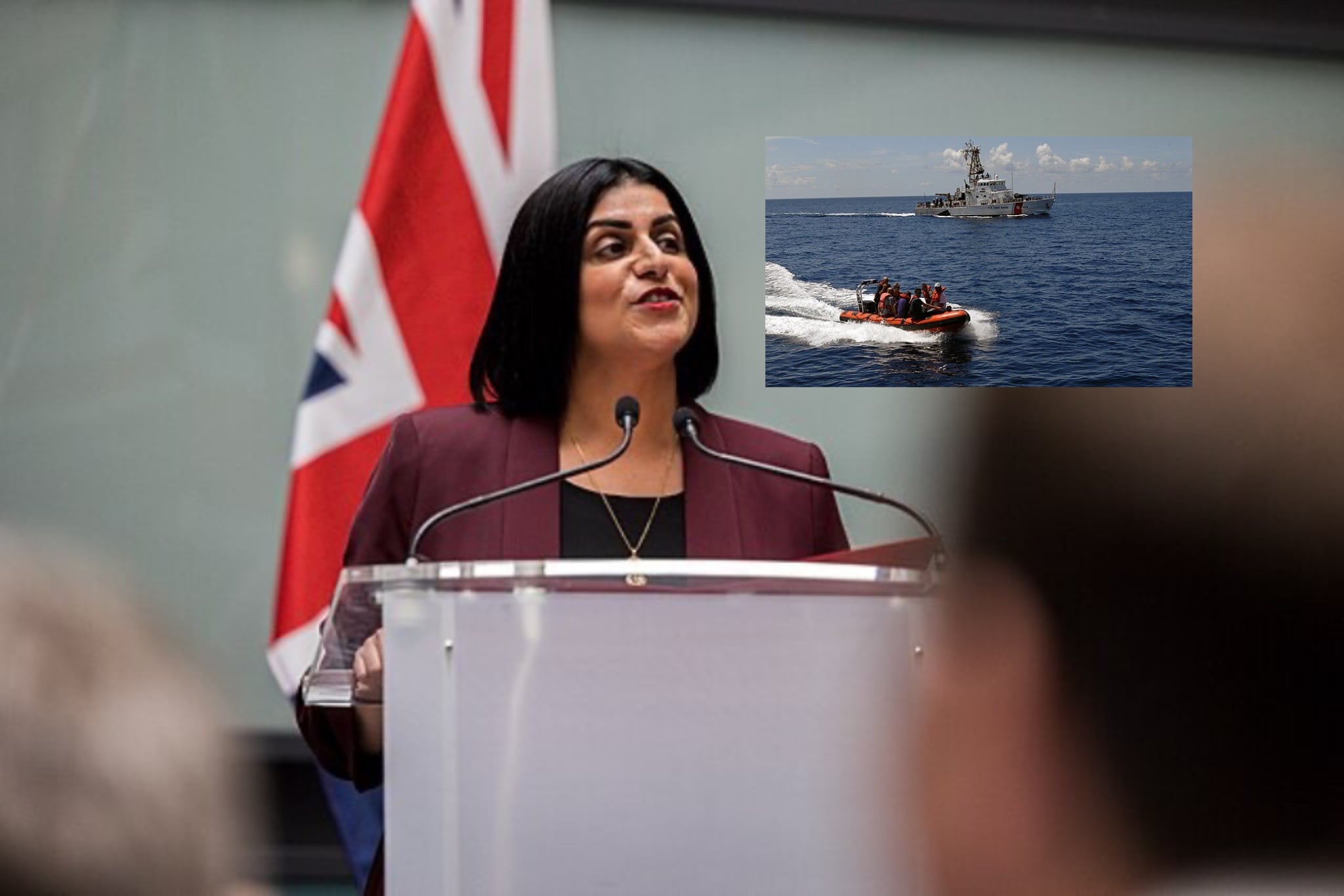
More than 600 migrants crossed the English Channel in a single day on Saturday, pushing this year’s cumulative figure past 6,000 and heaping further pressure on a Home Secretary already struggling to secure a lasting agreement with France over beach patrols.
Nine vessels were intercepted mid-Channel by Border Force boats before being brought into the Port of Dover. The Home Office confirmed 602 arrivals on the day — the second-highest daily figure recorded so far this year, narrowly behind the 605 who made the crossing on 25 February. The running total for 2025 now stands at 6,077. Since Labour took office, 70,701 people have made the journey from northern France.
The surge comes at a particularly difficult moment for Home Secretary Shabana Mahmood, who last month concluded only a temporary two-month arrangement with the French government to maintain taxpayer-funded beach patrols, after a previous multi-year deal signed in 2023 expired without a successor in place. That earlier £478 million package had also been intended to fund a new detention centre on the French side of the Channel, a facility that has still not opened.
Mahmood had pushed for performance-related payments in the new negotiations — a model that would tie British funding to measurable reductions in the number of migrants leaving French beaches. Paris rejected the proposal outright. The stopgap deal now in place will cost British taxpayers £16.2 million over its two-month lifespan while longer-term talks continue.
The Home Secretary’s difficulties are compounded by questions surrounding a separate scheme she launched on 5 March, offering failed asylum-seeking families up to £40,000 in cash — plus flights — to leave the country voluntarily. The payments are structured at £10,000 per person, capped at £40,000 per family. Most of those eligible are currently housed in migrant hotels at an average cost to the public of £158,000 per family per year. Mahmood has so far declined to disclose how many families have accepted the offer, prompting the Conservatives to accuse her of “shocking secrecy.” Officials have previously indicated they would consider increasing the financial incentive depending on the level of take-up.
The Home Office acknowledged it does not hold reliable data on the total number of failed asylum-seeking families currently being supported by public funds, citing weaknesses in its own data-gathering systems. However, sources confirmed that at least 700 Albanian families who have exhausted the full appeals process remain on public support.
A separate “one in, one out” scheme, launched last year and designed to allow small boat arrivals to be returned to France in exchange for accepting asylum seekers through official channels, has also produced underwhelming results. Some 377 people have been removed under the arrangement, while 380 have been brought into the UK under its reciprocal terms. The scheme is due to expire in June.
Adding to the sense of drift surrounding the Government’s border strategy, the head of the UK’s Border Security Command, Martin Hewitt, stepped down at the end of last month. Hewitt, a former senior police officer appointed by Sir Keir Starmer shortly after Labour entered government, had been given a specific mandate to reduce Channel crossings. During his 18 months in post, numbers remained at elevated levels, with last year recording the second-highest annual total since crossings began being tracked.
