



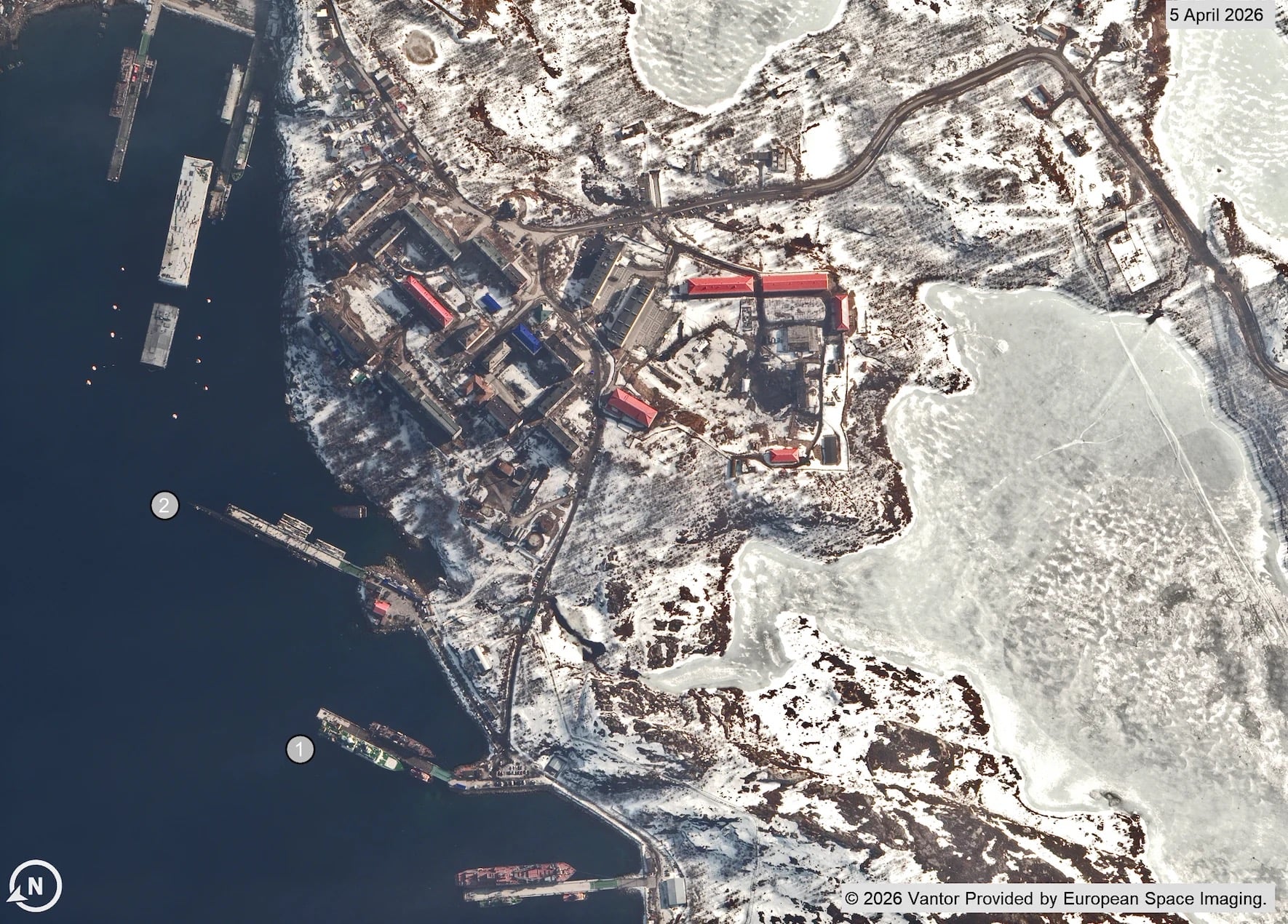
A Russian naval auxiliary ship’s 18-hour stationary presence near Britain’s Galloper windfarm could represent Moscow’s pragmatic solution for deterring British troops from seizing sanctions-busting oil tankers without deploying scarce warship escorts, a former navy intelligence officer has warned.
The 121.7-metre PM82 supply and repair vessel—previously stationed in Tartus, Syria, and never before identified in North Sea waters—remained static off the Sussex coast Monday, prompting security concerns it was serving as a makeshift base for Russian security teams prepared blocking boarding operations or engaging British forces in firefights.
James Droxford, an ex-Intelligence Agency officer turned consultant, suggested the vessel’s windfarm proximity represented deliberate positioning concealing its true protective mission whilst simultaneously concerning authorities.
“The Russian navy does not have enough warships to provide a 24/7 traditional convoy escort system to its sanctioned merchant vessels, whilst simultaneously conducting its standard military tasking,” Mr Droxford told The Times, characterising the forward-deployed static base approach as enabling armed security teams moving between threatened merchantmen as “a pragmatic operational solution.”
The 280-tonne equipment capacity vessel possesses ship repair capabilities, though experts believe its primary function involved housing security officers who could theoretically prevent British special forces accessing Russia-linked tankers passing through nearby shipping lanes.
“The UK’s threat to board Russian sanction-breaking vessels may have been stymied by President Putin and the timely deployment of a single naval auxiliary vessel,” Mr Droxford added.
RAF Poseidon aircraft circled above PM82 throughout Monday according to flight tracking data, whilst a Royal Navy helicopter also conducted overhead surveillance of the unusual Russian presence.
Earlier this month, Russian warship Admiral Grigorovich accompanied two shadow fleet vessels past Britain’s south coast, though the government’s announced readiness intercepting Putin’s sanctions-evading tankers transiting the English Channel has yet to materialise in actual boardings despite US, French and German precedents seizing Russia-linked vessels.
The latest security alarm arrives days after Defence Secretary John Healey revealed Russian submarines—including one nuclear-powered attack submarine and two spy submarines—conducted month-long North Atlantic operations targeting British energy and data underwater cables.
Britain deployed 500 personnel aboard warships and RAF P8 aircraft flying over 450 hours alongside Norwegian allies, dropping sonar buoys tracking underwater movements using acoustic signals before the Russian submarines eventually retreated without damaging infrastructure.
The submarines operated within Britain’s exclusive economic zone extending 200 nautical miles offshore though remained outside 12-nautical-mile territorial waters, Mr Healey confirmed.
“We see your activity over our cables and our pipelines, and you should know that any attempt to damage them will not be tolerated and will have serious consequences,” the Defence Secretary warned President Putin.
Yesterday two British Typhoon fighters scrambled from RAF Lossiemouth alongside a Voyager refuelling jet from RAF Brize Norton after a Russian warplane approached—though remained outside—British airspace near Shetland.
November witnessed research vessel Yantar attempting jamming HMS Somerset’s GPS whilst directing military-grade lasers at RAF P-8 Poseidon pilots—the first time Russian crews used lasers against UK forces, which Healey characterised as “deeply dangerous” provocation.
