



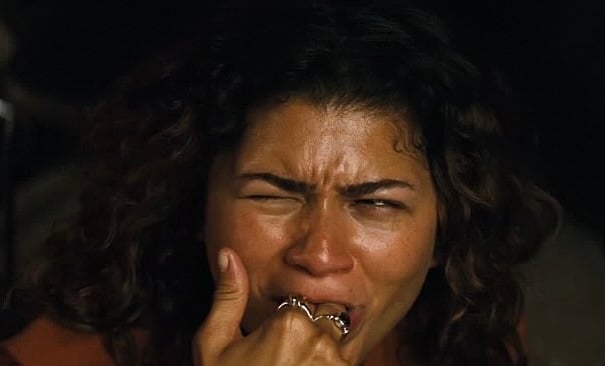
The long-awaited return of HBO’s teen drama Euphoria has triggered a firestorm of criticism as viewers and critics alike accuse creator Sam Levinson of descending into what The Telegraph characterised as “one man’s creepy, sex-obsessed fantasy”—allegations centring on creative decisions that see virtually every major female character now engaged in sex work whilst male characters either exploit or humiliate them.
The controversy surrounding the third season’s premiere represents a dramatic escalation of concerns that have shadowed Levinson’s work since the show’s 2019 debut, when its unflinching depictions of teenage drug use, violence and sexuality generated debate about whether boundary-pushing storytelling had crossed into gratuitous exploitation. Yet the latest season’s narrative choices—which place lead characters Rue, Cassie and Jules into scenarios involving drug trafficking, OnlyFans content creation, and high-end escorting—have prompted accusations that the show has abandoned dramatic purpose in favour of what critics describe as the director’s personal fixations.
“Does Sam Levinson know there are other career paths for women other than sex work or…?” wrote one viewer on X, capturing widespread frustration with storylines that see Zendaya’s recovering addict Rue managing a strip club whilst serving as drug mule, Sydney Sweeney’s Cassie monetising fetish content including scenes where she dresses as a baby and dog, and Hunter Schafer’s Jules working as a sugar baby. Even former adult film star Chloe Cherry’s character Faye—whose background might justify such narrative direction—appears in the premiere swallowing bags of fentanyl alongside Rue in sequences critics described as prioritising shock value over coherent character development.
Why Cassie’s Controversial Scenes Triggered Particular Outrage
The most intense backlash has focused on scenes depicting Cassie’s OnlyFans content creation, particularly a sequence showing her in sheer pink top and white bottoms styled as infantwear, hair in pigtails, pink pacifier in mouth, striking poses on a yellow couch. The imagery—designed to appeal to age-regression fetishes—prompted visceral reactions across social media platforms where viewers questioned whether anyone involved in production had considered declining to film material many characterised as deeply disturbing.
“Had to rewind the baby outfit scene because surely I wasn’t seeing what I thought I’d just seen???” wrote one Reddit user, whilst another directed frustration at the actress herself: “Sydney girl, you can say no to scenes.” The latter comment reflects broader questions about power dynamics on sets where young performers may feel pressure to accept creative directions they find uncomfortable, particularly when showrunners possess Levinson’s industry stature and the production represents career-defining work for emerging talent.
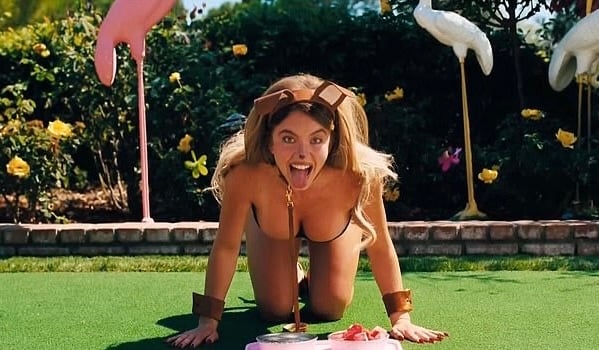
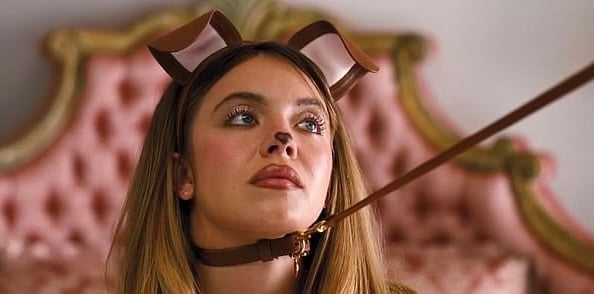
A subsequent scene depicting Cassie in dog costume—complete with ears, collar and leash—shows her licking water from a bowl and biting shoes before fiancé Nate discovers her filming content for social media upload. Their ensuing confrontation sees Nate condemning her work whilst simultaneously participating in the degradation: “You are not a doggy. You are a grown woman. So that makes you a what? A prostitute,” he states before pulling her closer by the leash and declaring “You’ve been a bad dog”—to which Cassie responds “Woof woof.”
The sequence encapsulates criticisms that Levinson simultaneously exploits and shames female sexuality, creating scenarios that linger voyeuristically on women’s degradation whilst ostensibly critiquing the circumstances forcing such choices. Eleanor Halls, writing in The Telegraph, observed that knowledge of Levinson’s working methods—he famously writes alone without a writers’ room and sometimes method dresses as his characters—makes “it difficult to watch his X-rated show in the same way again.”
What Critical Reception Reveals About Shifting Industry Standards
Professional reviews have proven scarcely less damning than social media reactions. The Guardian branded the new season “grubby and desperate,” whilst The Telegraph’s headline baldly stated that “even Zendaya can’t save it from Sam Levinson’s debauchery.” The latter publication’s assessment that Levinson “has gone full pervert” and “has trapped all of his female leads in the performance, or exploitation, of sex work” reflects critical consensus that the show has abandoned whatever sociological examination of teenage experience it once claimed to offer.
The criticism extends beyond specific scenes to encompass narrative trajectory decisions that viewers struggle to reconcile with established character development. “I don’t understand how euphoria went from the beautiful masterpiece that was s1 to cassie being dressed as a baby doing OF,” wrote one viewer, articulating confusion about how a show that earned praise for sensitive addiction portrayal and nuanced character work devolved into what many perceive as director’s personal fantasy fulfilment.
The montage depicting Rue and Faye swallowing bags of fentanyl—shown struggling through dry heaves as they prepare to cross the US border whilst serving as drug mules—generated comparisons to Breaking Bad and Narcos that viewers clearly did not intend as compliments. “At what point did Euphoria go from Euphoria to Breaking Bad??” one asked, whilst another wrote “I don’t know if I’m watching an ep of Euphoria or of Narcos..” The confusion reflects perception that the show has abandoned its ostensible focus on teenage psychological experience in favour of cartel thriller aesthetics that serve Levinson’s apparent interest in placing young women in dangerous, exploitative circumstances.
The Broader Conversation About Female Representation and Creative Authority
The backlash has reignited debates about how prestige television handles female sexuality and whether auteur-driven productions provide insufficient safeguards against directors whose personal fixations override dramatic necessity or performer comfort. Levinson’s refusal to employ a writers’ room—unusual for contemporary television where collaborative writing typically provides checks on individual creator excesses—means his vision faces minimal institutional challenge before reaching production.
“Could no one simply have said no to sam levinson i feel like he really needed to hear that,” wrote one viewer, identifying the apparent absence of collaborative processes that might have flagged concerns about whether every female character requiring sex work storylines served dramatic purposes or reflected creator obsessions. The observation that “sam levinson making the male characters nicer and the female characters struggle more” suggests viewers perceive systematic pattern rather than isolated creative choices.
The criticism proves particularly pointed given Euphoria’s target demographic. As a show ostensibly examining teenage experience, its narrative choices carry implications beyond typical adult drama where mature audiences engage fictional content with fuller awareness of artistic conventions and performative distance. Young viewers—precisely the demographic the show depicts—may lack frameworks for distinguishing between sociological examination of sex work and exploitation masquerading as social commentary.
Industry observers note that previous controversies surrounding Levinson’s work—including reported conflicts with actress Barbie Ferreira who departed after season two and persistent rumours about uncomfortable set conditions—establish pattern suggesting the current backlash represents escalation rather than aberration. Whether HBO will intervene to impose creative constraints or whether Levinson’s track record of generating viral conversation and substantial viewership numbers insulates him from consequences remains to be seen.
For now, the premiere’s reception suggests that whatever artistic license prestige television extends to visionary creators faces boundaries that Euphoria’s third season has tested to breaking point. Whether subsequent episodes moderate the approaches that generated such intense criticism or double down on the shock value that has simultaneously driven the show’s notoriety and undermined its dramatic credibility will determine whether Levinson’s vision survives intact or whether institutional and audience pressures force recalibration of a creative direction that critics and viewers alike increasingly characterise as having lost whatever moorings to defensible artistic purpose it once possessed.
