



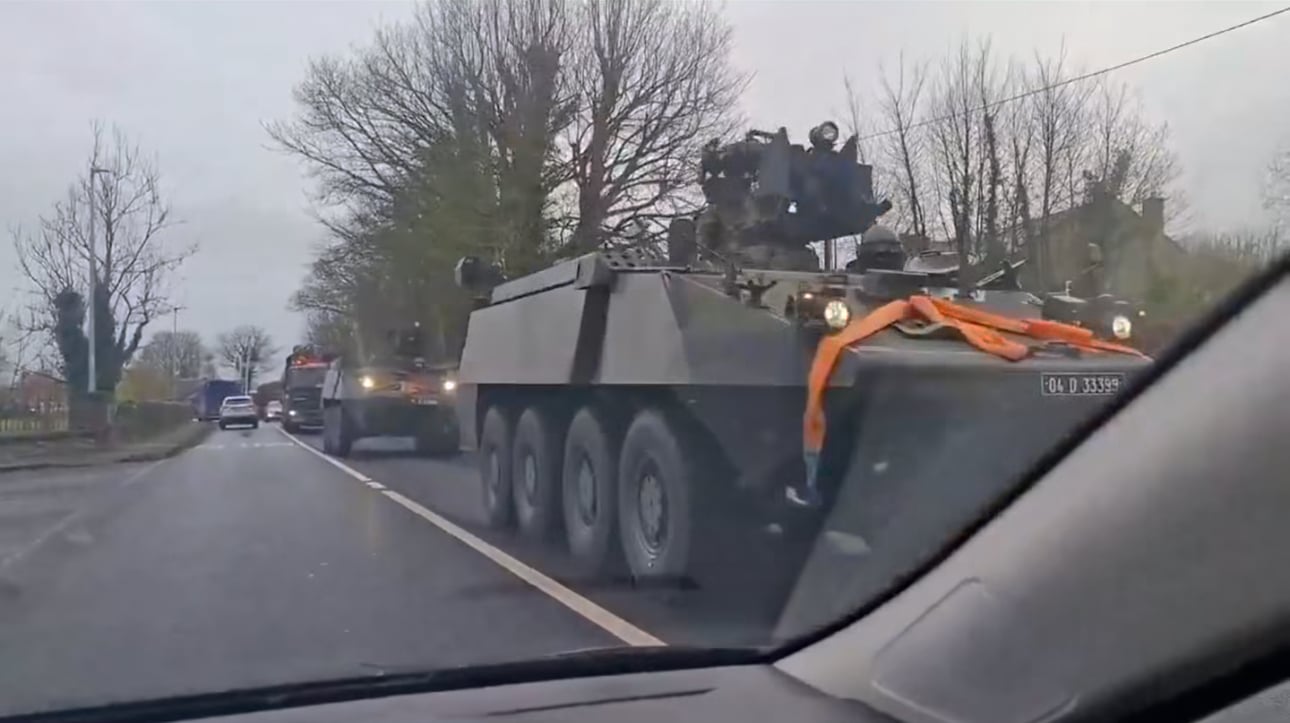
The Irish government has deployed Defence Forces to dismantle vehicle barricades obstructing fuel depots and refineries following three days of escalating protests by haulage and agricultural operators furious over soaring petroleum costs triggered by the Iran conflict.
Justice Minister Jim O’Callaghan confirmed military assistance has been requested to remove large vehicles blocking critical infrastructure, issuing Thursday morning ultimatums to owners warning they face potential damage during forced extraction operations.
“The blocking of critical national infrastructure will not be permitted to continue,” Mr O’Callaghan stated, cautioning vehicle owners “should not complain later about any damage caused to those vehicles during removal.”
The minister characterised the blockades—including County Cork’s Whitegate oil refinery—as denying citizens access to fuel and clean water, describing this as “an unacceptable interference in the most basic of human rights.”
Protesters have additionally established slow-moving tractor convoys on motorways whilst disrupting major Dublin thoroughfares, with Taoiseach Micheál Martin condemning demonstrators for transforming O’Connell Street “into a car park” through what he branded “an act of national sabotage.”
Dublin’s fire brigade reported emergency response delays caused by the demonstrations, raising public safety concerns beyond immediate economic disruption.
Agriculture Minister Martin Heydon told RTÉ Radio 1’s Morning Ireland the standoff represents “a clear choice between democracy or anarchy,” confirming the government would meet haulage and farming group representatives but refuses engaging directly with protesters.
“I completely understand where people’s frustration is from in terms of very high energy shock as a result of the war that has broken out between America, Israel and Iran,” Mr Heydon acknowledged.
Petrol and diesel costs have surged in recent weeks following Middle Eastern hostilities and Iranian closure of the Strait of Hormuz chokepoint carrying substantial global petroleum supplies.
Ireland’s coalition approved a €250 million (£218 million) relief package last month including temporary fuel excise cuts, expanded haulier and bus operator rebate schemes, and fuel allowance extensions.
However, ongoing Middle Eastern instability has largely eroded those measures’ effectiveness, with protesters arguing governmental responses prove insufficient addressing the crisis’s economic impact on transport-dependent industries.
The military deployment marks an escalation in Dublin’s response to civil unrest, testing the government’s willingness using Defence Forces against domestic demonstrators whilst balancing legitimate fuel cost grievances against infrastructure protection imperatives.
