



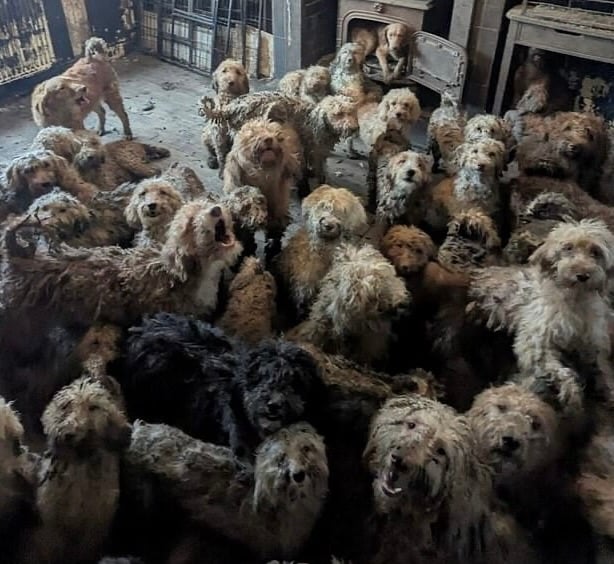
Animal welfare officers have verified shocking photographs showing 250 poodles rescued from a single Nottingham residence are genuine after widespread speculation the images were AI-generated, with the case representing a 70 per cent pandemic-era surge in animals discovered living in destitute conditions.
RSPCA Superintendent Jo Hirst addressed online scepticism surrounding the disturbing imagery depicting dogs clambering over each other filling a room nearly wall-to-wall, with some sheltering beneath tables and one perched inside a woodburner.
“The public’s disbelief is understandable, but this photo is real,” Superintendent Hirst stated. “Over-breeding and overwhelmed owners can create staggering situations, and our officers are seeing more cases involving 10, 20, even 100 animals.”
The owners claimed they had become “overwhelmed by breeding” when authorities discovered the animals covered in their own filth suffering from sore skin and matted coats, with many poodles so terrified of the outside world following their rescue that staff had to carry them from kennels to grass.
Whilst most have since found loving homes, two poodles—Eva and Teddy—remain at the RSPCA’s Radcliffe Animal Centre in Nottingham awaiting adoption.
Other rescued animals included Stevie, a deaf and blind cocker spaniel, and Sandy, a poodle serving as Stevie’s guide dog helping her navigate—making the pair inseparable and requiring joint rehoming. They currently reside at the RSPCA’s Southridge Animal Centre in Hertfordshire.
The Nottingham case follows an April 2025 Doncaster incident where over 80 canines alongside two cats and a chicken were discovered in squalid conditions, with photographs showing springer spaniels covered in filth crowding a rotting staircase thick with dirt and grime.
Four Doncaster rescue dogs—Bruce, Pablo, Lola and Nellie—subsequently joined Greater Manchester Police’s tactical dog unit undergoing training to become sniffer dogs assisting with drug detection and serious crime investigations.
PC Wes Donnelly from GMP’s tactical dog unit stated: “We’re giving them the best life possible. These dogs have gone from being neglected to having a real purpose. Providing their training goes well they’ll soon be helping us detect drugs, cash and other items that support investigations.”
According to Cambs News, pandemic-related disruptions have triggered a 70 per cent increase in instances of animals found living in destitute conditions as overwhelmed owners struggle with breeding management.
Animal welfare organisations continue appealing for prospective adopters to provide homes for rescued animals whilst warning potential pet owners about the responsibilities involved in breeding.
